
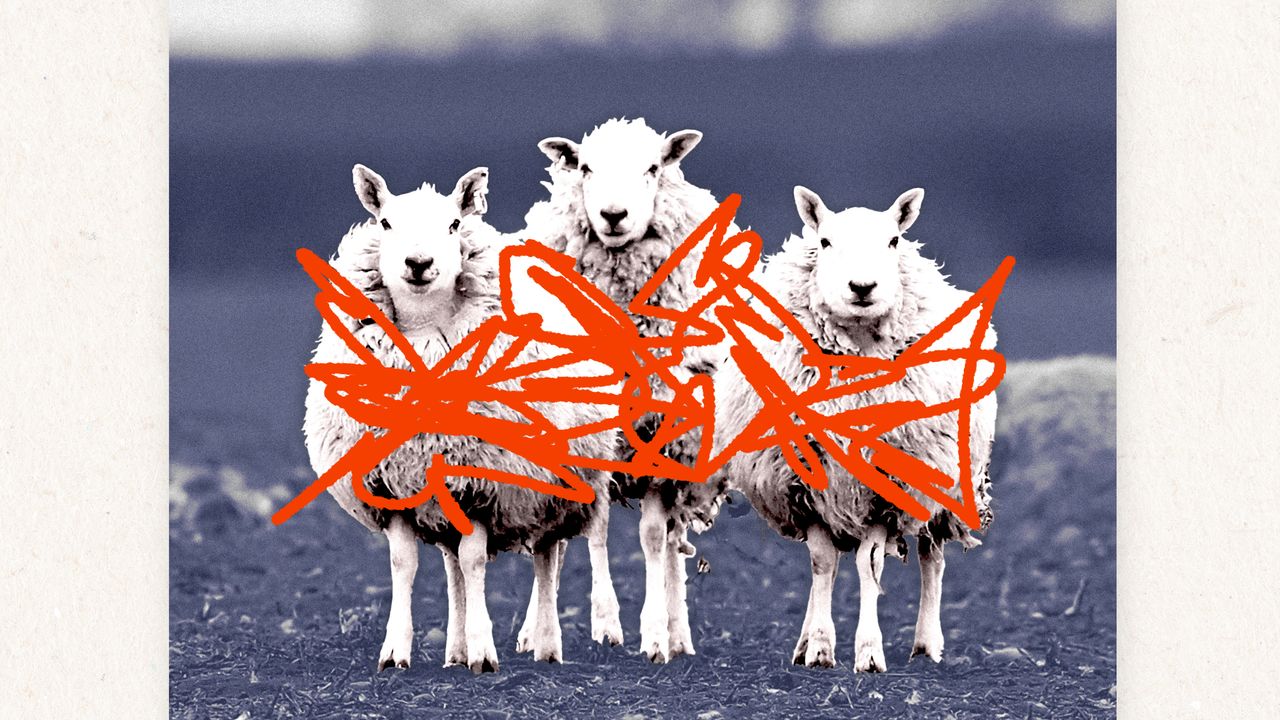
In case you missed it, PETA protestors crashed COS’s New York Fashion Week show on Sunday to decry the Swedish brand’s use of wool, which they said was abusive to sheep. The incident made headlines after videos of Steven Kolb, CEO and president of the Council of Fashion Designers of America, forcibly restraining two activists went viral. Now, Kolb is on leave from the CFDA, noting on his personal Instagram on Monday that he would be “taking a voluntary leave from work and meeting with a professional to ensure it never happens again.” GQ has reached out to the CFDA and PETA for comment.While the images of Kolb taking down animal rights activists are quite sensational, what can we make of the issue central to this altercation? PETA has a firm stance against the use of wool, with their protest signs reading, “Sheep Beaten and Bloodied for Wool, Don’t Buy It!” The organization has also said on its website that “no certification can protect sheep from the inherent cruelty of the wool industry.”But others argue that there are ways to procure wool that are beneficial to people, animals, and the environment. After centuries of selective breeding to produce as much wool as possible, many sheep need to be sheared because they cannot regulate the excess on their own. As a result, some countries, such as Sweden and Australia, require farmers to shear their sheep at least once a year in order to abide by animal welfare laws. But beyond that, wool has the potential to be a regenerative textile, meaning certain production methods can increase soil health, improve biodiversity, and reduce carbon emissions.“As long as we have sheep, they’re going to be growing wool,” said Lisa Bergstrand, founder and director of sustainability firm Bergstrand Consultancy. “I think we should use the wool. But of course, I think we should make sure that we farm the sheep in the best way possible, both for the sheep welfare and also for the land, because there's a huge potential there.”Bergstrand launched the Good Wool Collective in an effort to educate and assist brands interested in procuring more responsible wool. She said that most brands were concerned about the emissions created by growing wool, although they are increasingly interested in developing better animal welfare standards.“It's a big problem that brands don't have so much awareness of where their material comes from in general,” she said. “And especially when we talk about animal materials, it is very important to have traceability.”Bergstrand has visited farms across the world and observed the environmental benefits of regenerative sheep farming. During one trip to Australia, she found that one farmer saw his land absorb three times more carbon than it emitted after using a method of holistic grazing, which mimics what sheep would do in the wild. She added that sheep “fertilize the land, and with the regenerative way of farming, it also makes the soils keep a lot more water, which makes it more resistant to both fires and droughts, but also flooding.”Still, the wool industry is afflicted by animal welfare and environmental issues. Melanie Lary, research and campaigns manager at global animal welfare organization Four Paws said in an email that “many consumers are unaware of the vast animal suffering behind wool production.” Some of these issues include tail docking, castration, and sometimes aggressive shearing.One of the biggest problems impacting the industry is mulesing, also known as live lamb cutting (LLC), which entails cutting the skin near the lamb’s tail without pain relief. Mulesing is done to prevent flystrike, which is a fatal condition where parasitic flies lay eggs in the folds of a sheep’s skin. Still, Lary said “hundreds of thousands do not survive” this procedure. While the practice is uncommon in the US, it is legal in Australia, which is the second biggest wool producing country in the world.“While safe, pain-free alternatives already exist and are used by thousands of Australian farmers, every wool garment globally still has an approximately 60% chance of originating from sheep that endured this suffering,” Lary said. “Yet, this cruel practice is avoidable.”Four Paws analyzed over 100 brands across 11 countries in October 2025 and found that 67% failed to provide clear and consistent public information on live lamb cutting. Notably, it listed COS as a “transparency leader” alongside brands like Patagonia and Arcteryx, meaning they “exclusively source certified LLC-free wool and provide shoppers with clear product disclosure.”Lary said that there are certification schemes that “reliably exclude” mulesing in their standards including Responsible Wool Standard (RWS), ZQ Merino, Cape Wool, and NATIVA. Although, she noted that these certifications simply provide a baseline for animal welfare and have room for improvement.“While certification schemes are not perfect and animal welfare concerns may still occur, they can help drive higher animal welfare standards, greater transparency, and improved accountability throughout the supply chain,” she said.Textile Exchange, which issues RWS certifications, ensures that farmers use protective land management practices and abide by the Five Freedoms, or the global standards of animal welfare. These standards require sheep to be free from hunger and thirst; free from discomfort; free from pain, injury, or disease; free to express natural behavior; and free from fear and distress. RWS farms are audited by third-parties that check their practices against these standards.“Animal welfare is fundamental to the RWS,” Sarah Needham, chief engagement and partnerships officer at Textile Exchange, said in an email. “Its requirements cover areas including nutrition, living environment, animal management, and handling. Mulesing is prohibited under the standard.” She added that “responsible wool production is about looking at the whole system: the welfare of animals, the health of the land, the livelihoods of the people who depend on it, and continually improving the outcomes that system creates.”While recycled and vintage wool are more ethical options to virgin wool, those looking for animal-free alternatives can try tencel, modal, linen, hemp, organic bamboo and organic cotton, according to Lary. With consumers becoming more attuned to how their clothing is produced, she said momentum is growing to prevent inhumane practices like mulesing.But in regards to the greater sustainability issues impacting the fashion industry, Bergstrand noted that wool makes up 0.9% of the global textile and fiber market. She noted that the rise of fast fashion has contributed to more waste and increased use of material like polyester, which sheds microplastics that do not degrade. Although H&M group has taken major steps to improve its carbon footprint, it has historically been one of the biggest polluters in the fashion industry.“I think it’s good to talk about the fact that we use animal materials, but when it comes to COS and H&M group, there’s a lot of other problems that I would protest before I would protest what they do when it comes to animal welfare,” Bergstrand said.
Wait, Why Is PETA Protesting Wool Clothes?
Full Article
Original Source
Read the full article at Gq →KhanList aggregates and links to publicly available news content. We do not host full articles from third-party sources. Always verify important information with original sources.