
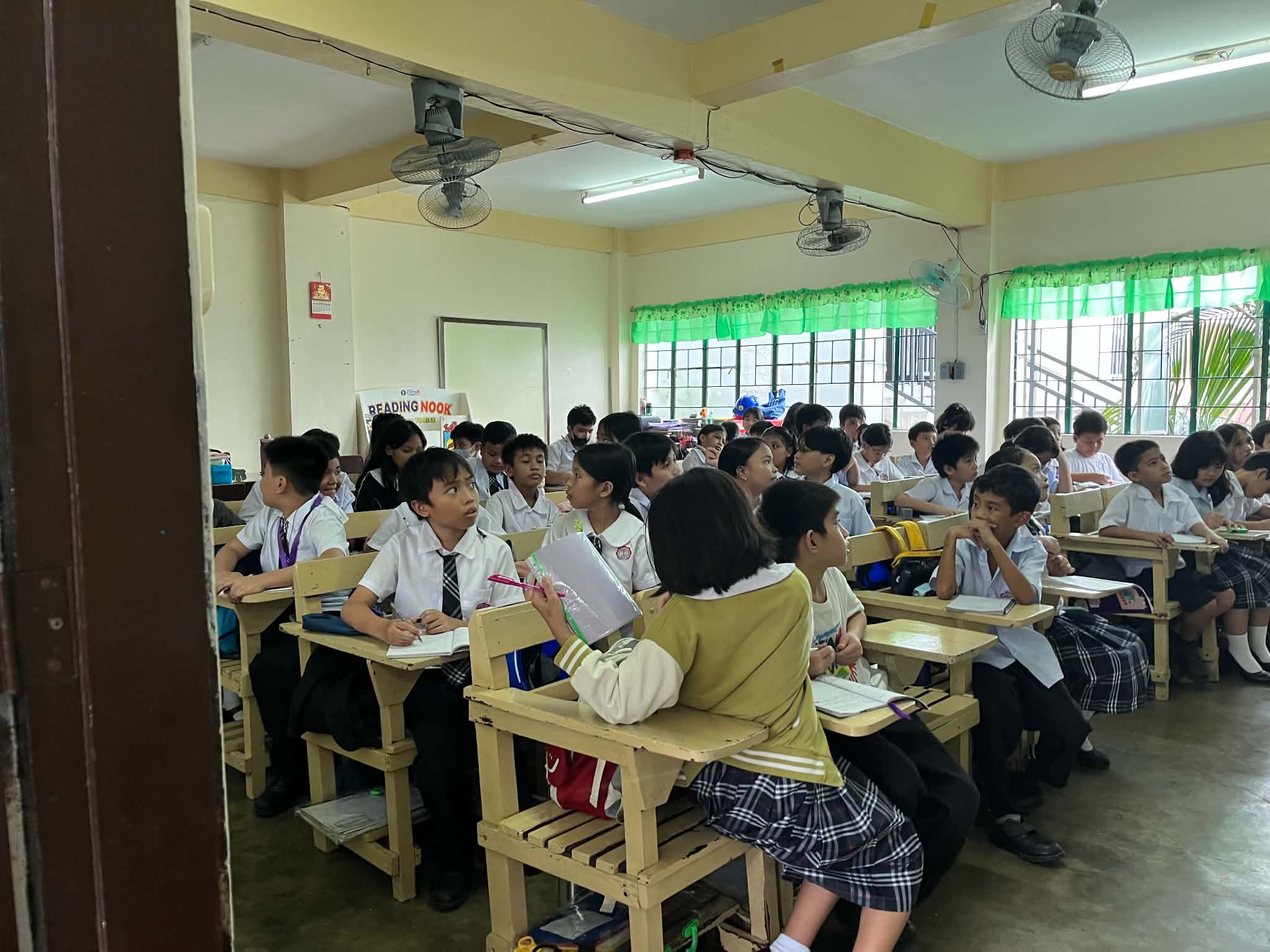
CLASS ONGOING. Students of Santolan Elementary School in Pasig City attend class on August 12, 2026. Jelo Ritzhie Mantaring/Rappler The voucher assistance program for private kindergarten and elementary schools is targeted for rollout in the 2027-2028 school year, subject to funding availability President Ferdinand Marcos Jr. signed Republic Act No. 12327, expanding the government's voucher program for basic education to include kindergarten and elementary students from low-income households. The law aims to alleviate congestion in public schools by prioritizing students from overcrowded institutions and areas without nearby public schools, with a target rollout for the program in the 2027-2028 school year. The Department of Education will implement measures to prevent fraud in the program and establish an online portal for mapping classroom congestion, while also creating the Bureau of Private Education. This is AI-generated. Read the article for full context. Report any errors. MANILA, Philippines – President Ferdinand Marcos Jr. has signed a law that expanded the coverage of the government’s voucher program for basic education, which allows poor students to study in private schools. Republic Act No. 12327 or the Basic Education Voucher Assistance Act — approved on November 12 and publicized on Friday, November 20 — aims to decongest public schools in the country. (READ: [OPINION] There’s a bigger problem than the classroom shortage — school congestion) The measure, which is among the Marcos administration’s priorities, broadened the Expanded Government Assistance to Students and Teachers in Private Education (E-GATSPE) Act, to include kindergarten and elementary school. Currently, the decades-old E-GASTPE Act only provides tuition aid to students in private junior and senior high schools (SHS). The target rollout for the voucher program of kindergarten to elementary is during the school year 2027-2028, subject to funding availability. With the new law, students coming from congested public schools and multi-shift institutions, as well those living in areas without nearby public schools, will be prioritized for the voucher program. The measure provides that beneficiaries from poor and low-income households receive a higher voucher amount. It allows supplemental assistance by a top-up or co-fund aid from local governments, private sponsors, or other scholarship providers to cover the difference between the voucher amount and the total cost of schooling. “Families will be empowered through a public registry detailing nearby participating private schools, slots, and fees,” read a part of the Department of Education (DepEd) statement. “Importantly, the law protects learners by prohibiting schools from withholding records due to delayed government payments, penalizes fraudulent claims, and provides salary subsidies and training for private school teachers,” it added. The DepEd faced the issue of “ghost students” in the SHS voucher program in 2025. In July 2026, the agency said a regional trial court had sentenced an individual to up to 14 years in prison for attempting to defraud the government program by submitting falsified documents. But state auditors found that there were 58 “unverifiable” beneficiaries of the SHS voucher program, which resulted in an overpayment of P938,000 during the 2025-2026 school year. In responding to that Commission on Audit report in September, the DepEd said it had “tightened beneficiary validation, billing, refund, and accountability measures” in the revised E-GATSPE guidelines released in April. The DepEd said it would “continue to pursue accountability and the recovery of government funds where warranted.” The agency is directed to establish an online portal for a nationwide mapping of classroom congestion, and annually update a decongestion framework to guide school prioritization. The Bureau of Private Education would also be created under the DepEd. Within three years, the DepEd should report to Congress whether congestion in public schools is addressed and learning outcomes of disadvantaged students are improved, among others. – Rappler.com How does this make you feel? Loading
Voucher program now covers kinder to Grade 12 under new law
Full Article
Original Source
Read the full article at Rappler →KhanList aggregates and links to publicly available news content. We do not host full articles from third-party sources. Always verify important information with original sources.