
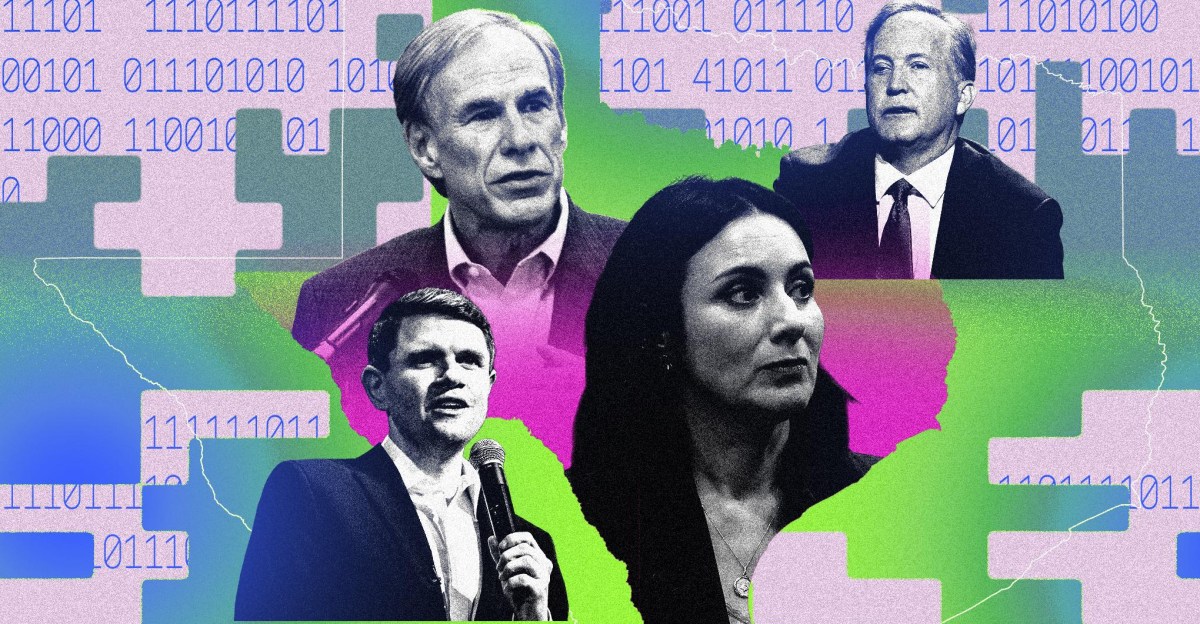
Ask Texas NAACP president Gary Bledsoe what it’s been like to see data center developers descend upon Austin and its surrounding suburbs and he can rattle off project after project facing opposition from locals.There’s the fight in Taylor over plans to build a data center at a site that’s supposed to be a park. Temple, around 40 miles away, is another sore spot, Bledsoe says. The mayor and City Council members there face recall attempts over data center developments. And some 30 miles outside of Austin, San Marcos became the first city in all of Texas to ban data centers.Nowhere in the world are data centers growing more explosively than in Texas. With the midterm elections looming, the data center fight “is the issue in Texas,” says Bledsoe. The state’s NAACP recently joined dozens of other groups across the political spectrum to form a coalition to stop — or at least stall — data center construction. Their grievances are just as diverse as their membership: concerns about how much water the industry consumes in a state as dry as Texas, qualms about tax subsidies, and objections to new gas plants and wind farms built to meet rising electricity demand. Together, Bledsoe estimates the coalition — named We the People Texas — represents as many as 1 million voters across the state.If there’s one thing a broad range of voters can agree on this election season, it’s that they hate data centers and are unhappy with the status quo. A majority of Texans — 57 percent — oppose the construction of data centers, an August poll found. That included 43 percent of Republicans, 75 percent of Democrats, and 54 percent of independents.“We have almost nothing in common in so many other ways. And yet you get us in the room with this issue, and it’s like a wall”After initially proclaiming his state the “epicenter of AI development,” Texas Gov. Greg Abbott is now fighting for reelection against underdog Democrat Gina Hinojosa, who is seen as having a rare shot at taking a reliably red state. The state’s high-profile Senate race is no less of a nail-biter, with Republican Attorney General Ken Paxton running neck and neck against Democrat James Talarico. In each race, candidates have to win over voters who think data centers are coming for their water, land, and livelihoods. Republican and Democratic hopefuls alike are trying to distance themselves from an industry that’s taken deep root in the state — and so far, voters aren’t buying it.“You’re talking about Democrats, libertarians, independents, Republicans, all in one fight … we have almost nothing in common in so many other ways. And yet you get us in the room with this issue, and it’s like a wall … fighting one big enemy,” says Jet Parker, who cofounded a group called Save Rural Texas that is now part of the We the People Texas coalition.Save Rural Texas came together this year after a local county commissioners’ meeting about plans to build a new data center in the Texoma area that borders Oklahoma. Residents, including Parker, successfully delayed that project. That victory led Parker, a corporate coach and speaker, to write up a handbook for other communities trying to block data center projects, and she now spends much of her time traveling around the state to train grassroots groups.She’s got a warning for Republicans: If they keep backing data centers, they’ll lose Texas. “You just pissed off a lot of people in rural Texas who are supposed to carry you across the [finish] line,” Parker says.Abbott is in particularly hot water. “You brung it, so you dance with it. That’s Texas talk, you know,” Parker says. “That’s what Abbott’s done, but we’re the ones having to dance with it … we didn’t want to be in the dance at all.”For years, however, Texas has taken among the most welcoming stances toward data centers in the country. The state passed a sales and use tax exemption for data centers in 2013 under former Gov. Rick Perry. In 2015, Abbott expanded the exemption to include hyperscale data centers, which can span millions of square feet and house tens of thousands of GPUs. As a result, qualifying data center developers don’t have to pay state taxes on equipment and electricity for up to 20 years. That essentially rolled out the red carpet for companies that need abundant electricity to power energy-hungry data centers.Since then data centers have had a massive growth spurt in order to support new generative AI models — and that’s costing the state. The tax exemption was initially expected to cost taxpayers $14.6 million in 2014 and 2015. But in 2025, state officials estimated that the tax break would lead to $3.2 billion in lost sales tax revenue over two years.“You brung it, so you dance with it.”The state’s energy woes go further than that. Electricity bills have grown by 35.4 percent on average over the past five years as demand rises and utilities build expensive new infrastructure to meet that demand. Bledsoe is concerned about air pollution for communities around new gas plants. Data center electricity demand could erase decades of air quality gains in Texas, one recent study found. Parker, meanwhile, can’t stand solar and wind farms built near farmland. Neither wants to see new transmission lines snaking through their communities.Data centers can also put pressure on already stressed water supplies, especially in a drought-prone state like Texas. While they can reuse water used on-site to cool servers, the larger part of data centers’ water footprint comes from electricity use. Data center proposals have driven a surge of gas and nuclear power projects, both of which need a lot of water for their own cooling systems.Data center electricity demand could increase nearly tenfold by 2030, the state’s largest grid operator estimates. Meanwhile, data centers in Texas consumed about 25 billion gallons of water last year, around 0.4 percent of total water use, according to the Houston Advanced Research Center (HARC). By 2030, that figure could grow to up to 2.7 percent of the state’s total annual water use, HARC estimates. And water consumption can be much higher when zooming into certain communities. Another study by the University of Texas at Austin estimated that data center water use statewide could rise to as high as 9 percent by 2040.Virginia has historically been the state with the most data centers, but it’s running out of space. Virginia still beats Texas 287 to 170 when it comes to the number of planned data center projects as of April, according to Pew Research. But as data centers get bigger, they’re moving out of cities and into rural areas — particularly in Texas. Data center capacity is typically measured by how much power it draws, and in this measure, Texas already takes the crown with 26GW of existing and under-construction capacity compared to 13GW in Virginia.Facing backlash to data centers, Abbott has changed his tune. In June, he directed the state Public Utility Commission to require that data center operators cover the costs of new infrastructure built to serve them. Since then, he has also announced statewide moratoriums on permits for data center projects pending audits on their electricity and water use. He’s also said that he would support a repeal of the sales tax exemption for data centers and greater oversight of data centers’ water and electricity use.Even so, he’s reportedly taken millions in campaign contributions from data center interests, and We the People Texas coalition members are not convinced he’s turned the page. “Is he doing enough? Absolutely not,” Parker says.The NAACP sent a letter to Abbott’s office last month criticizing his moratoriums for not going far enough because the state is only auditing projects that connect to the power grid. However, more so than any other state, Texas has data centers building their own power supply on-site, without needing to connect to the grid. Bledsoe’s concerned that these private energy projects will be subject to less regulatory scrutiny, while also harming air quality in nearby neighborhoods. Projects that already have permits are still being built. And an October investigation by advocacy group Public Citizen and FracTracker found public records indicating that state agencies are still processing permits for data centers, although Abbott’s office denies that they have issued any approvals since he directed them to pause permitting. To Bledsoe and other coalition members, he says, the temporary moratorium looks like “an attempt to run out the clock before the election.”Data center hyperscalers including AWS, Microsoft, Google, Meta, and others have formed their own trade group called the Data Center Coalition (DCC). For what it’s worth, DCC isn’t endorsing any candidates. But in an interview with The Verge, Jess Heck, the group’s director of Texas government affairs, says, “It’s very clear that our members share the same goals as Gov. Abbott and the legislature. We want to be true partners, good neighbors in every Texas community where we operate.” Heck didn’t confirm whether any of its members are providing any campaign support for Abbott.“An attempt to run out the clock before the election”Eduardo Leal, press secretary for Abbott’s campaign, said in an email to The Verge that “Under [Abbott’s] standards, data centers must pay for their own electric infrastructure, add power instead of only adding demand, reuse their own water, reduce the cost of electricity for Texans, not disrupt residential neighborhoods, and eliminate reliance on outdated taxpayer-funded incentives.”Abbott signed a state Senate bill into law last year that directs the Public Utility Commission of Texas to reassess how it allocates transmission costs in order to keep rates from rising disproportionately for residential customers. And this June, he proposed more measures to force companies to cover the costs of infrastructure upgrades needed to serve their data centers.Abbott’s biggest competitor, state Rep. Gina Hinojosa, has eked out a narrow lead recently in some polls after strengthening her language against data centers — calling for a moratorium on development until the state legislature passes more protections. “I think her campaign has made a ton of inroads into moderate Republican communities because of her stance on data centers,” says Anthony Elmo, public education funding defender for Good Jobs First, which recently cofounded another coalition pushing for data center reforms in Texas alongside other advocacy groups.Hinojosa has skyrocketed from a relatively obscure local official to a serious contender for the governor’s seat, largely on a populist message that caters to residents’ frustration with Big Tech companies grabbing land for data centers. Even so, she might not be convincing enough for conservative rural voters.Candidates from both sides of the aisle were pretty soft on data centers up until the party conventions earlier this year, says Miriam Cobb, who cofounded the Texas Coalition Against Data Centers earlier this year (which is also part of We the People Texas). Texans can see the political posturing from Hinojosa, too, she says. One of Hinojosa’s major donors has been the International Brotherhood of Electrical Workers, which recently formed an “American Infrastructure Alliance” with OpenAI and data center developers.“[Voters] know she wasn’t against it from a place of understanding or sincerity, it’s something she knows she has to say now,” Cobb tells The Verge, adding that she’ll be writing in an independent candidate come Election Day. Even with many conservatives — some of them now claiming to be single-issue voters on data centers — skeptical of both parties’ candidates, Cobb still expects Republicans to lose seats.Paxton, the Republican candidate for Senate, is attempting to atone for his previous support of data centers. He voted for the sales tax exemptions as a state senator in 2013, although he now says he’d support a repeal. In September, he announced an investigation into hundreds of data centers’ water use. Paxton also launched an investigation into the case in Taylor over whether it’s legal for land deeded for parkland to be developed into a data center. And he’s aligned himself with Abbott’s proposals to impose stronger light and noise restrictions on data centers, limit construction in rural areas, and push developers to cover the costs of new energy infrastructure. But he also reportedly received hundreds of thousands of dollars in campaign funding this year from data center interests.“Trump keeps saying, you know, ‘Let them in, let them in, let them in’”Talarico, meanwhile, has a similar plan to stop data centers “from jacking up our utility bills.” But he also claims to want to “empower local communities to decide whether they want a data center in their town,” a jab at Republicans including Paxton who have either stayed mum on whether counties should be allowed to make permitting decisions on data centers rather than the state or have actively curtailed their ability to do so. Abbott signed the so-called “Death Star” bill into law in 2023 barring counties and municipalities from crafting regulations that contradict state law. Some Republicans have cited the Death Star law in legal challenges to local moratoriums on data centers.While the Senate race between Talarico and Paxton is in the national spotlight over the prospect of a Democrat flipping the seat, it’s probably less important for Texans concerned most about data centers, advocates tell The Verge. The race is too politically polarized to flip voters on the single issue, Cobb says, and neither candidate has given a very convincing position on how to rein in data centers anyway. Neither campaign responded to press inquiries from The Verge.Working at the federal level, the best thing the senator-elect could do would be to push back against President Donald Trump’s data center agenda and ensure Texas can moderate data center development without interference, she says.“We want assurances that you’re gonna let us deal with it instead of what’s been happening, where Trump keeps saying, you know, ‘Let them in, let them in, let them in,’” Cobb tells The Verge.Cobb still sees construction traffic clogging two-lane rural roads leading to data center projects that have avoided Abbott’s partial moratorium. Residents are worried about the traffic jams blocking emergency vehicles, especially when fire weather kicks up. In some areas, Texans have seen property values drop, she adds. Farmers are giving up land that their families have tended to for generations. In other neighborhoods, an influx of new workers arriving for the data center “gold rush” is exacerbating housing shortages and making rent more unaffordable for locals. In either case, data center opposition coalition members say they’re worried about a loss of culture.“It’s not for nothing,” Cobb says. “They have real community … and now they’re losing it.”Follow topics and authors from this story to see more like this in your personalized homepage feed and to receive email updates.Justine Calma
Voters in Texas agree: They hate data centers
Full Article
Original Source
Read the full article at Theverge →KhanList aggregates and links to publicly available news content. We do not host full articles from third-party sources. Always verify important information with original sources.