
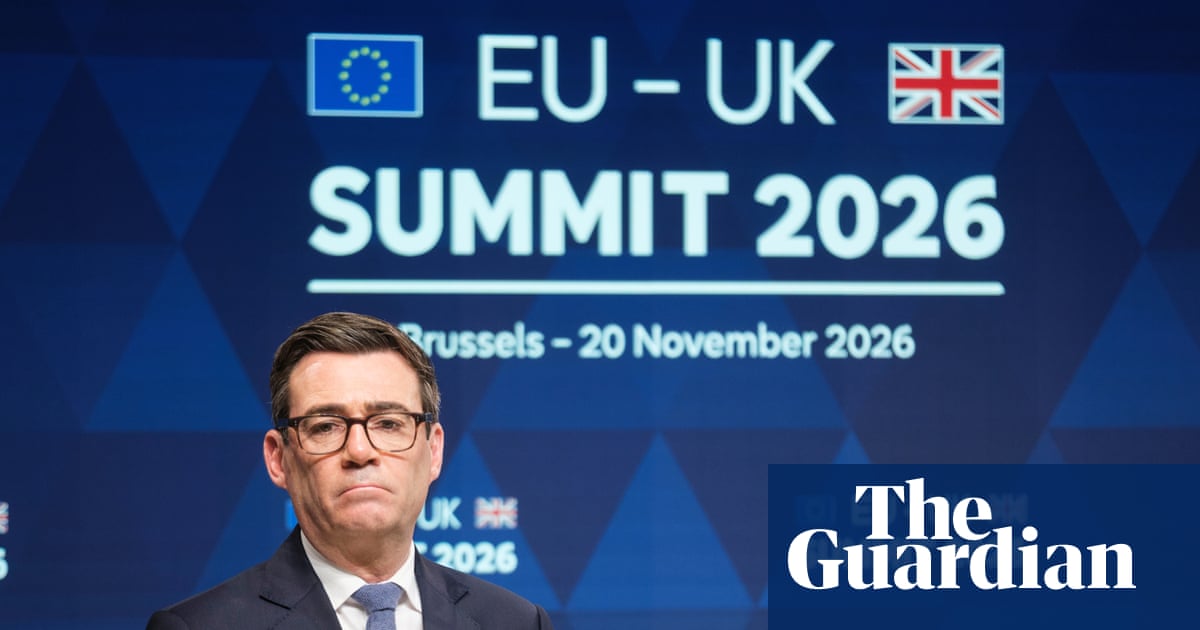
Voters in four out of five UK parliamentary seats now back rejoining the EU including dozens of former leave areas such as the prime minister’s constituency of Makerfield, according to polling.The constituency-level modelling across Great Britain found that 512 seats now favour rejoining, while 73 back staying out, and 47 are too close to call, in a survey that will boost Andy Burnham’s case for opening the debate on returning to the EU.The survey of more than 7,000 people was undertaken this month by Fortius Global, formerly the Messina Group, founded by ex-Barack Obama pollster Jim Messina, and which also worked for the remain campaign in 2016.The analysis found that voters in 274 of the 394 constituencies estimated to have voted leave in 2016 would now like to rejoin the EU, including Kemi Badenoch’s seat of North West Essex which is predicted to be 59.4% in favour.About two-thirds of the current cabinet hold seats believed to have voted to leave the EU. However, the modelling suggests that voters in many of these areas are now in favour of rejoining, including the Wigan seat of Lisa Nandy, the culture secretary, and the Sheffield Heeley seat of Lou Haigh, the first secretary of state.It estimated that the option of rejoining the EU leads by 58.3% in England, 68.9% in Scotland, and 57.9% in Wales.Polling has consistently shown that returning to the EU is growing in popularity this year, with Burnham having floated the idea in his party conference speech. After striking a deal on youth mobility and food exports at a reset summit in Brussels on Friday, the prime minister said that he wants the UK to achieve as close as possible ties with the EU.However, a number of Labour ministers and MPs with previously leave voting seats have privately expressed nerves about reopening the debate.Map showing leave/remain votes then and nowThose who campaigned for Brexit have this week begun to fight back with the launch of a new movement backed by Michael Gove called Stay Out, while Nigel Farage has been warning that people could take to the streets in protest if Brexit is reversed.The Fortius polling appears to show, however, that campaigning to rejoin the EU could boost rather than harm Labour’s electoral chances, and its seats would increase the closer to rejoining it gets.It predicted that projected seats for Labour would average about 370 under current EU ties, 451 under associate membership, 454 under the single market and 475 under full EU membership. Labour’s modelled vote share is highest under full EU membership at 36.6%.It projected that full EU membership could bring 101 new Labour polling leads on a constituency level and no losses. These include 37 constituencies previously led under the current-ties scenario by the Conservatives, 29 by Reform UK, 16 by the Liberal Democrats and 14 by the SNP. The model covered 632 constituencies on the 2024 boundaries.Burnham has repeatedly referenced voters in his own Makerfield constituency, where two-thirds of voters opted to leave the EU, as a reason why he will tread with caution on the issue.Earlier this week, he said: “I understood why back then – and still do now. Westminster and Brussels combined weren’t delivering for them. Industrial decline had stripped away good jobs. Cuts were hitting harder than elsewhere. People felt ignored by the powers-that-be.”But he said it was now “clear that the change promised by the promoters of Brexit has not materialised” and “the truth is Britain ended up with a much harder Brexit than the one promised at the referendum”.Polling suggests voters have grown increasingly favourable towards the idea of rejoining the EU over the course of this year. The data from Fortius is part of a series from the firm, which is funding the research along with some of its clients, none of which are aligned to political parties or campaigns.
Voters in four out of five UK parliamentary seats back rejoining EU
Full Article
Original Source
Read the full article at Theguardian →KhanList aggregates and links to publicly available news content. We do not host full articles from third-party sources. Always verify important information with original sources.