
Ukrainian President Volodymyr Zelensky said on Saturday that Russia used North Korean KN-23 ballistic missiles to attack energy facilities around Kyiv. He said 36 missiles were launched in the attack, and only four were intercepted by Ukrainian air defenses, along with 149 enemy drones. “This is further proof that global sanctions regimes deserve tangible reinforcement — against everyone in the world who provides their ‘services’ in destroying life,” Zelensky wrote in a social media post. Zelensky did not specify how many of the 36 missiles launched by Russia on Saturday were North Korean weapons. He said Ukraine has forensic evidence from the impact sites to support its claims and “experts are continuing their investigations.” As for the heavy damage inflicted by the strike, Zelensky placed some of the blame on a “significant shortage of interceptors” for Ukraine’s U.S.-supplied Patriot missile batteries. “At all levels, we are looking for ways to accelerate supplies and convey the necessary signals to the American side to give Ukraine the opportunity to defend life,” he said. “This is especially important now — not just before winter, but also before our next joint attempt to intensify negotiations with our partners,” he added. “By intensifying its attacks on Ukraine and our infrastructure at this very moment, Russia is trying to additionally lay the groundwork for putting pressure on Ukraine’s position and that of its partners,” he charged. “We hope that the United States, like our other partners, will act on principle,” Zelensky said. The KN-23 missile, known as the Hwasong-11A in North Korea, is a single-stage short-range ballistic missile (SRBM) that uses solid fuel, which means it can be transported more easily and made ready for launch faster than a liquid-fueled rocket. The KN-23 is similar in outline and capabilities to Russia’s 9K720 Iskander SRBM, referred to as the SS-26 Stone by NATO. First fielded in 2006, the Iskander missiles were an upgrade to the inaccurate Scud missiles that gained notoriety in the hands of Saddam Hussein during the Gulf War. Iskander missiles are highly maneuverable, as the North Korean variant appears to be, and can carry a variety of warheads, potentially including nuclear payloads. North Korea’s SRBM is slightly larger and heavier than the Russian missile, and was initially much less accurate, although the performance of the KN-23 seems to have improved considerably. Ukraine’s air defenses were very good at intercepting both types of SRBM early in the war, but intercepts have declined over the past year, possibly because the missiles have been refined and their crews have gained experience at penetrating Ukrainian airspace. The Ukrainian defense ministry made its first claim of KN-23 deployments in Russian hands back in April, warning that the North Korean weapons were “extremely difficult for air defense systems to deal with.” Zelensky held an emergency conference on Saturday after the Russian-North Korean missile strike to asses the damage to Kyiv’s supply lines and energy infrastructure. The Ukrainian president said “new contributions from European countries” would be essential to recovering from the attack. At the meeting, Ukrainian officials reported “severe damage” to energy facilities around Kyiv, including the transmission system that carries electricity to the city from two nuclear power plants. Bridges, water lines, and heating services were also damaged. At least two fatalities were reported, along with several dozen injuries. The Russian Defense Ministry acknowledged launching the attack, but claimed its forces targeted only “military-industrial facilities,” including Ukrainian missile factories. Russia claimed the bridges damaged in the attack were being used by the Ukrainian military to transport military equipment to the front lines.
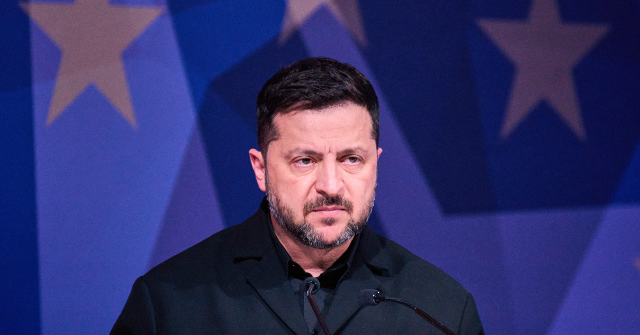
Volodymyr Zelensky Claims Russia Attacking Ukraine with North Korean Missiles
Full Article
Original Source
Read the full article at Breitbart →KhanList aggregates and links to publicly available news content. We do not host full articles from third-party sources. Always verify important information with original sources.