
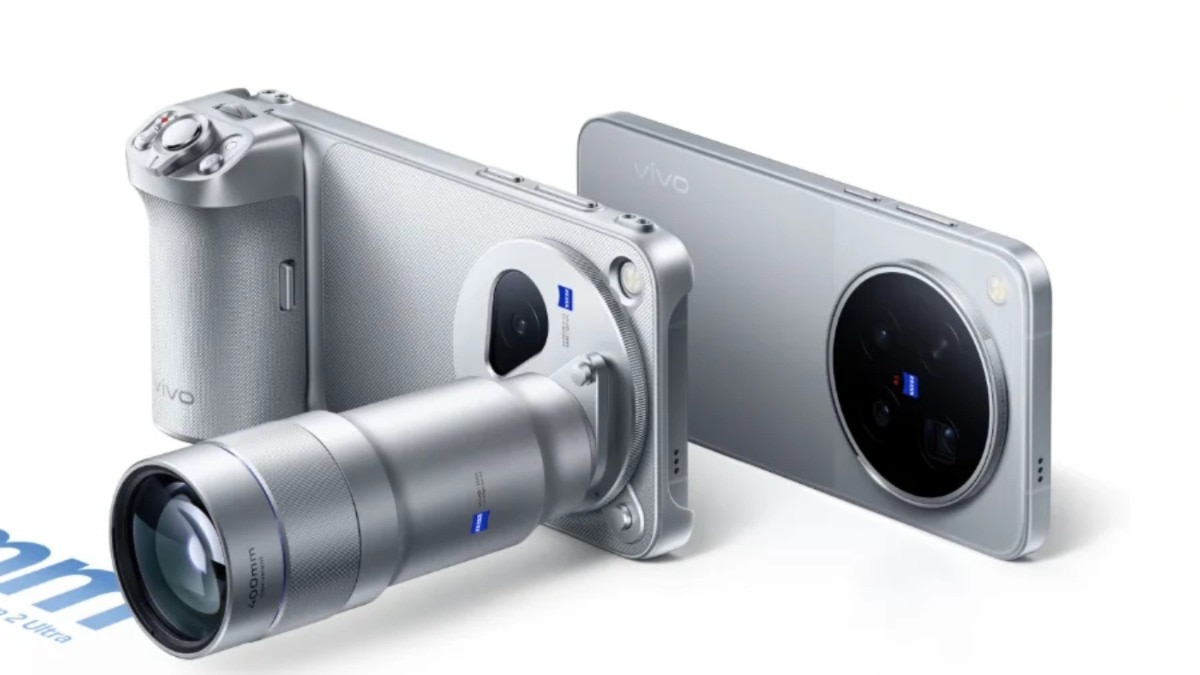
We are well into the flagship smartphone season and Vivo has just launched its latest offering, the X500 series. The phonemaker introduced three models – the Vivo x500, x500 Pro, and the X500 Pro Max. The three phones follow the tried-and-tested formula of the X series bringing capable camera hardware paired with top-of-the-line specs. At the same time, Vivo is also entering the smartwatch space with the Watch GT2.Before we have a deeper look at everything Vivo launched today, you should know that the X500 series follows the X300 devices, as there was no X400 lineup – 4 is considered a bad omen in Chinese culture.Vivo X500 series: Design and displayAll three models follow the familiar X series design language with large circular camera modules and glass backplates. While the vanilla X500 does change things a bit as its circular cutout is placed on a rectangular camera module, the X500 Pro and X500 Pro Max look similar to last year. The X500 Pro Max does get a slightly raised top half as part of its dual-tone finish.The Vivo X500 series comes with aluminium frames on all three devices as well as IP69/IP69 ratings for dust and water resistance. The base X500 comes in two colours, Ember Red and Titanium Black. The Pro and Pro Max get Apex Orange and Eternal Black options. Coming to the display, The X500 Pro Max leads the range with a 6.85-inch LTPO 2K AMOLED display. The display can switch anywhere from 1Hz to 144Hz and has up to 4,500 nits of peak brightness. The X500 Pro switches to a more compact 6.36-inch LTPO 1.5K AMOLED display with the same refresh rate.Meanwhile, the base X500 opts for a 6.59-inch 1.5K AMOLED display with a 144Hz refresh rate and up to 4,000 nits of peak brightness. Though this is an LTPS panel.Vivo X500 series: Cameras Cameras have always been the highlight of the X series and the case is no different this time around. The X500 Pro Max uses a 50-megapixel Sony LYTIA L910 main sensor with a 1/1.28-inch size. The 3.5x telephoto is a 200-megapixel Samsung HP0 periscope camera with a 1/1.4-inch sensor size. A 50-megapixel Samsung JN5 sensor covers ultrawide shots, while another 50-megapixel camera sits on the front.The X500 Pro uses the same main and ultrawide sensors as the Pro Max, but opts for a 64-megapixel Sony LYTIA 610 3.5x periscope sensor for the telephoto. The selfie shooter is also the same as the Pro Max.All three Vivo X500 series phones can also be used with the company’s teleconverter kit, though the 400mm teleconverter unit is exclusive to the Pro Max. Vivo says that the teleconverter kits from the X300 series are also compatible with these models.On the other hand, the vanilla X500 uses a 50-megapixel Sony LYTIA 828 primary camera, a 64-megapixel telephoto camera and a 50-megapixel Samsung JN1 ultrawide camera.All three phones come with Zeiss-branding and T-star coating on the lenses. You get multiple colour filters on all cameras as well as various video modes such as portrait video and auto-framing. The Pro models come with a dedicated Pro mode for videos, allowing you to record Log videos or use custom LUTs.Vivo X500 series: Performance and batteryThe Vivo X500 Pro and the Pro Max use the MediaTek Dimensity 9600 Pro chipset, which is based on a 2nm process. This is paired with 12GB of LPDDR5X RAM and up to 512GB of UFS 4.1 storage. Both phones also get a vapour cooling chamber for thermal management. The base X500 runs on the 3nm-based MediaTek Dimensity 9600M chipsetOn the battery front, the Vivo X500 Pro Max uses a 7,800mAh battery with support for 90W wired and 40W wireless charging. The X500 Pro switches to a a 6,510mAh battery while the X500 opts for a 7,500mAh unit. Both phones have the same charging speed as the Pro Max.All three phones run on Android 17-based OriginOS 7 with Vivo's productivity tools such as Origin Workbench and Officekit. You also get tons of AI features for calls, voice recordings, image erasers, and more. The company is promising 5 years of OS updates and 7 years of security patches.Vivo Watch GT2Alongside the X500 phones, we also have the Vivo Watch GT2. The Watch GT2 has a rectangular 2.07-inch AMOLED display with a resolution of 432 x 514 pixels, a 60Hz refresh rate and up to 2,400 nits of peak brightness. It runs BlueOS 3.0, built on OriginOS.The Vivo Watch GT2 offers Bluetooth 5.4, GPS and GNSS, NFC, and a microphone and speaker for Bluetooth calls. Its health and fitness features include heart-rate, blood-oxygen, stress and sleep tracking, guided workouts and more than 100 sports modes.It has a 695mAh battery and promises up to 25 days of battery life. While the Watch GT2 can work with all Android phones, and even iPhones, certain features such as Origin Island for apps require a compatible Vivo or iQOO phone running OriginOS.Vivo X500 series and Watch GT2 prices in IndiaThe Vivo X500 is priced at Rs 1,19,999 for the sole 12GB RAM and 256GB storage model. The X500 Pro, on the other hand, is priced at Rs 1,49,999 for the 12GB RAM and 256GB storage variant.Meanwhile, the X500 Pro Max is priced at Rs 1,64,999 for the 12GB RAM and 256GB storage model. The higher-end 12GB RAM and 512GB storage model is set at Rs 1,79,999. With the teleconverter kit (Photographer Kit), the 12GB + 512GB model costs Rs 2,29,999.Separately, the 200mm teleconverter extender costs Rs 15,999, the 400mm teleconverter extender costs Rs 27,999, and the Imaging Grip Kit is priced at Rs 11,999. The Vivo Watch GT2 is priced at Rs 14,999.Both the Vivo X500 series and the Watch GT2 are available for pre-booking starting today (November 26) and go on sale starting December 3, 2026. You can also get up to 10 percent instant cashback or exchange bonus on the X500 series, along with a Rs 1,500 bundle discount on the Watch GT2.- Ends
Vivo X500 series launched in India, Pro Max model has top-notch ZEISS camera
Full Article
Original Source
Read the full article at Indiatoday →KhanList aggregates and links to publicly available news content. We do not host full articles from third-party sources. Always verify important information with original sources.