
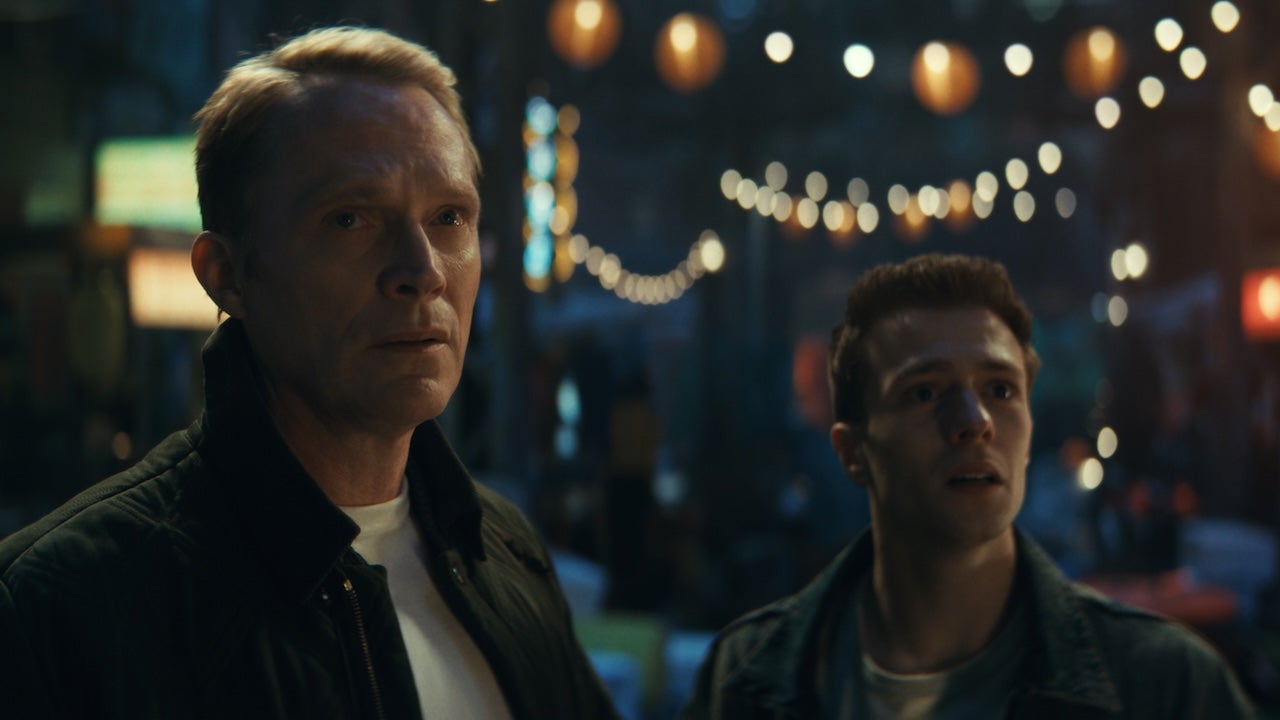
“VisionQuest” may be the conclusion of a trilogy of shows in the Marvel universe, but when showrunner Terry Matalas got to it, there truly were no strings on him. “What was really daunting, I think, is how open Kevin [Feige] and Marvel were to anything,” the television creator told TheWrap. Even “WandaVision” and “Agatha All Along” showrunner Jac Schaeffer, who was originally set to helm this series as well, before scheduling conflicts arose, made it clear to Matalas that he had creative freedom, and didn’t have to stick to any ideas she might’ve had. So Matalas sat down to think on what exactly he wanted to do. It took him only 15 minutes to arrive on the idea of bringing back Ultron, a villain first introduced on-screen more than a decade ago. For some, the decision might seem odd, considering how “Avengers: Age of Ultron” was received. It remains one of Marvel’s most divisive movies among fans. Even Marvel wasn’t sure, telling Matalas point-blank that he’d have to convince James Spader to reprise the character himself. “There was a lot of doubt there,” Matalas admitted. But the showrunner is a true fan of Ultron and Vision’s final scene in the 2015 film, and ran into very little hesitance from either James Spader or Paul Bettany. And thus, “VisionQuest” was off to the races. Now, the series is streaming in full on Disney+, bringing Matalas’ own vision to a close, while also setting up a potential future. So we went back to the beginning with Matalas to dig on how he tied everything up — from how to work in his two predecessors, to the Phil Collins guest appearance he wanted, and more. You can read our full interview below. This conversation has been edited for length and clarity. Editor’s note: This interview was conducted based on an advanced screener of the finale episode that did not contain the shocking post-credits scene James Spader and Paul Bettany in “VisionQuest.” (Credit: Marvel) TheWrap: I want to start at the beginning. You sign on to take “VisionQuest,” what’s kind of the goalpost of “Here’s what we want to achieve”? Is it complete the trilogy? Is it set up the future? Is it both? Matalas: No, I mean, what was really daunting, I think, is how open Kevin and Marvel were to anything. Basically, Kevin called and said, “What do you think of Vision?” I’m like, “Oh, I love where you left off with Vision. I would love to jump into that.” He’s like, “We know we want to do this last show with the completion of that trilogy. We know it’s going to be about him finding Tommy. That’s all we have.” I was like, “OK!” He’s like “OK so, I’ll come in and give you a few days to cook something up.” And pretty much within like, 15 minutes of hanging up the phone, I got to the idea of the mindspace and Ultron and the AIs. And then I started poking around at other things, but I just kept coming back to that, and I was like, all right, well, let’s just go in and see if they laugh me out of the room. And that became the thing. They loved it, and Kevin was like, “What about DUM-E and U?” I’m like, “They would be great!” And you know, Brad [Winderbaum], who runs television there, continued to just foster this idea and lean into its weirdness, which is you know, it’s a gift. I was going to ask you if this is the story that you always envisioned. Because there’s always the chance that maybe James Spader is not going to be available, or maybe he’s not going to want to come back to Ultron. Well, that was a thing, right? I hit hard on Ultron, and they were like, “You’re going to have to convince James” — there was a lot of doubt there. So I had to go fly to New York to sit down with him because I couldn’t write a story, this particular father-son story, without him. And I was lucky again! Within about an hour of talking with him, we were already spitting ideas back and forth with each other about what the show could be. And that was it. We had the show. Did you have backup plans? I can’t even speculate as to what it would be. I’m sure the Mindspace House would have survived in some way, but it wouldn’t have been the same thing. So, I don’t know. I’m lucky that I don’t have to think about it very much. The momentum of the thing happened, and we were very lucky that we all were all on the same page. From the first meeting with Paul, I mean, that could have gone — I had to sit and was like, “Hey, here’s where I think Vision is. I think he’s an outsider. I think he’s trying to find himself.” He’s like, “That’s exactly what it is.” And I’m like, “And I think he’s got Ultron in the attic.” And he was like, “Oh my God, let’s do that.” So again, all these pieces had to be aligned, or else we would not have been able to make this. Was there any part of you that was worried, though? Because “Age of Ultron” … was kind of polarizing in the MCU fandom. And bringing back a villain also who’s a decade past at this point. Was there any concerns or hesitation? Not for me! Not for me, I love James Spader. I thought that last scene — look, if you don’t like that movie, OK, that’s one thing. But that last scene between Vision and Ultron. If you don’t like that, I don’t know that we can hang out. It’s an amazing scene. So you can’t really think about that. I just knew, it’s Paul Bettany and James Spader chewing up the scenery. If you don’t want to watch that in any version of any character, then we just have different tastes. I’ve always liked Ultron. I liked Ultron and I love Vision. So, you have to go with the thing that is in your heart. Now, “VisionQuest” is going to be the last Marvel project before “Avengers: Doomsday.” Did you get any spoilers in that direction? Did you get any kind of inclination of, “Well, here’s what’s happening in ‘Doomsday,‘ Don’t touch this, maybe set up this.” I mean, I do know all the things, just from being part of it. They’re wonderful that way, but it wasn’t to navigate anything. We had creative freedom. I think it’s mostly just the nature of Marvel, is they’re very collaborative in all the things they do, and talk about it, and you’re part of a family once you get in there, and that trust, and then you can have a back and forth that’s really valuable. I’ll hit Kevin with all sorts of stuff all the time. I’ll be like, “So is blah blah blah blah blah blah?” And for the most part, I can get an answer. So this is the part where you relay those answers to me. It’s just you and me here. No, there’s snipers outside my house as we do this. All right. I am interested though, because you are completing a trilogy that started with ‘WandaVision‘ and ‘Agatha All Along,’ how did you arrive at how much to include from both of those series? Because I do want to talk about ‘UltraVision,’ I think that was so fun. I’m glad you liked ‘UltraVision,’ because it was a terrifying big swing that was either like, “Well, we’re either going to jump the shark full speed here, or people are going to like it.” Remains to be seen, it hasn’t aired yet, so we’ll see. But you know, ‘Agatha’ hadn’t aired when we started to develop this. When we started writing this, we had rough cuts, so we knew very specifically what Billy had done with Tommy, so that was key. But that is about it. I think all good endings need to touch on the beginning, in a way. And we had this conceit that Ultron was up there consuming television, and what if the final battle wasn’t Rock ‘Em Sock ‘Em robots — which we also do, so you get your MCU popcorn — but was actually took place in something more intimate and strange? Which is this American sitcom, this ’80s-esque sitcom. I grew up watching ’80s sitcoms. That was my Friday night, Thursday nights, and Friday nights with my family was sitting down and enjoying TV. So, in a way, that’s what my father passed on to me, and I pass on to my kid. And so, it just it felt natural. How did you go about filming it? Because I did ask Emily Hampshire about it, she said that there was no live studio audience for this one, like there was for “WandaVision.” So how do you go about creating that sitcom feel? Well, yes and no. We set up the sound stage to be like that, where we opened up the wall and set up multi-cameras to film it the same way, and for the most part the crew, the entire crew became that live studio audience who were laughing in those places. We were just like everybody can — we need it. So we did have that feeling, but we didn’t have the bleachers or anything. But we always had — I think you can even hear them still — I think a lot of that laughter is the crew. And I love that you brought back the Andersons, Kristen Anderson-Lopez and her husband. They’re so good at crafting an earworm. As soon as I heard the “UltraVision” theme song, I was like, “Did they bring them back?” And I was so pleased to see them in the credits. Yeah, and they’re wonderful and collaborative. You can get into like, “Look, I think we need pace here, we need this,” and they’re far more collaborative than they have any right to be because of, you know, my God, they’re EGOTS! So who am I to tell you what my dumb robot sitcom should sound like? But they’re amazing and wonderful to work with. Just great people. Obviously, with “VisionQuest,” everyone’s going to have their list of hopes, right? They’re going to hope that Elizabeth Olsen comes back as Wanda. There’s maybe the hope that Bruce Banner would come back because you talk about Vision needing repairs, and Banner’s the only one that can fix them. There’s the hope that Agatha would come in. I’m curious if you tried for anyone. Is there anyone that you were like, “We would love to get them in the show,” and then like it just maybe didn’t work out? There was one, but it led to a better idea. But it’s not that juicy. It’s not like “I wanted Tony Stark and I couldn’t get [him],” no. There was a couple of different ideas on the table for Phineas Horton. Because I always knew Paul was going to play Jim, and you know, I really wanted somebody surprising. I really wanted Phil Collins. Phil Collins, Lilly Collins (Getty Images) The Phil Collins? I wanted Phil Collins, who is an amazing actor from back in the day. And then we sort of talked about “Well, there’s Pierce Brosnan,” there’s things, and then I was like, “No, it should be Paul Bettany.” And Paul’s thrilled because now he gets to work with his favorite actor twice now, in that room with everybody. And it’s the better idea, is to do it with Paul. But I’ve always yearned to bring somebody unexpected like that in, in the way like Chris Nolan would have done in “Prestige.” He brought [David] Bowie.You know what I mean? It’s like that kind of thing. But you know, it worked out. I will admit, Elizabeth Olsen wasn’t necessarily on my radar, because this is Vision’s part of the story. But when Billy came in, I was like, “Oh my God, is he with Agatha?” I was ready for Kathryn Hahn to be there because that’s the last scene of of ‘Agatha.‘ She says, “Let’s go find Tommy.” Listen, the Wanda conversation was constant. And if we felt strong enough about it, we would have done it. But the second it — and there were pages written of an element of things. There’s a couple of them — but it always consumed the story in a way that detracted from Vision’s in a way. When you introduce Wanda again, it needs to be her story, instead of her coming in and out of this other thing. So that’ll be up to the Marvel gods as to what happens with that. But you know, stay tuned. “Doomsday,” man! Talk to me about writing for Billy and Tommy, though, because you do get to reunite the boys and you get to reunite them with their father. It’s a really heartwarming scene. How did you figure out what that reunion was going to look like and where to place it? Because you could have put that anywhere in the series, and you saved it for the end. Yeah, it was tough! I got to direct them both, which was a real pleasure. They’re such wonderful actors, and bringing Joe in. You know, the placement of it was like, if you bring Billy in too early, it sort of would hurt the journey Vision was going on with Tommy. And so it needed to come at the right time and when it could be the absolute most emotional reunion. Bringing them together in this sort of dream space was really fun, because we needed limitations. If Billy could just show up, I mean, he’s a kid who lives in Westview. Is he really bouncing all over the world looking for Tommy? Like, can he do that? Didn’t feel like it. And the idea that there’s still limitations to his power. Like, he’s still on a journey too. That was fun. And then getting them in the same room was like, “How do we get them to feel like brothers?” We didn’t know what their dynamic was going to be, because we didn’t chemistry test Ruaridh and Joe, and they were great! And just so down to play in that room. We were improv-ing lines, and it was this tiny room with candles. It was like 1000 degrees in there, but we had the best time. And then hopefully, you do that early enough in the finale, and you kind of forget about it, so that when he does finally figure out portals, you hopefully will have this emotional reaction to it. But we’ll see! Joe Locke as Teen in “Agatha all Along” (Disney+) I’m glad that you mentioned that tiny room, because there’s a detail that Ruaridh told me about that I want to ask you. He mentioned that in that scene, there was the bones of the dog from “WandaVision.” Did that make the final cut? It’s in the deleted scenes. Yeah, I had this idea that I wanted to make Billy like “You know, I am kind of a witch! It’s kind of messed up!” And so there’s a moment where Tommy looks down, and he’s like “Are these bones? These are dog bones!” And [Billy’s] like “Look I had to do it.” Hopefully they’ll release the Blu-ray set with that scene on it. It’s great. They were really, really funny. We’re aiming for a physical release for “Vision Quest?” I hope so. I don’t know if they’re going to, but we definitely finished that deleted scene because I want the world to see it. I want to see it! Because he told me about it, and Paul Bettany was like, “I can assure you it didn’t make the final cut.” It was too funny in a moment where we needed tension to be turning up. It’s one of those things. It’s like, sometimes you got to throw out your babies. But it’s a great bit. I am curious, you’re coming to this off “Star Trek: Picard.” How did that experience help you out here? I think how “Picard” helped me out was, when I made that third season of “Picard,” it was during COVID. I didn’t have any time. We had so many challenges production-wise and timing-wise and with actors. So, the making and the process of being a showrunner during really truly high stress —I mean, there’s pictures of me making “Picard” Season 3, I don’t even recognize me anymore. I wasn’t, still not taking care of myself, and sleeping four hours. So when I did this, I’m like, “Well, I can’t do that again. So I need to learn all the lessons of how hard it is to make this.” Because again, this is a giant show with an incredible budget, but it’s really hard to make and it’s super ambitious. Like you can’t really do the action scenes that we did on the show without a crew being like, “What are we doing? When?! On a Saturday?!” And so it’s it’s really using every part of everybody’s talents, and so I would say that’s the thing that I learned the most of. It’s how to put it together. I’m curious how the pressure compared because it’s not like “Star Trek” doesn’t have a fandom, and Marvel is obviously huge. These are two huge beasts of franchises that you’ve worked on. Is there a similarity there? I mean, look, you always have to just depend on what you think is good. You can’t really, for better or worse, you can’t really worry too much about “Oh, fans are going to think this or that.” You have to just depend on your own instinct of storytelling and those around you. Your great writers, your actors, your producers, and Marvel itself. And then hopefully the fans come along with you. You’re not going to please everybody. I would say that’s the lesson that is going to be, there are always going to be pockets of fandoms that are going to be angry about any any anything. There there will be people who are fans of “Agatha” who would want Billy to be on every one of these episodes. That would be great. It’s a different show. We didn’t make that, but it would also be amazing. There’s just, you have to pick a lane, and those are the consequences. You just can’t bring everybody on board. “VisionQuest” is now streaming on Disney+.
‘VisionQuest’ Finale Explained: How Showrunner Terry Matalas Factored in Wanda, Agatha and … Phil Collins?
Full Article
Original Source
Read the full article at Thewrap →KhanList aggregates and links to publicly available news content. We do not host full articles from third-party sources. Always verify important information with original sources.