
You beat the alarm on a Saturday morning, hoping to catch India fighting back in Christchurch, and find them at 116 for 6 at stumps on Day 2, trailing by 240 runs with four wickets left. Earlier generations of Indian fans knew that feeling well, from the 4-0s and 5-0s in Australia and England, the early-morning alarms set with plenty of hope and rewarded with disappointment. But anyone who came of age during the Kohli-Shastri years was spoilt, and this kind of helplessness feels strangely new. What unsettles is that Wellington and Christchurch read less like a bad fortnight than a habit forming.It is odd to remember, from here, that the team those fans grew up on began with a defeat. Virat Kohli was 26 when he first led India in a Test, standing in for an injured MS Dhoni in Australia, where Indian cricket had suffered some of its most painful overseas defeats. The 4-0 whitewash of 2011-12 was barely three years old and the scars had not faded. In the first Test of the 2014-15 series in Adelaide, Australia set India 364 to win on the final day, with Mitchell Johnson, handlebar moustache and all, still carrying the menace he had unleashed on England in the previous winter's Ashes. Every conventional instinct pointed towards shutting up shop.Dhoni, from the sidelines, urged caution. As former fielding coach R Sridhar recounts in his book Coaching Beyond: My Days with the Indian Cricket Team, Dhoni accepted that Kohli himself could chase the target down, but asked him to think about the rest of the line-up. Could the other batters play with the same positivity? Should a captain commit the whole side to a chase that only he might be equipped to finish? Kohli saw merit in the argument and still wasn't convinced that playing for a draw was the way forward."Only if we try, we can know na? Whether we can do it or not. We have not chased 360 on the last day of a Test match ever before because we haven't yet tried to do that. Let us try and give it a shot. Unless we try, how will we know how good we are?" Kohli had said. India went for it. Kohli made a magnificent 141, his second century of the Test, Murali Vijay made 99, and India fell 48 runs short. The result was almost secondary. Sridhar, who was in that dressing room, would later describe the Test as the beginning of the Indian team we came to know over the next eight years."That was the moment we knew as a team that this is how we are going to play Test cricket," he wrote. From then on, that was how India played Test cricket under Kohli and Ravi Shastri, first as Team Director and later as head coach. They did not always win, but they rarely went down quietly. They toured believing they belonged, and no opposition got an inch without paying for it.That is the standard Wellington and Christchurch are being measured against, and the gap is wider than a run of results or a series of baffling selection calls. The team seems to have lost the clarity that once made it formidable. The Kohli-Shastri years had an identity you could describe in a sentence: you knew what India wanted to do, what cricket they wanted to play and what they were willing to sacrifice to get there.Under Gautam Gambhir, that identity is hard to find. Nobody is arguing that Gambhir has failed Indian cricket across formats, since his white-ball record is excellent, with the Champions Trophy and the T20 World Cup won on his watch. The question is whether the instincts that served him there are seeping into the Test set-up. The longest format needs its own philosophy, and that philosophy needs patience, continuity and a willingness to trust specialists even when it means uncomfortable choices. Have India forgotten to win Tests? THE KOHLI-SHASTRI PLANIndia once had a plan to become a Test force. When Shastri and Kohli took charge, the ambition was never merely to win at home and hope for the best overseas. In 2018, early in his stint and building on the groundwork laid by Anil Kumble, Shastri spoke of building the best touring side in Indian cricket history. It sounded premature, even a little cocky, but the team gradually earned the right to say it. India lost that year's series in South Africa 1-2, yet the final Test at Johannesburg, on a treacherous surface, showed the appetite for a scrap, and later that year they won a Test series in Australia for the first time, with Kohli at the centre of every confrontation even if Cheteshwar Pujara was the batter of the series.Then came England in 2021, where India led 2-1 after four Tests before the fifth was postponed because of the Covid-19 pandemic. It was played the following year, and India lost. But Lord's remains the clearest picture of the team's attitude.At Lord's in 2021, Shami and Bumrah's rearguard partnership set up a famous win, before India unleashed 60 overs of hell on England on the final day. A few months earlier, India had recovered from being bowled out for 36 in Adelaide to win a historic series in Australia, even with Kohli absent for the final three Tests. These were teams that refused to accept defeat as an inevitability. The belief that India could fight back, even when everything seemed lost, was perhaps the most enduring part of the Kohli-Shastri era. BUILDING A BOWLING FORCEThe bowling attack was the plainest expression of that belief.Bharat Arun, who worked closely with Shastri and Kohli as bowling coach, told The Indian Express in 2021 that when he joined the support staff in 2017, the two of them told him they wanted to create a Test force. The brief was simple: take 20 wickets and play five bowlers in any conditions. Kohli was ready to ask his batters to carry more responsibility so that an extra bowler could be unleashed."Let us, the batsmen, take the load a bit. We are all good, surely the six of us are enough to do the job and we can unleash the bowlers," Arun recalled him saying."Virat Kohli is the best thing to have happened to Test cricket," he added.It was never just about having a few good quicks. India built a group that could bowl long spells, hold the pressure and take wickets in different conditions. Shami, Ishant Sharma, Umesh Yadav and Bumrah became central to the project, and Siraj emerged as a dependable overseas option. The spinners had their roles, but India no longer needed a surface turning square to take 20 wickets. In 2018, Shami, Bumrah and Ishant took 136 Test wickets between them, going past the 130 set by Joel Garner, Michael Holding and Malcolm Marshall for the West Indies in 1984. Shami, Bumrah and Ishant were a lethal pace trio. UNBEATABLE AT HOMEAt home, India did not lose a Test series under Kohli, winning 26 of 34 Tests and losing only two. They were brave with selections, aggressive in tactics and, at times, too adventurous with pitches, as the 2017 series against Australia showed.I still remember the Bengaluru Test of that series: India were bowled out for 189 in the first innings, Steve Smith's side took a lead and looked well placed, and India fought back to win by 75 runs. Kohli was a bowler's captain in the truest sense. He backed his quicks, gave them long spells and attacked when the safer option was to wait. The five-bowler theory was never about picking an extra bowler for the sake of it. It was about giving India the best chance of taking 20 wickets.The conviction was not confined to the bowling either. This was a captain who, in his very first Test, challenged the thinking of the man he was deputising for and owned a call that went against a senior figure's instinct. Even when you disagreed with a decision, there was usually a cricketing logic you could follow. India backed Jadeja in all four Tests of that 2021 England series and the balance of the side was clear.Shastri summed up the thinking in 2019, after India completed a 3-0 sweep of South Africa and Sanjay Manjrekar asked what had changed since he took charge."Bhaad mein gaya pitch," he said. To hell with the pitch.India's aim, he went on to explain, was to take the surface out of the equation. Whether they were playing in Johannesburg, Melbourne or Mumbai, the job was the same: take 20 wickets. They would build an attack capable of winning matches rather than keep hunting for conditions that made the job easier. That was the confidence of the era, and India backed it with their selections.The obvious objection is nostalgia, and it deserves a straight answer. Kohli's India lost 1-4 in England in 2018. They lost 0-2 in New Zealand in 2020, in Wellington and in Christchurch, the very grounds that have just humbled them again. They left Ashwin out for much of the 2021 England series, and the aggression sometimes tipped into the kind that plays better in a highlights package than in a dressing room.Gambhir's side, for its part, drew 2-2 in England and has not lacked courage. But those Kohli sides lost in a way you could read. You could point at the attack they had picked and the risk they had taken and say, that is what they were trying to do, it did not come off today. The complaint against the present team is not that it loses. It is that, watching it lose, you cannot quite say what it was trying to do.THE SELECTION CIRCUSThe Gambhir era has a selection problem, but the deeper trouble is philosophy. Gambhir has often defended his approach by saying his job is to make the right decisions, not the popular ones. As a principle it is fair, since a coach cannot pick a side on public sentiment or the noise around a player. But the line can harden into a shield. An unpopular decision is not automatically a brave one, and when the same questions keep returning, the management owes an explanation of what it is building towards.The omissions of Siraj and Ravindra Jadeja in New Zealand are a case in point.Siraj sat out Wellington despite being one of India's most reliable overseas quicks, a call that drew criticism from Sunil Gavaskar, who questioned how a bowler India had leaned on so heavily could suddenly fall outside the preferred attack. He was left out again in Christchurch. There was a cricketing argument for the combination. India wanted four fast bowlers and valued Washington Sundar's batting against New Zealand's left-handed top order, and spin-bowling coach Sairaj Bahutule defended Jadeja's absence by pointing to seam-friendly conditions and the need to rotate the quicks. Those are legitimate considerations.But how does a player of Jadeja's experience, who scored more than 500 runs on the previous England tour, become so expendable? And what is the plan for Siraj? Rotation is a reasonable idea. Rotating out the same proven overseas bowler twice in a row looks less like a policy than a preference nobody has explained.The lure of batting depth raises the same problem. India seem increasingly drawn to batting down to No. 8 or 9, even at the expense of specialist bowling options. Washington is a fine cricketer, but is he India's first-choice Test spinner? Is he picked for his bowling, his batting or the balance he offers? Those are not minor distinctions. The selection of Anshul Kamboj ahead of Siraj sharpens the point. If Kamboj is there because the management believes he gives India a better chance of taking 20 wickets, that is a call to back. If the attraction is the extra batting and the temptation for 10-20 extra runs, India are losing sight of what wins Test matches.The numbers on selection are worth a look. Under Kohli's full-time captaincy, India used 41 players in 73 Tests. In the Gambhir coaching period covered by this comparison, 27 players have featured in 24 Tests. Injuries, retirements and a changing team all matter, and Kohli had a pace quartet at its peak. But that rate of churn, and the absence of a settled group, make it fair to ask whether India know their first-choice combination at all. A team that cannot name its XI will struggle to name its identity.Gambhir's messaging has its own contradiction. After the 0-2 home defeat to South Africa in 2025, he said he hated using the word transition, and then explained that transition was exactly what the team was going through, because several batters had played fewer than 15 to 20 Tests. He had resisted the term after the 2-2 draw in England earlier that year. It points to the instability in personnel and batting positions during his tenure, questioning whether the selection policy squared with the claim that the side needed time to settle.Of course India are in transition. Kohli, Rohit Sharma and Ashwin have all gone from Test cricket, and players of that stature cannot be replaced overnight. But transition cannot become the permanent explanation for every setback. At some point it has to become a plan. Who is India building around? In what roles, and for how long?The results make those questions harder to dodge. India have suffered two unprecedented home series defeats in this period, the 0-3 whitewash by New Zealand in 2024 and the 0-2 loss to South Africa in 2025. The side has shown it can still compete overseas, as the 2-2 draw in England proved, but the home defeats exposed a team that is neither as settled nor as hard to beat as it once was.Gambhir has every right to point to his white-ball achievements.But Test cricket cannot be treated as an extension of limited-overs cricket. A player who offers batting depth in an ODI is not necessarily the right choice in a Test XI, a bold selection is not automatically a good one, and a team that keeps rearranging its combination loses the continuity that lets players understand their roles. After the South Africa defeat, Gambhir himself said that if India really cared about Test cricket they had to start prioritising it, and that success in white-ball formats should not make players forget what they had done in red-ball cricket. It was a strong message. The uncomfortable question is whether the team's own selections reflect it.THE MISSING BELIEFThe difference is best captured by R Ashwin's comments after Wellington. He spoke of the lack of urgency in India's approach while New Zealand were trying to save the match. He spoke about the lack of fielders crowing the opposition batter, trying to save a Test."You need urgency on the field. There is one thing you can learn from Virat Kohli's captaincy. I will never say that another captain or another bowler would have won you the Test match from that situation. But, urgency helps," he said."I noted Daryl Mitchell wasting time by trying to fix the sight screen. He was talking to our captain, our players. He was laughing and sharing jokes with our fielders. These things never happened in our team. Yes, when we had the upper hand, we would find time to enjoy. But, when we are chasing a result, we were always ready for a fight. You can't let the batter go into his comfort zone. The fielders were not coming close."Think of Lord's in 2021, 10 wickets in less than two sessions, done. In Christchurch, India struggled to take the final wickets and New Zealand stretched their first innings to 356. The pitches and circumstances differ, and the two Tests cannot be compared as if played in identical conditions, but the contrast in the ability to force a result was striking.IS THERE LIGHT AT THE END OF THE TUNNEL?Which brings me back to the principle Shastri and Kohli built around. Take 20 wickets. It sounds basic, but it shaped everything from selection to field placements to the workload given to bowlers, and it is why the current obsession with batting depth is so puzzling. Test matches are not won by the longest tail that can bat. They are won by scoring enough runs and then taking 20 wickets, and India once understood that balance. They backed fast bowlers, trusted their spinners and gave players defined roles.So can India ever replicate that era? It would be unfair to expect Shubman Gill to be Kohli overnight. He is still learning the demands of captaincy, and his first major assignment in England showed the temperament and batting ability to lead through a difficult series. But captaincy is more than scoring runs or winning a toss. It is about imposing a vision on a team. Kohli's first act as captain in Adelaide was to challenge the instinct to play safe, at 26, standing in for Dhoni. Gill need not imitate that aggression or turn every Test into a confrontation, but he has to make the team his own, be clear about what he wants from his players and own the decisions that follow.Then there is the captain-coach relationship. Kohli and Shastri agreed on the Test team they wanted to build. A coach who believes in tough decisions and a captain still finding his feet is not enough. Gill and Gambhir need a shared view of what winning Tests in India and overseas takes.Test cricket in India has survived transitions before and will survive this one. But the longer the uncertainty lasts, the harder it becomes to rebuild the culture Kohli and Shastri left behind. The next generation of fans should not have to grow used to an alarm that ends in the familiar disappointment of watching India surrender overseas.In Adelaide, a 26-year-old captain chose to chase a target India had never chased before. They fell short, but they found out something about themselves. That is what a strong Test team needs: not the guarantee of victory but the conviction that victory is worth pursuing. Right now, that conviction feels like a distant memory.- Ends
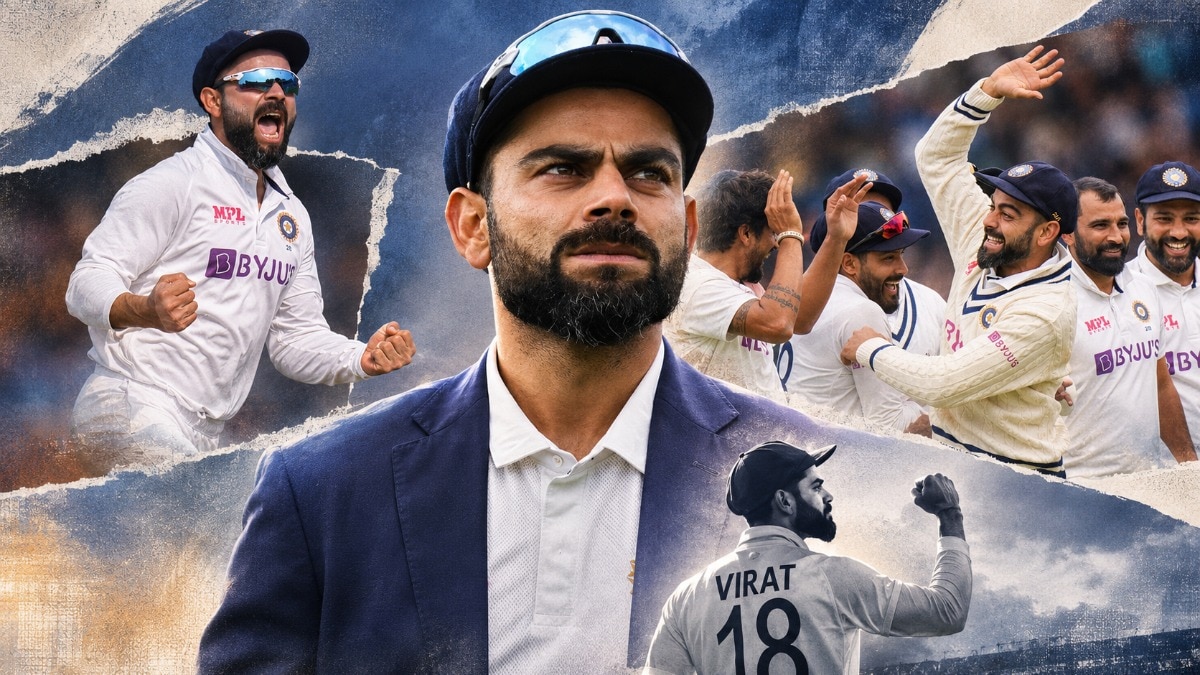
Virat Kohli's era in Tests feels like a lifetime ago. Are those days gone for good?
Full Article
Original Source
Read the full article at Indiatoday →KhanList aggregates and links to publicly available news content. We do not host full articles from third-party sources. Always verify important information with original sources.