
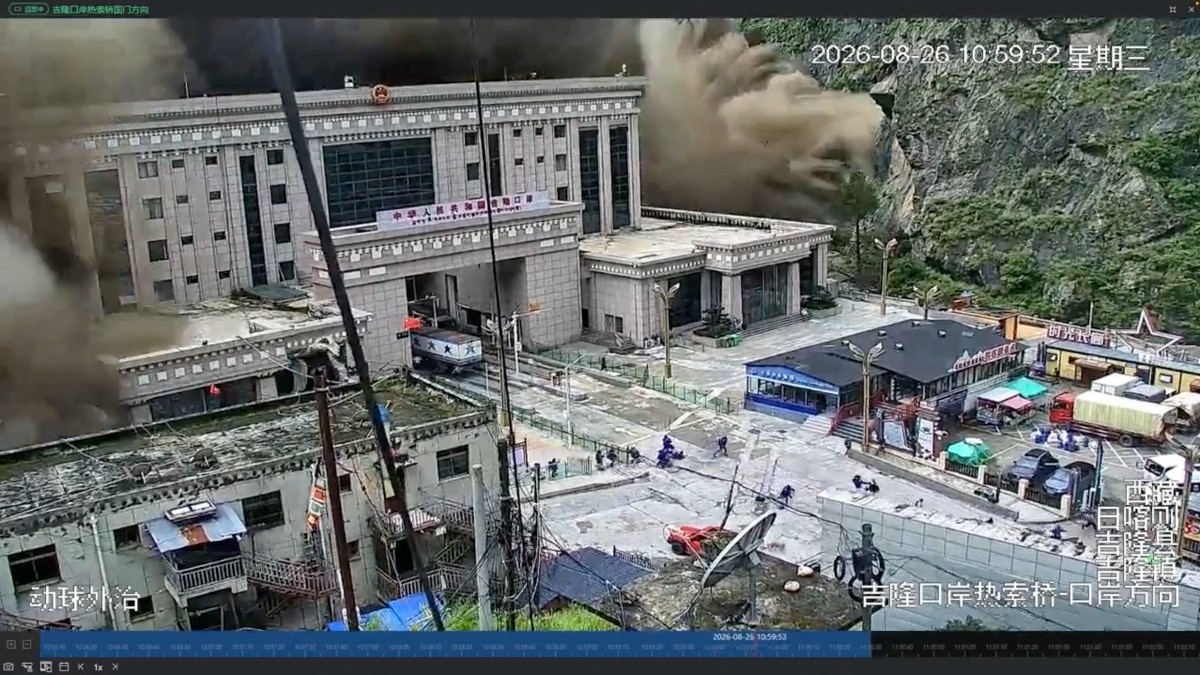
Torrential floods hit the Himalayan border areas of Nepal and Tibet on Wednesday, killing at least 16 people and damaging roads, bridges and power projects.A CCTV footage shows people running away as wall of mud and water destroys buildings in a valley at Nepal-China border, in Gyirong, Tibet region on August 26, 2026. (Photo: Reuters)At least 16 people have died, and 105 Indians remain missing after massive flash floods swept through Nepal’s northern Rasuwa district along the Tibet border on Wednesday, leaving behind a trail of destruction across villages, roads, bridges and key infrastructure. At least 400 people were missing after the disaster hit the Himalayan country, authorities said.The scale of devastation is starkly visible in videos from the affected areas. Visuals showed floodwaters and debris surging through settlements, with houses appearing partially submerged or damaged as muddy waters tear through the area.Elsewhere, videos captured the extent of the destruction across mountainous valleys, with a wide stretch of land covered by floodwater and debris. Footage released by Nepal Police also showed what appeared to be a huge debris field cutting through the landscape, highlighting how far the floodwaters spread downstream.The floods were reported in and around Timure and Syapru Besi in Rasuwa, where the Bhote Koshi river surged after waters entered from the Tibetan side at around 9 am. Entire settlements were reportedly swept away, while vehicles, houses and construction sites were damaged or carried away by the powerful current.Timure Bazaar, a key market close to the China border, and the nearby customs area were extensively damaged. The newly rebuilt Friendship Bridge at Rasuwagadhi, which had been reconstructed after last year’s deadly flooding, was also washed away. Three Nepal Police facilities in the area were damaged, while nine Armed Police Force personnel deployed in Timure were reported missing.The disaster has also dealt a major blow to Nepal’s infrastructure. Roads and bridges were destroyed and hydropower facilities were damaged, affecting around 430 MW of electricity supply, according to the Energy Ministry. The figure represents more than 12% of Nepal’s total installed hydropower capacity.Rescue efforts have been hampered by the severity of the flooding. Army helicopters were sent towards the affected areas, but high water levels prevented them from landing in Syapru Besi and Timure. Nepal Army, Nepal Police and the Armed Police Force have been deployed for search and rescue operations.As the floodwaters moved downstream, authorities issued alerts across the Trishuli river basin. The Bhote Koshi joins the Trishuli river system, which eventually flows into India as the Gandak. Water levels were reported to be rising at Narayani Devghat, prompting warnings for communities along the river. Bihar authorities also stepped up vigilance, particularly in districts along the Gandak and Kosi river systems.Across the border in Tibet, a mudslide hit Gyirong county and the Gyirong port, disrupting roads, communications and power links. Chinese authorities reported casualties and missing people and ordered intensified search operations.CCTV footage from Gyirong captured the terrifying moment a powerful wall of mud and water swept through a valley near the Nepal-China border. People could be seen running to safety as the surging debris crashed into and destroyed buildings.The footage, reportedly shared by local residents on social media, highlighted the disaster’s sheer intensity.With rescue teams still struggling to access the worst-hit areas and floodwaters continuing downstream, authorities remain on high alert as the death toll and extent of damage could rise further.- EndsPublished On: Aug 26, 2026 16:36 IST
Viral: Wall of mud and water crashes into buildings in Nepal amid flash flood fury
Full Article
Original Source
Read the full article at Indiatoday →KhanList aggregates and links to publicly available news content. We do not host full articles from third-party sources. Always verify important information with original sources.