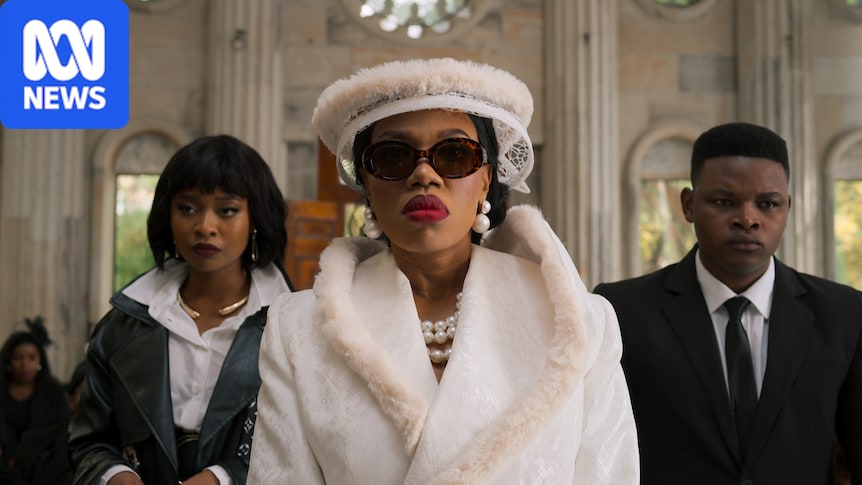
Social media users the world over have been losing their collective minds over the Netflix series The Polygamist.Viewers have binged all 22 episodes in a flurry of excitement — and wonder — sparking strong reactions online."Started watching The Polygamist and now I need answers, therapy, and a group chat," posted one user on Threads."I had to watch a romcom, a horror, and cartoons to reset," another commented.Talk show host and actress Sherri Shepherd summed up the thoughts of many in an Instagram reel."I thought Crazy Rich Asians was something, but crazy rich Africans is a whole 'nother level," she said.In the show, Jonasi Gomora is a self-made CEO and banker who is married to social media darling Joyce, but he has a secret second wife, a mistress, and a girlfriend.His carefully curated empire begins to unravel when Joyce has a scandalous emotional meltdown after discovering his betrayal.Based on the novel of the same name by Zimbabwean author Sue Nyathi, the Zulu-language soap has remained in the Top 10 Non-English shows on Netflix since its release on June 12.The Polygamist has opened up serious discussions in the community. (Supplied: Netflix)Charmaine Hunzwi, a Zimbabwean-Australian, knew The Polygamist would cause a stir but even she could not have anticipated just how viral it would become."I knew it would be viral within the African context," Ms Hunzwi said."But to have this level of virality globally, no-one anticipated that, not even the production themselves."Ms Hunzwi is a Melbourne-based community leader and the creative director of Safe Space Media, a cultural creative agency that helps brands diversify their audience.She has watched all 22 episodes three times and has gone back for a fourth round."I remember when we were watching it [the first time], and then we were at episode three, and so much had happened," she said."And I'm like, 'What do you mean, you're telling me I've got 19 more episodes of this? This is epic!'"It is just absolute cinema, as the young kids say nowadays."African storytellingMs Hunzwi said it was great to see veteran storytellers from the African continent get the recognition they deserved.Charmaine Hunzwi is watching The Polygamist for a fourth time and says it's epic. (Supplied: Nynno Belair)"I grew up in Zimbabwe, where I would see predominantly Black productions," she said."And a lot of the cast that are on The Polygamist are veteran actors who do exceptionally well."They just never had any international recognition. So, to see them getting … their well-overdue flowers [is] absolutely amazing."Whenever people talk about African storytelling, it's often other diaspora communities, predominantly Hollywood, who then tell African stories."But then they cast American actors, or British actors, but they never actually take into consideration that, hey, there actually is very much capable talent on the continent."She said because Netflix had global distribution, it's helped the world engage in productions from other countries."We've loved K-drama," Ms Hunzwi said."K-drama is very popular here, but it's also getting people to know that, well, African storytelling is also equally as good, even more salacious, and [can be] more dramatic."So, in the same way that people consume K-drama here, people should also take into consideration the African productions that are out there that they would also enjoy."What The Polygamist has proven is that a story can be African, with African cast, African production, African narrative, everything African, and you will still have global appeal."And this is something that the Australian industry is yet to grasp onto."So, the popularity of The Polygamist also opens doors for creatives here in Australia for them to use The Polygamist as a case study on [how] an Afrocentric or Black-centric narrative can still have commercial appeal, both locally and internationally."The beauty and glam of AfricaIn The Polygamist, Jonasi and his family live in opulence.Ms Hunzwi said it's a diversion from the "poverty porn" people were used to."What you saw in The Polygamist is a combination of lower class, middle class, and upper class," she said."And Jonasi showcased what the elites look like."I was shocked when I came to Australia to realise that there were poor white people because that's not the environment that I grew up in."I was not aware. It was so jarring."So, I understand how it could, based on the environment that you grew up in and what you've been exposed to, for you to see the complete opposite of what's popularised can be shocking and jarring, but then it's also realising that, no, we live in the same world."Classism exists because capitalism exists."You are going to have different classes in each society."Xavier Mulenga is an addiction psychiatrist working in Sydney, and said The Polygamist showcased Black people in positions of power."Ultimately, you are following an affluent family," Dr Mulenga said."So, of course they'll be moving in these well-to-do spaces."There was a lot of intentionality, a lot of choices on the fashion."They all mesh well together to ultimately give us quite a good show with a really engaging script."Dr Xavier Mulenga says some men found The Polygamist triggering. (Supplied)Originally from Zambia, Dr Mulenga said his friends on the African continent watched a lot of similar telenovelas back at home, and while The Polygamist drew them in, it transcended those spaces."I felt like my friends in America, Canada, UK and Australia, especially in [the] African diaspora mostly, really, really caught onto it," he said."And I think there's something to be said about us not being exposed to those stories on mainstream media."The issues the show brought upDr Mulenga said in the discussions he was having with people about the show, many issues had been raised, particularly around infidelity and addiction."A lot of men are also justifying that it's not all men," Dr Mulenga said."Everyone knows a Jonasi, but no-one wants to admit if they're a Jonasi, or if our fathers are Jonasi."He said some were even triggered by the show."I had a friend who actually watched only two episodes, and he was so triggered because his father was similar to Jonasi," Dr Mulenga said."It was just like it was too close to home."And I thought that, for me, from the Black psychiatrist's perspective, [it] was interesting in terms of the emotions it brought up in lots of men."I do like the idea that it brought up these discussions."And then even … I've got a group of Black men I follow who mostly have kids and talking about how they have to just do better than their fathers or Jonasi, because they already came from that."So how do you break the cycle?"Dr Mulenga said while The Polygamist was quite a negative story, there were positives that could come out of it if people were willing to self-reflect.He said there were healthy discussions to be had around mental health, addiction, and complex trauma."Everyone needs to see a therapist," he said.
Viral hit The Polygamist raises issues — and eyebrows
Full Article
Original Source
Read the full article at Abc →KhanList aggregates and links to publicly available news content. We do not host full articles from third-party sources. Always verify important information with original sources.