
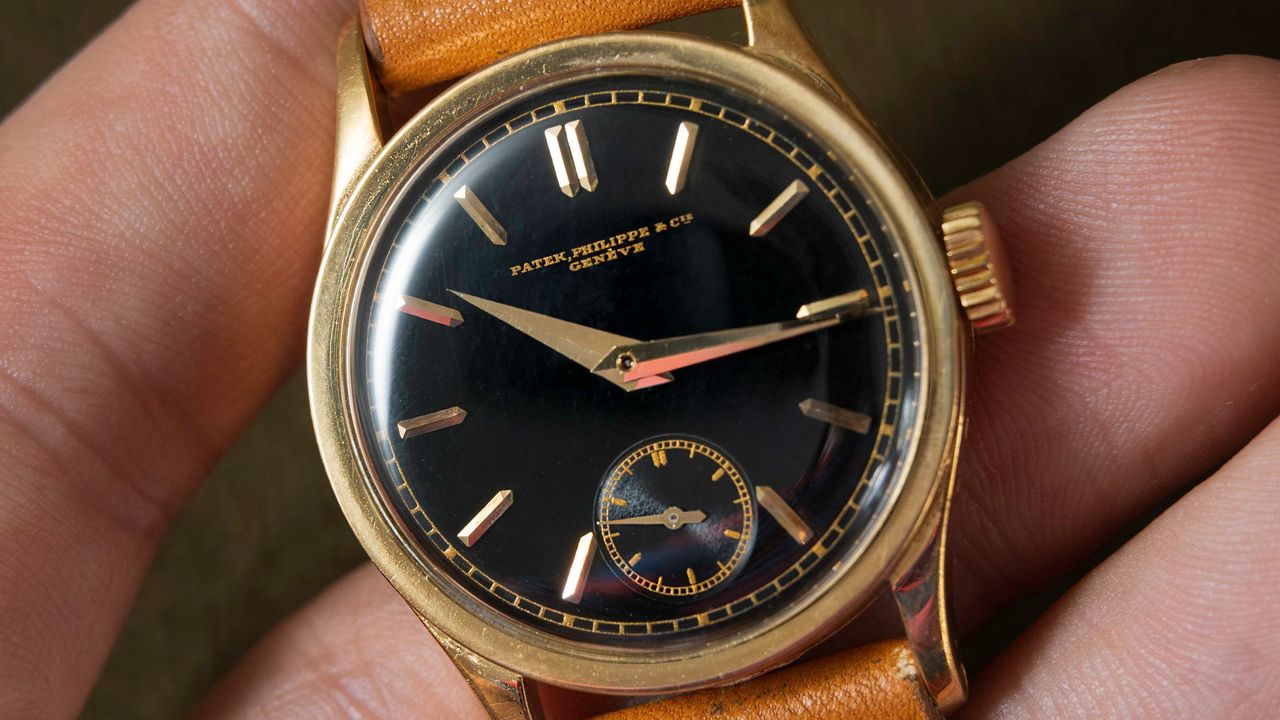
This is an edition of the newsletter Box + Papers, Cam Wolf’s weekly deep dive into the world of watches. Sign up here.And another thing, a watch collector might say as they try to sell you on the virtues of the hobby, is that you can bring them anywhere. Unlike other high-value collectibles—cars or paintings, say—you can wear even the rarest of grail-worthy timepieces to, say, a dimly lit bar. Which is precisely where James Fisk—the photographer behind the images in the just-released Vintage Watches: The Modern Guide, written by the renowned dealers Eric Wind and Charlie Dunne—encountered one of the most historic tickers in the book.Last September, Fisk was at the Waldorf Astoria in New York when he spotted a collector wearing the coveted 1940s Longines model known as the “Tre Tacche.” Watches are challenging subjects even in a photo studio, but Fisk was forced to stumble around the hotel bar looking for any slice of decent lighting to capture the Longines before it slipped through his fingers forever. Used to working on the fly, the photographer keeps 40 or so fabric swatches with him at all times, just in case he needs to lay a watch on top of one as a backdrop for an impromptu shoot.“You meet someone who just happens to be wearing something really special on the wrist that day, and you have to just be ready for it,” Fisk tells me. It’s how many of the legendary vintage watches—mildly important subjects for a book on the topic—ended up in Wind and Dunne’s new tome.The book is a comprehensive deep dive into the booming world of vintage watch collecting. Wind and Dunne take readers on a Jungle Cruise-style tour of this sometimes daunting hobby: On your left are the questions that all newcomers should know to ask before buying a vintage watch; on your right, you’ll find testimonies from famous collectors like David Chang, Ronny Chieng, and Daniel Dae Kim; straight ahead are dispatches on the most important brands, from Rolex to Piaget.Vintage Watches: The Modern Guide is designed to be as welcoming and accessible as possible. While many watch volumes sell for hundreds of dollars, Dunne and Wind made it a point to price theirs at $60 (or $50 on Amazon right now). “A lot of people will be able to afford this book,” Dunne says. “And then, hopefully, they’ll aspire to get some of the watches in it and it’ll ignite their interest in the hobby.”Below are Wind and Dunne’s favorite selections from the book, including one that the latter was most insistent on including to represent the more affordable side of the spectrum.The Fortis Shipman 200There may be two six-figure watches on the cover, but flip just a few pages into the book and you’ll find this delightful little example from Fortis. “I forced Eric to put that in,” Dunne jokes. “He said, ‘We're not putting that in—it's too cheap!” The watch sells for just a touch over $1,000, and this exact piece was in Wind’s collection for several years. He calls it a personal favorite from his years of collecting.The Shipman might not be historically important or carry great provenance, but it serves an important dimension in the book as a representative for the many types of pieces that comprise a true collection. “Not only [does it show] the range of what is out there as far as exceptional watches at all price points, but also it's one of the most fun and quirky watches in the book,” Dunne says. “You want to have very, very serious watches in your collection, but you also want to have things that put a smile on your face at any price point.”Audemars Piguet ref. 5516How do you choose the cover stars for a book about vintage watches? You start with the obvious: The Rolex “Paul Newman” Daytona (bottom) is the poster boy for vintage collecting. The famed Phillips auctioneer Aurel Bacs, who sold the actor’s personal version for a record $17.8 million, calls Newman wearing this special variant “the Adam and Eve moment in Rolex collecting.”But the Daytona’s partner on the cover, the Audemars Piguet ref. 5516, is an unexpected choice that packs just as much historical heft. “This is one of the most important watches ever made, because of the leap year indicator” Wind says. “AP beat Patek by over 20 years to have a leap year indicator on the bottom. This and the Royal Oak are probably two of the greatest impacts on the Swiss watch industry.” Only nine were made, and Wind sold this example for $545,000 while he was at Christie’s in 2015. I love the specificity of the watch’s leap-year function, which only comes into play once every four years.Heuer Seafarer ref. 346Wind and Dunne are longtime evangelists for the Seafarers that Heuer made for Abercrombie & Fitch in the late ’40s and early ’50s. This particular reference is modified to include a tide indicator at the 9 o’clock subdial, done up in extremely pretty tones of sandy tan and deep sea blue. The example featured in the book remains pristine—with a perfect eggshell-white dial—thanks to the original owner stuffing it in a drawer unworn for decades. The watch got to Wind by way of a friend, whom he sent to fetch it from a diner in the original owner’s home state of Arizona.Longines Tre TaccheThe watch that Fisk scrambled to shoot in a hotel bar was well worth the hustle. “Longines, in some sense, was Rolex before Rolex,” Wind says. The brand was “the tool watch manufacturer in the 1930s and 1940s, particularly with their Tre Tacche cases. Many of the great aviators and pioneers of the time wore Longines watches.” The model gets its nickname from the three notches on the caseback that helped watchmakers screw the case together tighter to prevent water and dust from getting inside.Patek Philippe ref. 96This is a classic watch—a defining example of a dress model—done up with a particularly sleek dial. Patek Philippe made endless examples of the 96, allowing collectors to select their favorite flavor from the lot. Wind and Dunne sold this example but both wish they could have it back. “ I don't think it's coming to the light ever,” Dunne laments.To capture the glossy black dial in the book, Fisk shot the watch at two different angles to mimic the experience of tilting it back and forth in your hands.Rolex GMT-Master ref. 1675The very last watch added to the book was this version of the GMT-Master, one of the Crown’s most important models. The ref. 1675 isn’t the first GMT-Master that Rolex made, but it’s considered the platonic ideal visually and the most collectible among vintage watch lovers. Its predecessors featured troublesome bezels that were prone to cracking, as well as poisonous amounts of radium.The 1675 was produced for just over 20 years, from 1959 to 1980. This one belongs to Fisk and was on his wrist when we met last week. “We got this right as the pages were printed,” Dunne says, “and we started yelling in emails [to the publisher] saying, ‘We have to stop everything. Put this page in there.’”
Vintage Watch Experts Break Down Their 6 Favorite Timepieces
Full Article
Original Source
Read the full article at Gq →KhanList aggregates and links to publicly available news content. We do not host full articles from third-party sources. Always verify important information with original sources.