
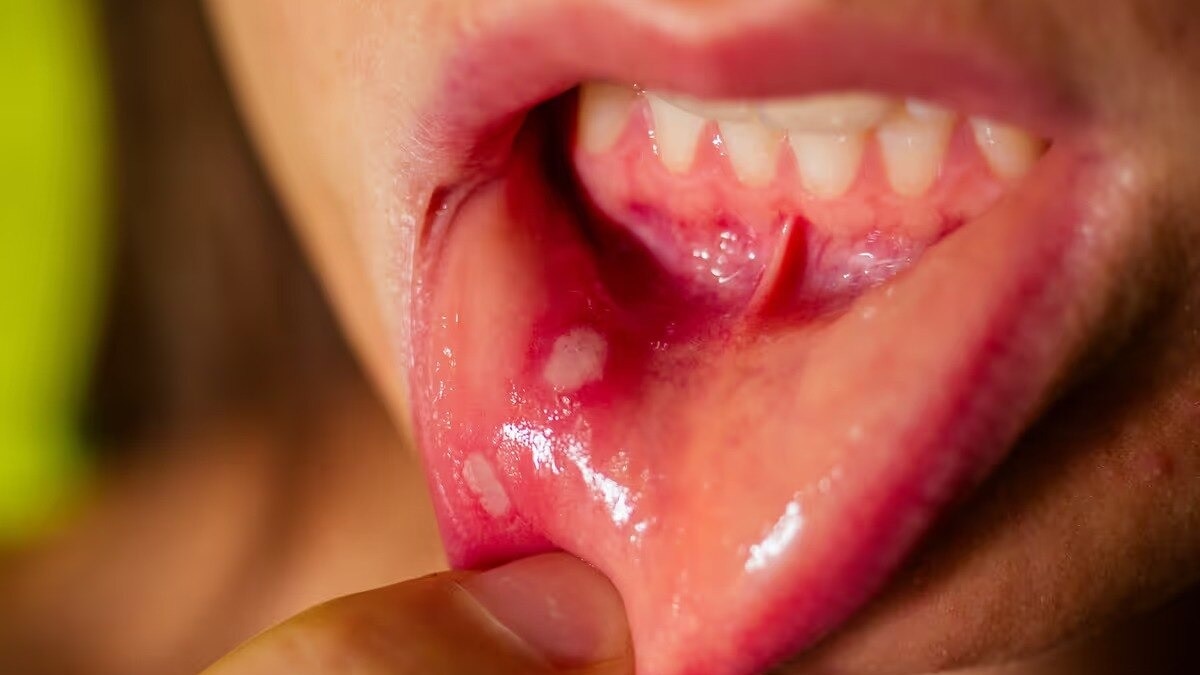
Show cause notices over a Vimal Elaichi advertisement have renewed scrutiny of surrogate branding linked to tobacco and pan masala. The row has also turned attention to India's heavy oral cancer burden from smokeless tobacco and areca nut.The Maharashtra Food and Drug Administration's recent show-cause notices to Bollywood actors Shah Rukh Khan, Ajay Devgn and Tiger Shroff over a Vimal Elaichi advertisement have once again brought surrogate tobacco advertising into focus. While the advertisement promotes elaichi, the controversy has raised questions about the visibility of brands associated with tobacco and pan masala products.The health concern, however, goes much beyond advertising. India has one of the world's largest oral cancer burdens, with tobacco, smokeless tobacco and areca nut among the major preventable risk factors. A 2026 analysis of GLOBOCAN 2022 data reported that India accounted for 81 per cent of incident oral cancer cases in the WHO South East Asia Region in 2022, despite representing about 68 per cent of the region's population. India's oral cancer incidence rate was also 33 per cent higher than the regional average.The latest GLOBOCAN estimates recorded about 143,759 new cases of lip and oral cavity cancer in India in 2022. The burden is particularly concerning because many of the exposures driving these cancers are preventable.And in India, tobacco exposure does not only mean smoking. Gutka, khaini, zarda, tobacco-containing betel quid and other smokeless tobacco products are widely used. Areca nut, commonly consumed as supari and in several pan masala preparations, adds another important carcinogenic exposure.INDIA'S ORAL CANCER BURDEN REMAINS HIGH The scale of India's problem becomes clearer when tobacco and areca nut are considered together.An IARC-linked analysis published in The Lancet Oncology estimated that 120,200 oral cancer cases globally in 2022 were attributable to smokeless tobacco and areca nut use. The burden was particularly high in South Central Asia, including India. A recent analysis of Indian data estimated that 83,400 of those 120,200 oral cancer cases worldwide attributable to smokeless tobacco and areca nut in 2022 occurred in India. The study estimated that areca nut was responsible for a substantial proportion of India's oral cancer burden, highlighting why oral cancer prevention in India cannot focus only on cigarettes and smoking.This is particularly important because areca nut is carcinogenic even when it is consumed without tobacco. The IARC classifies areca nut as a Group 1 carcinogen, meaning there is sufficient evidence that it causes cancer.A 2025 meta analysis of 33 studies involving 62,680 smokeless tobacco users further showed the difference between tobacco-only products and those containing areca nut. The prevalence of oral potentially malignant disorders was 16.3 per cent among people using smokeless tobacco with areca nut, compared with 10.4 per cent among tobacco-only users. Among tobacco and areca nut users, oral submucous fibrosis was particularly common.WHAT HAPPENS INSIDE THE MOUTH AFTER YEARS OF TOBACCO USETobacco and areca nuts do not turn normal cells into cancer cells overnight. The process is gradual and involves repeated injury to the lining of the mouth.When tobacco or areca nut products remain in contact with the oral lining repeatedly, their chemicals can cause oxidative stress, inflammation and DNA damage. The areca nut itself contains alkaloids that contribute to this damage.Dr Sandeep Nayak, Chairman of Oncology, MACS Renova Oncology Institute, KIMS Hospital, Bangalore, explains:"When tobacco or areca nut products rest against the lining of the mouth, day after day, they deliver a cocktail of toxic chemicals that quietly damage the DNA inside the cells that line the oral cavity, the same cells that normally renew and repair the mouth's surface. In the betel quid and areca nut forms of tobacco use common in India, the nut's own alkaloids add to the assault by generating harmful reactive oxygen species, triggering long-lasting inflammation and low oxygen levels, and directly injuring the genetic material of oral cells. Over years, these repeated hits cause mistakes (mutations) to build up in protective genes such as TP53 and CDKN2A that normally keep cell growth in check."These genetic changes matter because genes such as TP53 and CDKN2A help regulate cell growth and prevent abnormal cells from multiplying unchecked.As damage accumulates, some cells begin to behave abnormally. The mouth's entire lining is repeatedly exposed when tobacco or chewing products are used, which can create what doctors describe as a field effect or field cancerization.Dr Nayak adds:"Because the entire lining of the mouth is bathed in the same chemicals, the damage spreads across a wide 'field' of tissue, which is why oral cancer can appear not just in one patch, but anywhere in that exposed region."This is one reason why developing oral cancer does not necessarily mean that the risk is limited to that particular spot.THE FIRST WARNING MAY BE A PRECANCEROUS LESIONThe cellular damage caused by tobacco and areca nut may first appear as changes that are not yet cancer but can potentially become cancerous.Two important conditions are oral leukoplakia and oral submucous fibrosis.Leukoplakia generally appears as a persistent white patch inside the mouth that cannot simply be wiped or scraped away. Oral submucous fibrosis, meanwhile, is strongly associated with areca nut use. It causes progressive scarring and stiffness of the tissues inside the mouth.People with oral submucous fibrosis may initially experience burning while eating spicy food. As the condition progresses, the mouth can become increasingly stiff, and the person may find it difficult to open their mouth fully.The 2025 meta analysis of smokeless tobacco users found oral submucous fibrosis and dysplasia were particularly associated with tobacco and areca nut products.Importantly, not every precancerous lesion becomes cancer. But some can undergo increasingly abnormal cellular changes known as dysplasia.HOW A PRECANCEROUS LESION CAN BECOME CANCERThe progression can happen over several stages.Repeated exposure first causes inflammation and injury to the cells lining the mouth. DNA damage accumulates and some cells begin to grow abnormally.These abnormal cells may develop epithelial dysplasia, where the cells show increasingly disordered growth and appearance.If genetic damage continues to accumulate, some abnormal cells can acquire the ability to invade the surrounding tissues. At that point, the disease can progress to oral squamous cell carcinoma, the most common type of oral cancer.Dr Nayak explains that the process is particularly concerning in oral submucous fibrosis because continuing exposure to areca nut can maintain the inflammatory and fibrotic environment.The important message is that a visible lesion is not necessarily the beginning of the problem. Cellular changes may already have been developing before a person notices a white patch, stiffness or ulcer.ARECA NUT IS NOT HARMLESS WITHOUT TOBACCOOne of the biggest misconceptions around chewing products is that removing tobacco makes them safe.That is not the case with areca nut.Areca nut is itself carcinogenic. It is widely consumed in India both with and without tobacco, and its use is strongly associated with oral submucous fibrosis and oral cancer.A 2021 nationally representative study published in BMJ Open estimated that 23.9 per cent of Indian adults consumed areca nuts. The majority of users consume it with tobacco. This means well over 200 million adults in India are exposed to areca nut.This makes areca nut an important public health issue in its own right. It also explains why products marketed as supari, pan masala or other chewing preparations should not automatically be considered harmless simply because a particular version does not contain tobacco.WHAT HAPPENS IF YOU QUITOne of the most important questions for tobacco users is whether stopping actually reduces the damage. New 2026 research from India provides useful evidence.A multi-centre case-control study published in 2026 in the International Journal of Cancer examined the relationship between tobacco cessation and buccal mucosa cancer. The researchers found that longer duration of smoking and chewing cessation was associated with lower cancer risk, although risk remained higher than among people who had never used tobacco.The study also found that chewing tobacco with areca nut was associated with almost twice the risk of buccal mucosa cancer compared with chewing tobacco without areca nut, with an odds' ratio of 1.86. Importantly, the researchers found that quitting was associated with a reduction in risk.The study further showed that risk declines steadily with time since quitting, with about a one-third lower risk after 10 years of smoking cessation and around 40 per cent lower risk after 20 years of chewing cessation.That gives a clear message for people who have been using tobacco for years: quitting is still beneficial, even after long-term use.However, quitting does not mean that an established precancerous lesion can simply be ignored. Persistent lesions still need examination, and people with advanced precancerous changes may continue to have an elevated risk.CAN EARLY DAMAGE BE REVERSED?The answer depends on what stage the disease has reached.Stopping tobacco and areca nut can prevent continued exposure and may allow some early changes to regress. But once significant fibrosis, dysplasia or cancer has developed, medical evaluation and treatment may be required.A 2026 systematic review of tobacco and areca nut cessation interventions among people with oral potentially malignant disorders found that cessation interventions produced higher abstinence rates than usual care and reported lesion regression in a substantial proportion of intervention participants.This reinforces the importance of identifying these lesions before they become invasive cancer.A separate 2026 study from rural northern India also looked at improving tobacco control and oral cancer prevention through frontline health workers. The study highlights the importance of using community health workers for tobacco cessation counselling and symptom-based oral cancer screening, particularly in areas where smokeless tobacco and areca nut use is widespread.WHAT WARNING SIGNS SHOULD TOBACCO USERS WATCH FORPeople who regularly use tobacco or areca should not wait for severe pain before seeking help.Warning signs include:A mouth ulcer that does not healA persistent white or red patchA lump or thickened area inside the mouthUnexplained bleedingPersistent burning or painNumbness in the tongue or mouthDifficulty chewing or swallowingIncreasing difficulty opening the mouthPersistent changes in speechA white patch or mouth ulcer does not automatically mean cancer. But when such changes persist, particularly in someone who uses tobacco or areca nut, they should be examined rather than ignored.INDIA NEEDS TO LOOK BEYOND CANCER TREATMENTPrevention means reducing tobacco and areca nut consumption, identifying oral potentially malignant disorders early, helping users quit and making sure persistent mouth lesions are examined promptly.There are also promising developments in treatment and diagnosis. In July 2026, researchers at the Indian Institute of Science and MS Ramaiah Medical College reported research exploring the use of low-frequency ultrasound to selectively target oral cancer cells. The work used patient-derived oral tumour samples and explored whether differences in the cells' mechanical properties could be exploited therapeutically.Another 2026 research project explored electrical impedance tomography as a possible method for improving intraoperative identification of oral cancer margins, with the research reporting boundary localisation within 0.5 mm in its simulations and phantom experiments. This remains a research stage technology rather than established routine clinical care.But for most people, the most effective intervention remains much simpler.Do not use tobacco or areca nut. If you already use them, quitting can reduce your future cancer risk. And if there is a persistent change inside the mouth, get it checked early.The Vimal Elaichi controversy may have started with an advertisement, but the larger health story is about what happens when tobacco and areca nut exposure becomes a daily habit. The damage begins long before a tumour becomes visible, which is why prevention, cessation and early detection remain critical in India's fight against oral cancer.- EndsPublished By: Smarica PantPublished On: Aug 17, 2026 13:12 IST
Vimal elaichi ad row: The hidden oral cancer risk behind tobacco and areca nut
Full Article
Original Source
Read the full article at Indiatoday →KhanList aggregates and links to publicly available news content. We do not host full articles from third-party sources. Always verify important information with original sources.