
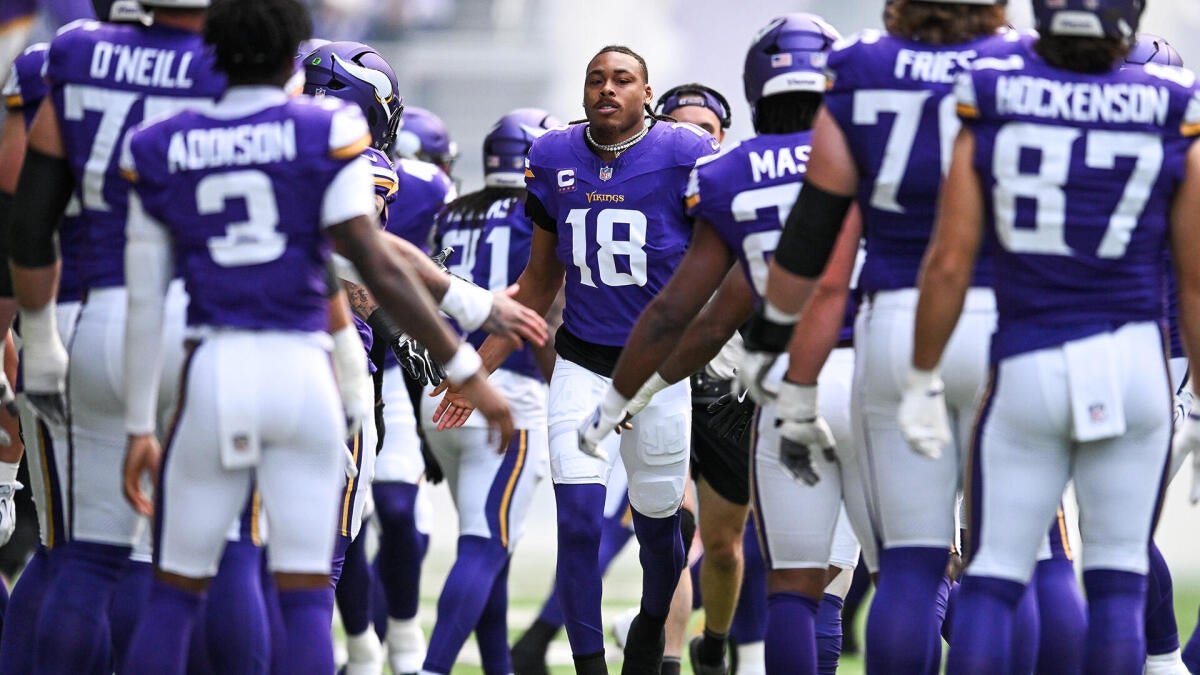
The Minnesota Vikings are 6-0, the last unbeaten team in the NFL, and they're doing it with a club in one hand and a catapult in the other. Their offense is stuck in the Stone Age, with only 10 touchdowns, the fewest by any 6-0 team since the 1934 Lions (who threw 46 passes all season). Their defense and special teams, meanwhile, are the best in football. In terms of expected points added (EPA) per play, no team this century is more lopsided when measuring the dropoff from their defense/special teams (0.208) to offense (-0.148) (gap of 0.356). There's still a lot of season to be played, but I set out to answer two questions.If the Vikings continue this level of play in all facets, is this a championship formula?Can they sustain this historic start on defense?To answer the first question, I scoured the archives (862 teams, every season since 2000) and uncovered the top 13 similar metrics in terms of defense/special teams-to-offense dropoff by teams that actually made that medieval formula work (won at least 70% of games in the regular season). So what happens to great teams weighed down by a bad offense? Let's find out.The imbalance index: historic defense to dark ages offense(measured by largest EPA per play dropoff — from defense/special teams to offense — for teams that won 70% of games since 2000) 1. 2026 Vikings (-0.356)6-0 record: defense 1st | special teams 1st | offense 31st The popular opinion says these Vikings are frauds. They went one-and-done in the playoffs after 13+ win seasons in 2022 and 2024 with similar QBs we really didn't trust (Kirk Cousins and Sam Darnold). So history is just repeating itself, right?Not exactly. The defense and special teams are on another level. They have the fifth-best EPA per play allowed (0.20) by any team this century behind the 2019 Patriots, 2000 Ravens, 2020 Rams and 2002 Buccaneers. Two of those teams won Super Bowls (2000 Ravens, 2002 Buccaneers). This is also the best special teams we've seen this century (0.24 EPA per play). Myles Price leads the NFL in total return yards (802), kickoff return average (30.7, min. 15 returns) and punt return average (19.2, min. 5 returns) Will Reichard, who was a first-team All-Pro last year, has made 18-of-19 field goals this season and recently broke Gary Anderson's franchise record for consecutive field goals made (36). So don't sleep on the special teams, which puts them over the top in a league where the margins are razor-thin (just ask the Rams). The offense is bad, as mentioned (second-worst EPA per play, better than only the Chargers), but it's not a generational outlier like the defense and special teams have been so far.As you're about to find out, this formula, if maintained, could actually make Minnesota quite dangerous. 2. 2000 Ravens (-0.259)12-4 record: defense 1st | special teams 2nd | offense 24th (won Super Bowl)If you're a Vikings fan, you love to see the 2000 Baltimore Ravens next on this list. They won a Super Bowl with Trent Dilfer at quarterback and had arguably the greatest defense in NFL history. They also had elite special teams, evidenced by Jermaine Lewis' kickoff return touchdown in the Super Bowl.The laundry list of accolades is a humbling reminder that this Vikings defense has a LONG way to go to breathe the same air as the 2000 Ravens:Fewest points per game allowed (10.3) by any team in a 16-game seasonFewest rush yards per game allowed (60.6) by any team since World War IIEight games with 0 offensive TD allowed and four shutoutsDefense scored more TDs (two) than it allowed (one) in four playoff gamesBaltimore had consecutive shutouts early in the year vs. the lowly Bengals and Browns, but time obviously proved their defense was generational. We'll see about these Vikings. This comparison is based on Minnesota maintaining its historic start on defense, a topic I'll tackle in a bit. For now, there are enough similarities to at least pique our interest.The 2000 Ravens had 125 points through six games. The 2026 Vikings have 125 points through six games.The 2000 Ravens averaged 20.8 points per game for the season (fewest by a Super Bowl champion ever). The 2026 Vikings average 20.8 points per game.The 2000 Ravens were 24th on offense, first on defense and second on special teams in terms of EPA per play. Similar ranks to the Vikings and similar off-the-charts efficiency on defense.2000 Ravens vs 2026 Vikings (EPA per play)2000 Ravens2026 VikingsOffense-0.07 (24th)-0.15 (31st)Defense0.22 (1st)0.20 (1st)Special teams0.10 (2nd)0.24 (1st) 3. 2001 Bears (-0.182)13-3 record: defense 1st | special teams 1st | offense 24th (lost playoff opener)Some great teams actually do get dragged down by horrible offenses. The 2001 Bears went one-and-done in the playoffs when their offense let them down with four turnovers vs. the Eagles. Jim Miller and Shane Matthews at quarterback were a problem, not even Brian Urlacher and co. could overcome. 4. 2006 Bears (-0.181)13-3 record: defense 2nd | special teams 1st | offense 20th (lost in Super Bowl)Hard to believe it's been 20 years since Dennis Green's infamous "The Bears are who we thought they were!" rant. These 2026 Vikings are also leaving opposing teams with similar "we let 'em off the hook!" feelings. Chicago had a suspect QB (Rex Grossman), an elite defense (Brian Urlacher, Lance Briggs, Charles Tillman, Tommie Harris) and the greatest returner in NFL history (Devin Hester returned the opening kickoff for a TD in the Super Bowl).This team ultimately fell short to Peyton Manning and the Colts in the Super Bowl, but the traits they share with Minnesota are another win for Vikings believers. Chicago was 20th in offense, second in defense and first in special teams efficiency that year. 5. 2002 Buccaneers (-0.171)12-4 record: defense 1st | special teams 15th | offense 23rd (won Super Bowl)The 2002 Buccaneers abused opposing passers to the tune of a 48.4 passer rating, the lowest allowed by any team in a season since the late 1980s. They allowed 10 touchdown passes and had 31 interceptions, plus had a Super Bowl record three pick-sixes. Yeah, this defense with four Hall of Famers (Ronde Barber, John Lynch, Derrick Brooks, Warren Sapp) was different (and don't forget Simeon Rice). It was enough to win a title, even with average quarterback play from Brad Johnson. 6. 2019 Patriots (-0.169)12-4 record: defense 1st | special teams 18th | offense 19th (lost playoff opener)Wait, Tom Brady is on this list? Yes, the Brady-Belichick relationship was strained in his last season in New England, and the offense was pedestrian as they lost 20-13 in the playoff opener vs. Mike Vrabel's Titans. This defense produced the best EPA per play allowed (0.23) by any unit in a season since 2000, but it wasn't enough as the magic in Foxborough ran out. 7. 2000 Titans (-0.166)13-3 record: defense 2nd | special teams 5th | offense 17th (lost playoff opener)The 2000 Titans were a smashmouth team coming off a 1999 campaign that fell inches short of a Super Bowl. Eddie George carried it 400+ times, and Steve McNair had more turnovers than touchdowns. The defense was humming with Jevon Kearse, Randall Godfrey and Samari Rolle (I love recalling these names!), but they were second fiddle to the 2000 Ravens, getting bulldozed by Baltimore in the playoff opener. 8. 2006 Ravens (-0.161)13-3 record: defense 1st | special teams 16th | offense 17th (lost playoff opener) Let's call this team 2000 Ravens-lite. Steve McNair and Jamal Lewis led an average offense with an embarrassment of riches on defense between Ray Lewis, Ed Reed, Terrell Suggs, Bart Scott, Chris McAlister, Trevor Pryce, Samari Rolle, Adulius Thomas and others. They allowed just 12.6 points per game but lost their playoff opener to the eventual champion Colts. 9. 2020 Steelers (-0.152)12-4 record: defense 2nd | special teams 26th | offense 21st (lost playoff opener)The Vikings critics will point to this team as a cautionary tale. They started out 11-0 with a stingy defense and Ben Roethlisberger as the captain checkdown (remember no Le'Veon Bell or Antonio Brown at this point). But they lost five of their final six games and allowed 48 points to the Browns in the playoffs! 10. 2011 49ers (-0.152)13-3 record: defense 3rd | special teams 1st | offense 16th (lost in NFC championship) Jim Harbaugh's first season as an NFL head coach was one to remember as he helped Alex Smith go from all-time bust to "game manager" for a 13-3 49ers team. This team was absolutely loaded with Frank Gore, Michael Crabtree and Vernon Davis on offense, plus Aldon Smith, Justin Smith, Patrick Willis and NaVorro Bowman on defense. Ted Ginn Jr. brought juice on special teams, but it's too bad he wasn't healthy for the 2011 NFC title game when Kyle Williams infamously coughed up two punts. Otherwise, they may have made the Super Bowl. 11. 2025 Texans (-0.146)12-5 record: defense 3rd | special teams 4th | offense 26th (lost divisional round) No complaints with this comparison, right? The Texans' defense was savage last year, but nobody could block for C.J. Stroud, and he went down in a blaze of glory. He became the first player in NFL history with at least five interceptions and five fumbles in a postseason. 12. 2015 Broncos (-0.146)12-4 record: defense 1st | special teams 18th | offense 25th (won Super Bowl)The 2015 Broncos immediately come to mind when we think of teams overcoming a bad offense. They were 18th on special teams, but the offense (25th) and defense (first) absolutely fit the bill and are very similar to the 2026 Vikings. So yeah, if they can win it all, why not Minnesota? 13. 2025 Seahawks (-0.135)14-3 record: defense 2nd | special teams 1st | offense 20th (won Super Bowl)If the 2025 Seahawks can win a Super Bowl with Sam Darnold and the best defense in the league, why can't the 2026 Vikings win with Kyler Murray and maybe the best defense in the NFL? They had Jaxon Smith-Njigba, and Minnesota has Justin Jefferson. Seattle had Rashid Shaheed; Minnesota has Myles Price. We still need to see how good this Vikings defense is, but the Seahawks were putting off the same type of fraudulent stink around this same time last year. They really didn't have any statement wins until later in the year against the Rams and 49ers. If you're keeping track at home, four of the top 13 teams on the 2026 Vikings similarity score list won a Super Bowl (2000 Ravens, 2002 Buccaneers, 2015 Broncos, 2025 Seahawks). Plus, there's more further down the list we didn't even mention (14. 2003 Patriots, 16. 2008 Steelers).Measured by EPA per play dropoff from defense/special teams to offense among .700 win pct teams Microsoft CoPilot I'm sure that the champions above were subject to constant "do they have enough offensive firepower" debates, too. So to answer our first question, if the Vikings maintain this formula, and that's a big if, they are legit title contenders.These teams had Vikings vibes, tooBefore jumping into how sustainable this is, I also have to mention these teams. The math didn't land them on the above list, but let's be honest, they have Vikings vibes. 2009 Jets9-7 record: defense 1st | special teams 3rd | offense 24th (lost in AFC championship)The Jets went 9-7 and made the AFC title game in their first season with Rex Ryan and rookie QB Mark Sanchez. That was a fun team with "Sanchize" and "Revis Island". They weren't much to see on offense, but it was enough to beat pairs like Carson Palmer and Chad Johnson, plus Philip Rivers and LaDainian Tomlinson, in the playoffs. 2014 Texans9-7 record: defense 2nd | special teams 5th | offense 17th (missed playoffs)J.J. Watt had one of the best defensive seasons ever (20.5 sacks), but this team missed the playoffs as Ryan Fitzpatrick couldn't work enough "Fitzmagic" with Arian Foster and DeAndre Hopkins. 2017 Jaguars10-6 record: defense 1st | special teams 24th | offense 12th (lost in AFC championship)Remember Blake Bortles and "Sacksonville"? The 2017 Jaguars held a 10-point fourth-quarter lead vs. the Patriots in the AFC title game before Tom Brady mounted a comeback. 2023 Browns11-6 record: defense 1st | special teams 4th | offense 28th (lost playoff opener)The 2023 Browns had the No. 1 defense in the NFL and five different starting quarterbacks. That includes Joe Flacco, who threw two pick-sixes in a playoff blowout loss.Can Minnesota's defense keep up the pace?So, we know teams can win a title with a profile like the Vikings. We just don't know if Minnesota can continue this pace.I'm not writing them off, but I need to see if this defense remains generational vs. this gauntlet coming up.They've played the third-easiest schedule (.390 opp win pct) up to this point. The Packers' win in Week 1 doesn't look nearly as good now, given their deficiencies on offense, which include perhaps the worst offensive line in football. They caught the Bears in a monsoon in Week 2 when Caleb Williams got hurt. Since they've beaten the Buccaneers, Dolphins, Saints and Colts, all of whom have been, more or less, dumpster fires.The next month will probably tell us all we need to know. Minnesota has the hardest strength of schedule (.731 opp win pct) in the next four weeks while facing the Lions, Bills, Packers and 49ers. Detroit, Buffalo and San Francisco rank as three of the four best offenses in the NFL, and their quarterbacks (Josh Allen, Jared Goff, Brock Purdy) are top three in EPA per dropback.Brian Flores' defense and his diabolical blitz rate (NFL-record 72%) may not hold up against the NFL's elite. In the past three years, they've allowed about a touchdown more per game against top-10 offenses than against everyone else. If this group defies the odds and continues its historic run, we are looking at a serious Super Bowl contender, not the paper tiger we've come to expect from Minnesota in the playoffs.I still think the 2026 Seahawks are a better version of these Vikings, and the 49ers and Rams are probably bigger threats in the NFC, too. I need to see Minnesota throttle these elite offenses before I'm ready to officially remove the "fraud" label.
Vikings quest: Title contenders or frauds? Ranking most imbalanced teams this century
Full Article
Original Source
Read the full article at Cbssports →KhanList aggregates and links to publicly available news content. We do not host full articles from third-party sources. Always verify important information with original sources.