
For millennia, devotees entered a Tamil temple carrying flowers, coconuts, camphor, prayers and the private burdens of life. The twenty-first-century pilgrim has made one more addition to the basket: a fully charged smartphone. It began by recording the deity. It soon started directing the devotee.Darshan once meant seeing and being seen by the divine. It now frequently means ensuring that everybody else sees that we have seen the divine. Between the devotee and the deity has appeared a third eye -- not Siva’s, but Samsung’s.From September 1, the Vijay government has begun enforcing a ban on devotees carrying mobile phones inside 52 major temples administered by Tamil Nadu’s Hindu Religious and Charitable Endowments Department. Visitors must deposit their devices at designated counters, generally for a fee of 5, before proceeding for darshan.The government’s purposes are difficult to quarrel with: preventing prohibited photography and videography, discouraging selfies and social-media reels, protecting privacy, improving crowd movement and restoring something of the sacred atmosphere that temples are meant to possess. The policy has judicial parentage. In December 2022, the Madurai Bench of the Madras High Court directed that mobile phones be prohibited in temples across Tamil Nadu to preserve their sanctity and purity, with deposit lockers and security personnel to prevent observance from becoming an ordeal. The present measure implements that earlier direction, although its design, fairness and success now belong squarely to Vijay’s administration.The smartphone entered the temple as a camera, stayed as a companion and eventually behaves like the Creator!WHEN DEVOTION BECAME CONTENT There is a serious case for the restriction. The phone is neither an unqualified desecrator nor an innocent camera. It is a tool that has become a temperament.Anyone who regularly visits a popular temple knows the scene. A worshipper reaches the sanctum after waiting for an hour, sees the deity for a few seconds and spends half of them trying to obtain a properly framed photograph that is expressly prohibited and may not even be worth keeping. Others pose in narrow passages before pillars, gopurams and processional deities. Somebody begins a video call so that an aunt in America can participate in darshan; another supplies a running commentary; a third turns backwards in a moving queue to capture a reel, transforming fellow devotees into involuntary extras.Photography and videography within the sanctum and of the moolavar are already prohibited in most major temples. Notices say so, priests repeat it and regular devotees know it. Yet pictures and videos continue to emerge on the sly. A phone is concealed, a camera raised for three seconds, an attendant looks elsewhere or an influential visitor receives latitude unavailable to the ordinary queue. The new prohibition is therefore not inventing sanctum privacy. It is attempting to enforce a boundary repeatedly breached by technology, temptation and privilege.The camera does not merely document the moment. It reorganises it. The worshipper asks where to stand, whether the lighting is adequate, how the scene will appear on Instagram and whether the priest can repeat an action missed by the lens. Presence becomes production. Prayer acquires retakes.This does not make the modern devotee insincere. Faith has always sought forms through which to retain a sacred experience—a flower carried home, vibhuti preserved, a picture placed in the puja room or a story narrated to the family. The smartphone is the newest vessel of remembrance. The difficulty begins when preserving the experience overtakes experiencing it.A temple visit gradually becomes content waiting to happen. Bhakti is expected to prove its existence through bandwidth.The Tamil temple was never noiseless. Bells rang, drums rolled, ngaswarams rose, vendors called and children cried. What is new is not sound but self-broadcast.A PUBLIC PLACE WITH A PRIVATE CENTREThe Tamil temple is not a silent chapel sealed from society. It has historically been a house of worship, work of architecture, repository of sculpture, centre of music and dance, landholder, employer, granary, school, public assembly and archive written in stone.Its festivals occupy streets and sometimes entire towns. Its chariots require collective labour; its inscriptions record donations, taxes, irrigation, trade and social arrangements. The temple belongs simultaneously to religion, history, art and community memory.A blanket hostility to cameras would therefore be foolish. Photography has documented endangered sculpture, damaged inscriptions, disappearing rituals and changing landscapes. Video has carried music, recitation and festivals to younger generations and the diaspora. Those unable to travel because of age, illness, disability or distance can watch rituals that remain emotionally central to them.The camera can preserve a civilisation. The selfie can also reduce it to scenery.This distinction should guide the Vijay government’s policy. The sanctum is not merely another photogenic interior. The deity is not an exhibit, and the worshipper nearby has not consented to become public content. The deeper one enters the ritual centre, the stronger the case for restricting personal photography.The outer prakaram, gopuram, sculpture corridor, temple tank and public procession present different considerations. A single prohibition applied from compound wall to sanctum could interfere with legitimate heritage documentation, tourism, journalism and festival recording. Clear zones are preferable to confused zeal.Authorities must say where the prohibition begins, what it covers and whether exemptions exist. “Inside the temple” can mean the sanctum approach, roofed structure, inner prakarams or entire estate. In sprawling complexes such as Srirangam, Chidambaram, Madurai or Rameswaram, these are not interchangeable spaces.A rule gains reverence when it is intelligible. Otherwise, sanctity may depend upon which security guard interprets it that morning.NO REELS; BUT WHAT ABOUT RELAYS?Here arises an engaging modern paradox. Tamil Nadu may prohibit the devotee from carrying a camera phone towards the deity, while millions see the same deity through television cameras, official recordings and live digital broadcasts.The Vaikunta Ekadasi opening of the Paramapada Vasal and the majestic progress of Srirangam’s Namperumal are watched far beyond Tiruchi. Tiruvannamalai’s Karthigai Deepam, temple car festivals, kumbabhisekams and major utsavams are routinely carried by private television channels or distributed digitally. Authorised cameras can provide what personal phones cannot: disciplined coverage without obstructing queues or invading privacy.Across India, this distinction is already visible. Tirumala has long prohibited mobile phones and electronic devices in the immediate temple experience. The Kashi Vishwanath Temple restricts personal devices while its trust provides official online live darshan. During heavy pilgrimage, rituals have also been relayed through LED screens and authorised broadcasts. The principle is not that the divine must disappear from the digital world, but that the digital world should not disorder the physical place of worship.Tamil Nadu needs similar clarity. The restriction on personal devices should not be confused with a ban on authorised coverage. Temple administrations must frame transparent rules for official photography, accredited media, festival broadcasts, documentary work, archival recording and scholarly access. Otherwise, a security guard may stop a grandmother’s phone while a television camera nearby enjoys celestial clearance.Rules must also govern official footage. Who owns it? May devotees share it? Can private channels reuse it? Will temples provide reliable live feeds? Can archival footage eventually enter the public domain?These are not minor questions in a State whose temples are among its greatest civilisational resources.MEMORY, MURAI AND THE FAMILY CAMERABetween the casual selfie and accredited television relay lies another category: the family performing a traditional murai.Across Tamil Nadu, families return annually—or once in a generation—to fulfil hereditary ritual duties, sponsor an abhishekam, offer a vastram, participate in or perform an utsavam or honour an ancestral vow. Members travel from different cities and countries. Elderly relatives may be making the journey for the last time; children may be witnessing a family tradition for the first.Their desire to preserve the occasion is understandable and not equivalent to holding up a queue for a reel. Yet emotional importance cannot confer a right to film the moolavar, enter restricted spaces with cameras or record rituals who’s Agamic and temple rules prohibit photography.The answer is authorised accommodation, not furtive exemption. Where permissible, the temple could arrange an approved photographer or provide a brief official recording involving the utsavar or a ritual outside the sanctum. Where recording is forbidden, the rule should be explained beforehand so that a cherished occasion does not end in argument at the threshold.Archana may be performed to moolavars as well as utsavars according to each temple’s customs. What may be recorded is a separate question. Neither ritual practice nor camera permission can be compressed into one statewide assumption.A civilisation survives through memory. But memory need not always arrive as an MP4 file.THE WHATSAPP UPAYAMThe consequences will be felt in another institution of Hindu religious life: the devotional WhatsApp group.There are countless such groups across denominations; sampradayas, temples, mutts, streets and extended families. Before breakfast, members may receive suprabhatam from Tirumala, an alankaram from Mylapore, an abhishekam from Palani, a procession from Kumbakonam and a theological dispute from an uncle in Coimbatore. By 8 am, the devout phone has completed a pilgrimage its owner could not undertake in eight months.These groups circulate videos of utsavams, permitted archanas and alankarams, discourses and temple functions. Some material comes from official broadcasts, television channels or authorised organisers. Much has been forwarded so often that source, date and even deity become matters of faith. Last year’s festival occasionally arrives as this morning’s miracle.This devotional network will not disappear. It may move from casual, user-generated clips towards official feeds and temple-supplied material—less crowd-sourced and more temple-sourced.That could improve quality and authenticity but deprive smaller shrines and festivals of spontaneous visibility. Major temples can afford professional coverage; a village utsavam often depends upon one enthusiastic devotee, one obliging priest and one phone held at an angle known only to providence.The government should avoid treating all recording alike. Public processions and festivals outside restricted ritual zones can accommodate authorised local documentation. Temples could nominate a photographer, promptly release selected footage and maintain digital archives. The prasadam may continue to be shared by hand; the video could be shared by link.Otherwise, the ban may create a content famine in WhatsApp groups—or force them to live indefinitely on recycled Deepams, dated darshans and deities wearing yesterday’s alankaram.THE COUNTER BEFORE THE PRAYERThe spiritual argument is persuasive. The administrative test will be decidedly earthly.Each deposited phone contains banking applications, correspondence, photographs, professional data and access to the owner’s digital life. Devices range in value from a few thousand rupees to more than a lakh. Temple administrations assume responsibility for secure storage and prompt return.Forget high-profile idol thefts; in Temple Nadu, even footwear left outside the premises goes missing. What happens if a phone is misplaced, damaged or wrongly returned? Are the counters insured and monitored? How long will retrieval take when thousands emerge after a major puja? Will sufficient counters operate during festivals? Can several family devices be deposited under one token?Many devotees welcome the intention but want more counters and easier payments. Here the policy produces its most delicious irony: visitors may be asked to make a digital payment for the privilege of surrendering the instrument through which they make digital payments.To protect devotees from digital distraction, the temple may now require a digital system to collect the distracting device.The Integrated Temple Management System can create receipts and accountability, but technology must serve the queue rather than lengthen it. Cash should remain available, elderly visitors should not be bewildered by QR codes and counters must precede the point where the pilgrim joins a long queue.Emergency needs require thought. Doctors on call, solo travellers, parents separated from children and caregivers may have legitimate concerns. Exemptions should be narrow and controlled—sealed devices, counter access or temple contact numbers—not informal permissions that swallow the rule.The government has put the phone in custody. The more difficult question is whether the mind has surrendered it.ONE RULE FOR EVERY FOREHEADUniform enforcement is essential. Temple India has an unfortunate ability to impose its strictest rules on the ordinary devotee while discovering flexibility around influence.Ministers, officials, trustees, donors, celebrities, police personnel, priests and media representatives should not carry personal phones because status opens a side door. Staff needing devices for official duties can receive identified equipment with controlled use; authorised photographers must carry accreditation and observe defined limits.Film stars and celebrities present a particular test. Their visits attract photographers, television crews, personal videographers and phones raised by everyone who has temporarily forgotten the deity. A star may come in genuine devotion, but the camera procession can convert the temple into a location shoot and ordinary worshippers into crowd scenery. Fame cannot become a roaming media pass.Any official coverage should remain within demarcated areas, avoid the sanctum and neither obstruct rituals nor closely film other devotees. The celebrity’s prayer deserves privacy. So does everybody else’s.Privilege also travels on four wheels. VIPs and high-profile devotees sometimes summon cars to crowded temple entrances, forcing pedestrians, elderly worshippers and families with children around vehicles where orderly movement is most necessary. A government serious about sanctity must attend not only to the phone in the hand but also to the car called to the gate.Defined drop-off points, access for persons with disabilities and genuine medical needs, and uniform vehicle restrictions are essential. A temple entrance cannot become a private porch merely because the arriving devotee possesses a public profile.A phone ban that stops at the VIP entrance will have protected hierarchy, not sanctity.This is also about privacy. Women and families may be photographed without consent. Grief, private vows, prostration and intense prayer can enter social media stripped of context. A person approaching the deity at a vulnerable moment should not wonder whether the emotion will become somebody else’s reel.Security concerns are equally real. Unauthorised recording of entrances, internal layouts and restricted passages can create risks. Smartwatches, button cameras and camera-equipped spectacles complicate enforcement. The regulation must be technologically literate without turning every devotee into a suspect.VIJAY'S SECULAR TEST OF SACRED ADMINISTRATIONFor Vijay, the issue is modest in scale but revealing in meaning. His government did not invent the phone ban; it is implementing a judicial direction that predates it. Yet implementation is where governments reveal their character.A modern State administering ancient institutions must avoid two errors. It cannot treat the temple as merely another department, reducing sanctity to a circular, fee and token. Nor can it invoke sanctity so vaguely that arbitrary restrictions escape scrutiny.Tamil Nadu’s temples require conservation, clean surroundings, orderly queues, trained staff, transparent finances, protected traditions and hospitality towards ordinary worshippers. Removing phones may recover attention, but it will not repair an unclean prakaram, shorten an unreasonable wait or make an impatient official courteous.Nor will a phone-free sanctum become orderly if unofficial photography survives for the influential, celebrity entourages command passages, cars crowd entrances and families performing an ancestral murai discover the rule only after arriving. Sanctity cannot be achieved by confiscating a device while preserving disorder.The state can regulate the device; it cannot manufacture devotion.The best outcome would be a practical compact. Personal phones should remain outside clearly defined sacred zones. Deposit facilities must be secure, affordable and efficient. The rule must apply equally to VIPs and ordinary devotees. Authorised media and temple documentation should operate transparently. Official live feeds should serve the elderly, disabled, distant and diasporic. Public processions and heritage areas require proportionate rules rather than an undiscriminating ban.Temple websites and booking systems should state whether a sponsored ritual, family murai or public utsavam may be recorded and by whom. An official facility for permitted family photographs would replace influence with procedure. The choice should not be total prohibition for the ordinary devotee and discreet permission for the well-connected.Most importantly, the policy should explain why the phone is left outside: not because technology is impure or faith fears modernity, but because some experiences deserve undivided presence.The government has created flight mode for the temple. It cannot guarantee inner silence. A deposited phone may continue ringing inside the mind: unread messages, missed calls, market movements, office anxieties and the suspicion that somebody, somewhere, has replied to our status.A temple asks the devotee to look up. The smartphone has trained humanity to look down. Tamil Nadu’s experiment will succeed not when every phone has been deposited, but when, for a few unrecorded minutes, the worshipper no longer feels that an experience becomes real only after it has been shared.Perhaps that is the true darshan our age has misplaced: not merely the sight of the deity, but the recovery of attention.The gods survived stone, empire, invasion and modernity. They will survive the smartphone too. The question is whether our attention will.(The author is a senior Chennai-based journalist and these are his personal views. His exclusive 50-part series, Time, Tide & Tamil for Indiatoday.in explores the deep history, culture, language, cinema, and political identity of Tamil Nadu. Access the series here.)- EndsPublished By: Priyanka KumariPublished On: Sep 3, 2026 06:45 IST
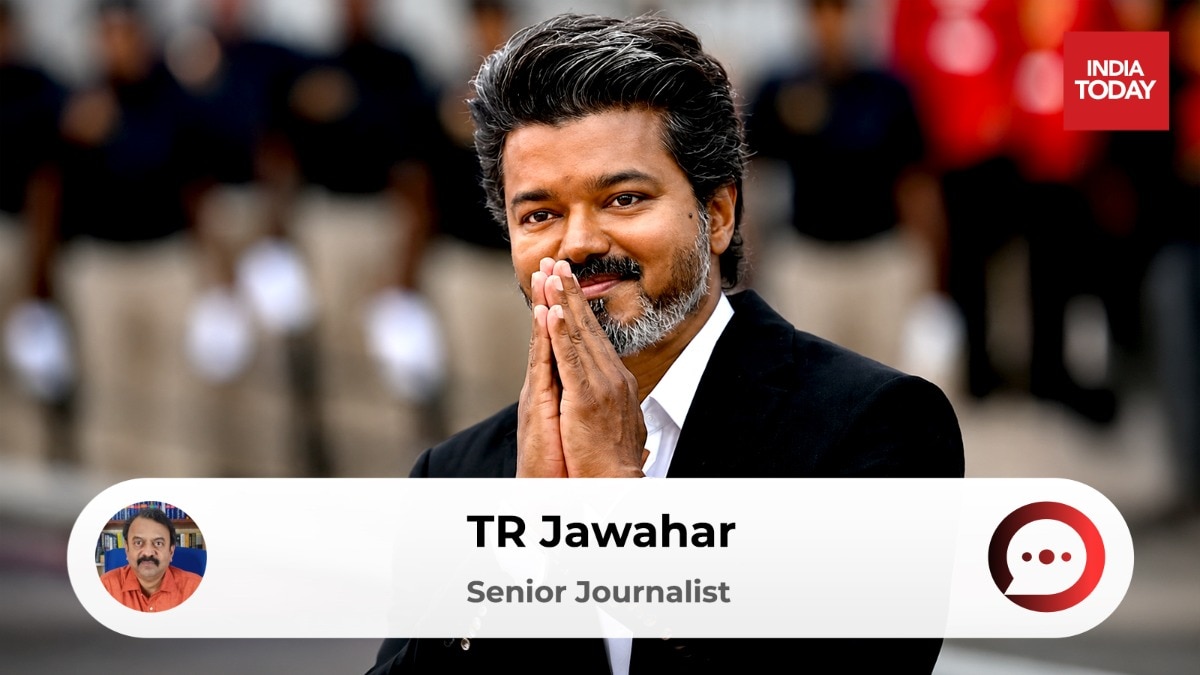
Vijay puts mobiles on flight mode in Tamil Nadu's temples. Gods know why
Full Article
Original Source
Read the full article at Indiatoday →KhanList aggregates and links to publicly available news content. We do not host full articles from third-party sources. Always verify important information with original sources.