
Jim Chalmers is facing his toughest tests since he became treasurer. As he squares up for them, his state of mind won’t be helped by Sunday’s Newspoll showing he is the minister people are most dissatisfied with. But that’s what happens to treasurers when things go bad. Chalmers’ immediate test comes on Tuesday if, as expected, the Reserve Bank increases interest rates for the fifth time this year. He will have to respond to a barrage of questions about how the government will set about getting its fiscal policy into better shape so as to push in the same direction as the bank in fighting inflation. That is, how it will curb its spending to help take some weight off the excessive demand that’s contributing to stubbornly high inflation. Flowing from this, Chalmers’ second and real test, in the coming weeks, is what level of spending cuts he can actually drive through cabinet’s expenditure review committee and with ministers more generally. There will be one basic measure of his success. Chalmers, Prime Minister Anthony Albanese and, at the weekend, Finance Minister Katy Gallagher have all refused to say whether the savings they are boasting will come in the December budget update will amount to net savings. If they do not – if they basically just cover extra spending, including the rising interest bill on debt – the government will score a “fail” regardless of the dollar amount of the savings. The total net saving needs to be a respectable number and with items that are solid, not flaky. Flaky savings are vague undertakings, such as restricted use of consultants. Government sources stress this is a traditional budget update, not a mini budget. This would seem to suggest it will not contain measures to reset spending in a way that would achieve substantial long-term structural savings (as would, for example, introducing more means testing). While the imperative of finding serious savings is getting through in some Labor circles, it’s New South Wales Premier Chris Minns, facing an election within months, who seems the most willing to be frank about the problem of government spending generally. (On Monday, Minns was almost pleading with the Reserve Bank not to raise rates.) Chalmers is widely seen as the government’s best communicator. Until recently, he was regarded as the clear favourite to be Albanese’s successor. Now he has to watch the PM appearing to anoint Health Minister Mark Butler. Chalmers comes across in public, even when the situation seems to be running off track, as calm and controlled. In reality, this is sometimes a matter of putting on his best face. He has considerable ups and downs in mood as he deals with the stresses of the job. If rates rise, finding the right pitch in response will be important but difficult. People need to hear that the government is up for some policy recalibration without that being an alarm siren. It’s time for realistic talk about what can and can’t be afforded, but that seems a near-impossible message to deliver these days. Chalmers will be carrying virtually all the weight of the government’s response if rates increase on Tuesday. Albanese is at the Commonwealth Heads of Government Meeting (CHOGM) in the Caribbean. The prime minister apparently felt he couldn’t miss CHOGM given he was under some pressure from King Charles to be there. But perhaps he should have found a way to decline and sent his deputy, Richard Marles, instead. From now until the end of the year, Albanese will be a fleeting presence in Australia. Next week he will be at the COP international climate conference in Turkey, with other summit meetings on the way home. Then, in December, he will be face to face with US President Donald Trump at the G20 meeting in Miami. That means he won’t be in the country on December 14, the anniversary of the Bondi Beach attack. He has already begun interacting with the Jewish community about this unfortunate timing. As it nears Christmas, the Labor caucus is more restless than it was previously, but still relatively disciplined. Chalmers and Albanese have never been buddies; in recent times the tension has increased, and there is ill-disguised leaking between the Chalmers and Albanese camps. But problems in the relationship have not reached a level of destabilising the government. The suggestion in some media quarters that Chalmers could or should be moved from the treasury job is bizarre. Chalmers and Albanese might not be mates, but they are partners. They have shared ownership of where the government is at the moment. Anyway, who would make a more credible treasurer? For all the internal talk, one wonders whether the government is sufficiently galvanised about the position in which it finds itself. Newspoll is showing Labor on a primary vote of 27%, a point under One Nation’s 28%. And a range of respected economists is urging the government to focus on the need for fiscal policy to be better attuned to deal with what might lie ahead (including what could happen in the Middle East after this week’s US midterm elections). Some in Labor may be tempted to take the attitude, we’ve been here before – for example, just before the 2025 elections – and not only did we dig ourselves out of the hole, but we soared to incredible heights in terms of seats. Everyone knows Albanese is a superior political tactician – it’s his great strength as a politician. Some remember that Scott Morrison was quite good at tactics, too, until he wasn’t. The risk is that in the long run, tactics can stop working. .
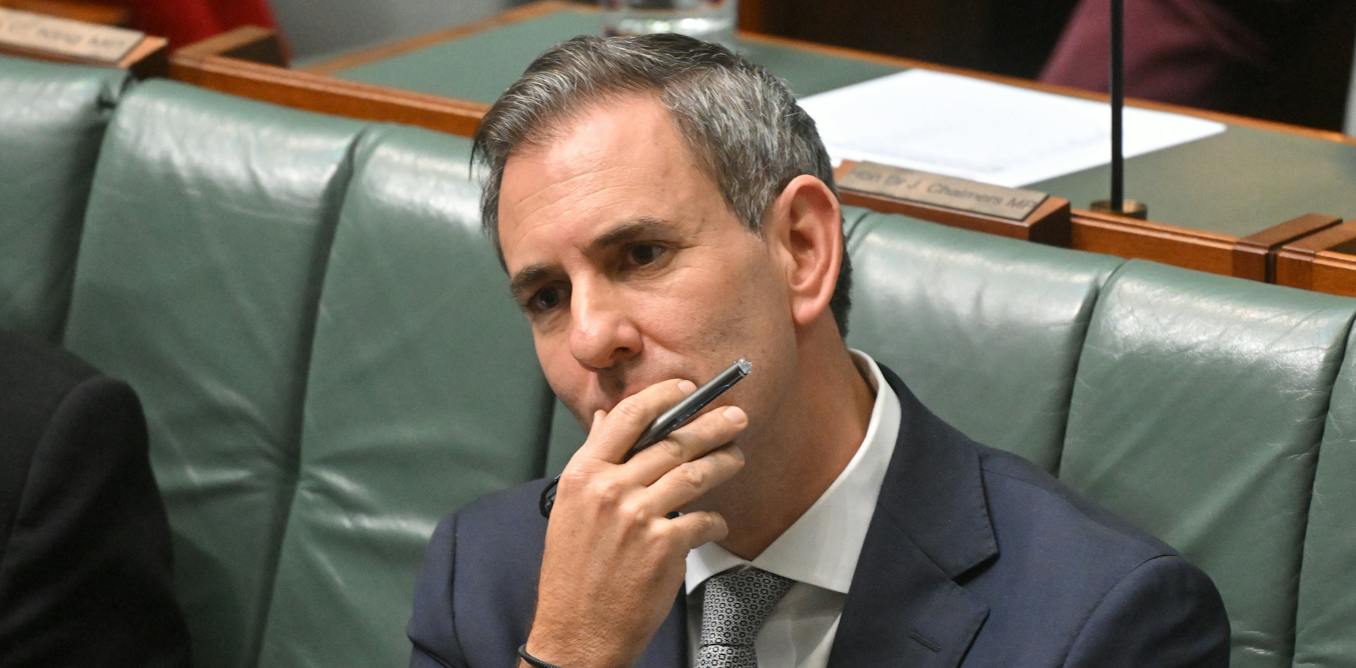
View from The Hill: Jim Chalmers has a lot of weight on his shoulders in the run-up to Christmas
Full Article
Original Source
Read the full article at Theconversation →KhanList aggregates and links to publicly available news content. We do not host full articles from third-party sources. Always verify important information with original sources.