
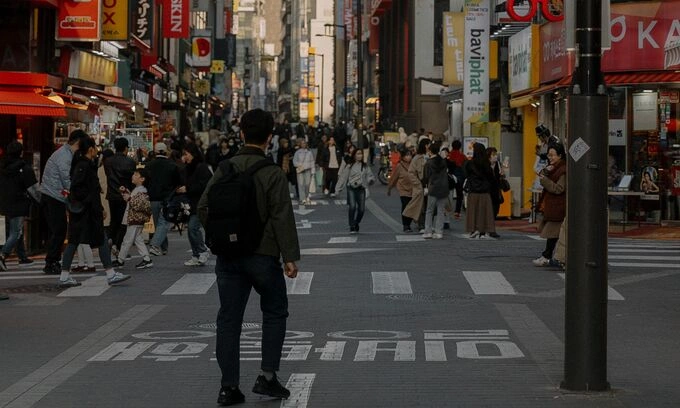
More than 26,200 Vietnamese students have overstayed their visas in South Korea, the highest number among all nationalities. The latest data from South Korea's Ministry of Justice showed that the number of international students who remained in the country after their D-2 visas, which cover college, undergraduate and postgraduate studies, expired reached a record high of more than 9,900 as of August.Vietnamese students accounted for the largest share, with more than 6,800 cases, or over 68% of the total, nearly five times the figure for Uzbekistan, which ranked second at more than 14% with 1,412 people.They are followed by Mongolia (738 people, 7.4%), Nepal (318 people, 3.2%), and China (236 people, 2.4%), The Chosun Daily reported.Vietnamese nationals also topped the list of overstayers among students enrolled in Korean language programs under D-4-1 and D-4-7 visas, with more than 19,400 cases, accounting for 89.4% of the total,By nationality, around 40% of Vietnamese students in these programs were found to have violated visa regulations, the second-highest rate after Uzbekistan. The rate was nearly six percentage points higher than a year earlier.By region, Gyeonggi, Gangwon, South Chungcheong and North Chungcheong provinces recorded the highest numbers of international students overstaying their visas.Depending on the circumstances, visa overstayers face fines, imprisonment, deportation and bans on re-entering South Korea.People Power Party Rep. Kim Hee-jung accused universities of focusing on recruiting international students without putting adequate measures in place to ensure they remain enrolled and maintain legal residency status."Universities, which should be centers of learning, have become backdoor channels for illegal residency," Kim said, as quoted by The Korea Herald.She urged the Education Ministry and Justice Ministry to review the entire international student system, including visa screening, admissions, residency monitoring and post-admission oversight. A street full of pedestrians in Seoul, South Korea. Photo by Pexels South Korea has more international students than ever before. The country aimed to attract 300,000 foreign students by 2027 but reached that target in the summer of 2025.The number of international students had risen to 367,700 as of September, according to the Ministry of Justice's Korea Immigration Service.Vietnamese students make up the largest international student group in the country, numbering more than 129,200, or 35% of the total, increasing by over 20,000 from a year earlier.Chinese students ranked second, with more than 89,000, according to University News Network.A study by Kim Gyu-chan, an associate professor at Gangneung-Wonju National University, found that international students overstay their visas or work without authorization largely because of strict employment and visa regulations, financial pressures, and insufficient support for transitioning from education to employment, The Korea Times reported in January.The study also criticized a university accreditation system that uses illegal-stay rates as a key measure, arguing that it could encourage institutions to prioritize immigration monitoring over education and career support."International students should not simply be viewed as temporary substitutes for the declining school-age population or as administrative burdens," Kim said, as quoted by The Korea Times. "They must be recognized as future residents and valuable human resources."Kim argued that South Korea should regard international students as potential long-term residents and skilled workers rather than temporary labor or administrative burdens. He recommended establishing a unified government data platform, dedicated career support centers and incentives for universities that build partnerships with local businesses.
Vietnamese students top South Korea's visa overstayers with over 26,200 cases
Full Article
Original Source
Read the full article at E →KhanList aggregates and links to publicly available news content. We do not host full articles from third-party sources. Always verify important information with original sources.