
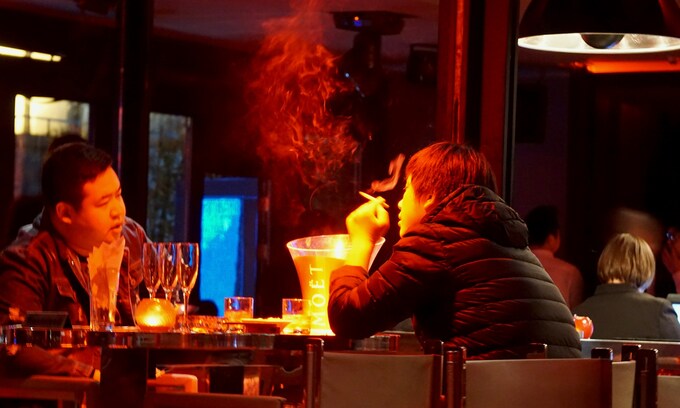
Bars, karaoke parlors, dance clubs and hotels in Vietnam may lose their designated smoking areas and go fully smoke-free in phases, under a draft decree that accompanies proposed changes to the country's tobacco law. The plan is part of the dossier for amending the Law on Prevention and Control of Tobacco Harms, which the National Assembly's Committee for Culture and Society is reviewing. The bill is expected to go before lawmakers at their year-end session, which opens Oct. 17.Under an option in the draft implementing decree, indoor venues now allowed to set aside smoking areas would gradually switch to complete bans.Venues under consideration include bars, karaoke parlors, dance clubs, airport passenger terminals, hotels and tourist accommodation. The switch would be phased in rather than applied to all of them at once.Ships and trains are also proposed for the group of public transport where smoking is banned outright. The Ministry of Health accepted the change after comments from the Ministry of Public Security and plans to detail it in the decree guiding the law.The wider bans aim to reduce secondhand smoke in public places. Ministry of Health data show that between 2010 and 2024, exposure fell from 73.1% to 44.9% at home, from 55.9% to 22.4% at workplaces and from 34.4% to 22.9% on public transport.Display and online sales bansThe bill would also ban the display of conventional cigarettes at points of sale, except in cases set by the government. The ban covers products, packaging, images, brand names and any other means that let buyers identify tobacco.Each outlet may now display no more than one pack, carton or box per brand. But a study covering 2015-2017 found that 82.5% of surveyed outlets broke this limit.The drafting agency says a display ban would remove one form of tobacco promotion, make cigarettes less appealing to teenagers and lower the risk of relapse for people trying to quit.Some businesses asked to keep limited displays so buyers can recognize legal products, but the ban remains in the bill.Sales via e-commerce platforms, other electronic transactions and vending machines would also be banned. So would all direct marketing aimed at getting people to buy or use tobacco, from introductions, solicitations and advice to online affiliate marketing.Shops must post signs saying they do not sell tobacco to anyone under 18. When a buyer's age is in doubt, sellers would have to check the buyer's citizen ID card, VNeID digital ID app or passport.The bill also proposes banning sales of conventional cigarettes within 100 m of the gates of schools and medical facilities, measured from the nearest boundary of their grounds, to limit young people's access. A no-smoking sign on the door of a state agency. Photo courtesy of VGP New products added to banned listThe bill further tightens the ban on e-cigarettes and heated tobacco products, along with their components and ingredients, which lawmakers first imposed by resolution in November 2024. Banned activities include production, trading, storage, transport, import, export, transit, advertising, promotion, sponsorship, harboring and use.Nicotine pouches and shisha would also be added to the banned products, a move meant to close legal gaps as new forms of tobacco keep appearing on the market.Ministry of Health data show e-cigarette use among 13- to 17-year-olds rose from 2.6% in 2019 to 8.1% in 2023. Among 13- to 15-year-olds, it climbed from 3.5% in 2022 to 8% in 2023.The dossier also proposes enlarging health warnings to cover at least 85% of the front and back of cigarette packs, up from a minimum of 50% now. Both sides would also carry a quitline number, and each brand's warning designs would change every two years.The amended law is expected to take effect on July 1, 2027. The roadmap for converting venues to full smoking bans and the details of health warnings will be set in guiding documents after the law is passed.
Vietnam weighs full indoor smoking bans at bars, karaoke parlors and hotels
Full Article
Original Source
Read the full article at E →KhanList aggregates and links to publicly available news content. We do not host full articles from third-party sources. Always verify important information with original sources.