
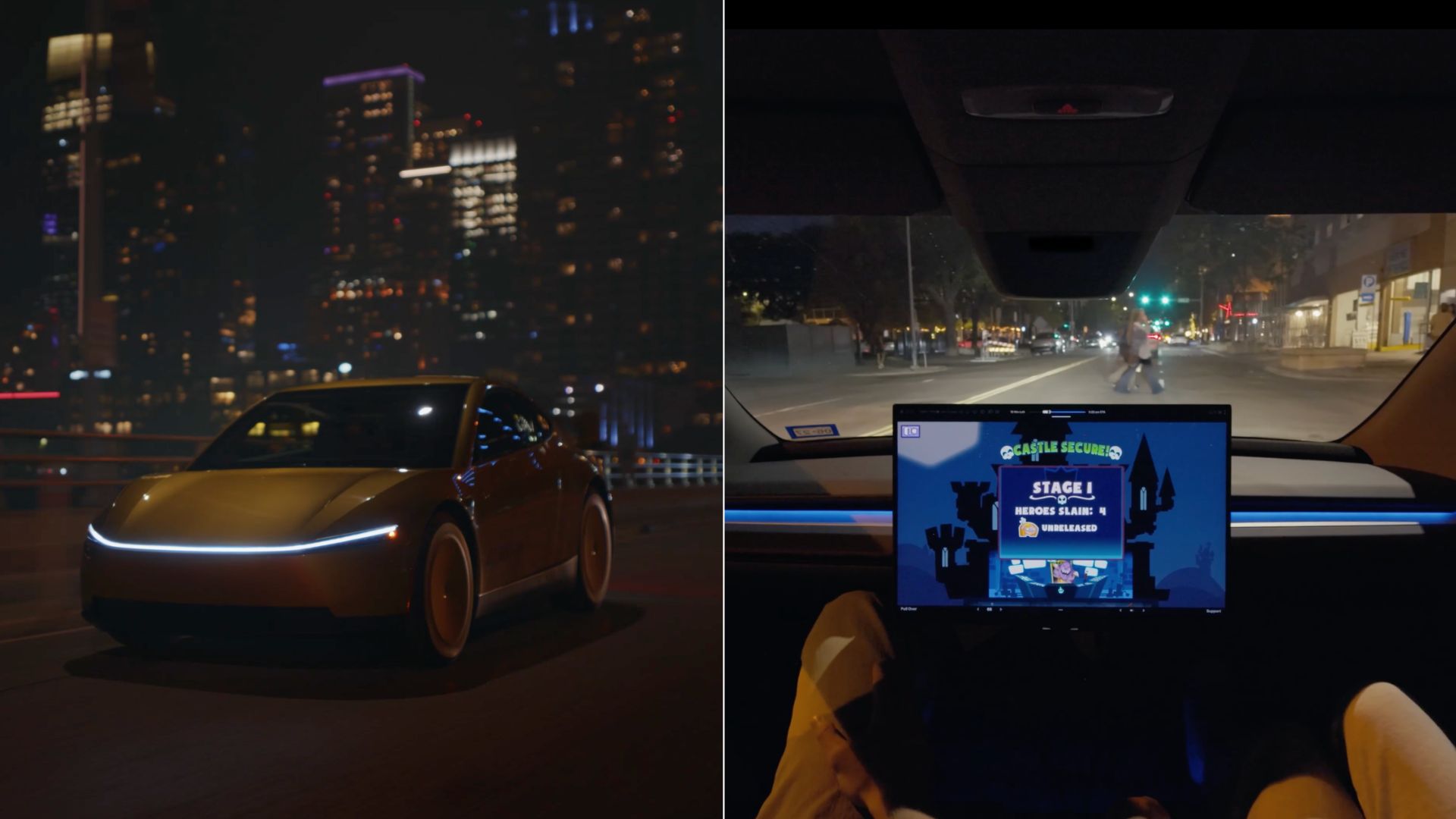
Elon Musk’s Tesla has deployed dozens of its purpose-built Cybercabs on public roads in Austin, Texas, marking a new phase in the company’s push toward fully autonomous ride-hailing. The gold-colored vehicles have no steering wheels or brake pedals, meaning passengers cannot take control if something goes wrong. Tesla is using the rollout to test both the technology and whether riders are willing to trust a vehicle that offers no manual driving option. The push beyond supervised robotaxis Tesla has operated a self-driving robotaxi service in Austin since June 2025, but those vehicles still came with conventional controls and initially carried safety drivers who could intervene if necessary. The new Cybercabs go further. They are designed from the outset as autonomous taxis, without a steering wheel or pedals. Musk also revealed the Cybercab uses no rare earth metals. An invitation-only launch event was also expected to be held later Thursday as Tesla prepares to expand the service to additional cities. The company already operates more than 200 unsupervised robotaxis across cities in Texas and Florida, according to RobotaxiTracker. However, Tesla still trails Waymo, which has more than 4,000 driverless vehicles operating across 14 cities. The major safety test For Tesla, the challenge is not only scaling the fleet but proving that its autonomous driving approach can operate safely without human intervention. Tesla relies heavily on cameras and artificial intelligence for its self-driving system. Rivals including Waymo and Amazon-owned Zoox use cameras alongside radar and lidar, which use radio waves and lasers to help vehicles understand their surroundings. That difference makes the Austin rollout an important test of whether Tesla’s camera-based system can consistently identify pedestrians, vehicles, road markings and unexpected hazards in real-world traffic. The company’s partial self-driving software has faced multiple safety investigations in the United States, while approvals remain limited across much of Europe. Musk ultimately wants to make full self-driving software available to hundreds of thousands of Tesla vehicles through software updates. His broader vision would allow owners to place their cars into Tesla’s robotaxi network when they are not using them. Public trust could be the bigger hurdle Even if Tesla can demonstrate that the Cybercab works reliably, convincing passengers to climb into a vehicle without any manual controls may prove difficult. A Pew Research Center survey conducted in February found that seven in 10 U.S. adults were either “not too” or “not at all” comfortable with the idea of riding in a driverless car. Only 16 percent said they would be “somewhat” comfortable, while 7 percent said they would be “extremely” or “very” comfortable. Separate Gallup polling from 2025 also found growing skepticism about autonomous vehicle safety compared with earlier surveys. Tesla is making the Cybercab push while its core vehicle business faces pressure. The company recorded a second consecutive annual decline in vehicle sales last year, profits fell, and China’s BYD overtook Tesla as the world’s largest electric vehicle seller.That puts added importance on Musk’s robotaxi bet. Tesla now needs to show that Cybercabs can operate safely, scale quickly, and convince riders to give up control entirely.Get the latest in engineering, tech, space & science - delivered daily to your inbox.Atharva is a full-time content writer with a post-graduate degree in media & amp; entertainment and a graduate degree in electronics & telecommunications. He has written in the sports and technology domains respectively. In his leisure time, Atharva loves learning about digital marketing and watching soccer matches. His main goal behind joining Interesting Engineering is to learn more about how the recent technological advancements are helping human beings on both societal and individual levels in their daily lives.
Video: Tesla’s steering-wheel-free Cybercabs hit Austin streets in robotaxi push
Full Article
Original Source
Read the full article at Interestingengineering →KhanList aggregates and links to publicly available news content. We do not host full articles from third-party sources. Always verify important information with original sources.