
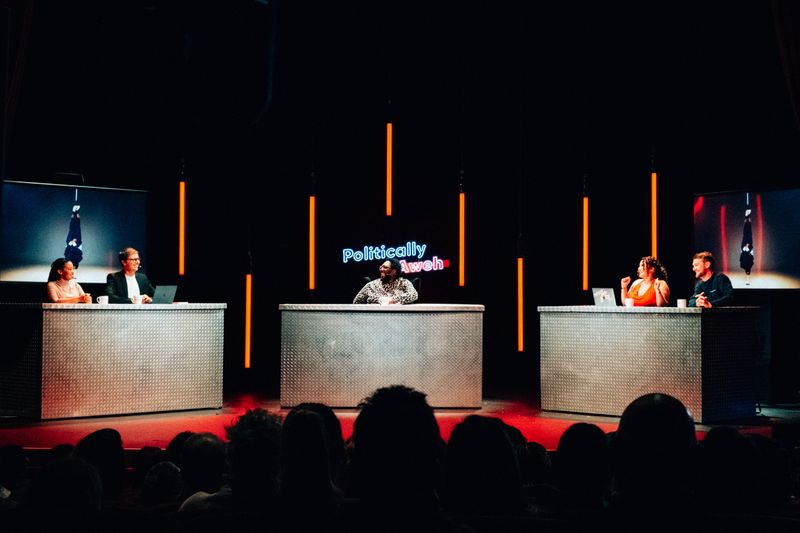
The show was filmed in front of a sold-out crowd at the Homecoming Centre in District Six on 21 October. KG and his co-hosts, Zoë Human and Stephen Horn, were joined by podcaster and author Dan Corder, as well as Daily Maverick reporter Naledi Mashishi. The night also included stand-up performances from comedians Yaaseen Barnes, Dillan Oliphant and Lindy Johnson. Before the show, Horn promised that “we’re not going to tell anyone how to vote”. He kept his word. KG, on the other hand, would very much like your vote.A campaign trail on a budgetThe hosts noted that this campaign has felt cheaper than previous ones. Remember when parties made music videos and put up statues? This time, it’s mostly bots and paid influencers. KG calls it “election shrinkflation”.It may be a cheapskate election, but it certainly hasn’t been boring. Between the ANC missing the IEC’s deadline to register 181 candidates because it didn’t click “submit as final”, and Helen Zille’s pothole shenanigans, we’ve had plenty to talk about.KG also told the audience that he thinks he’s influenced this election in a major way. In one interview, KG asked FF+ leader Corne Mulder about their campaign tagline, “Dit is ons tyd”, pressing Mulder to share who “ons” refers to. A few weeks later, some of the posters dropped the “ons” and now say, “Dit is tyd.” Since he’s clearly so influential, KG announced his own mayoral campaign. He promised to end the service delivery crisis by ending service delivery altogether. Every pothole will be filled with bobotie, and anyone who can work out the change from the front seat of a taxi gets an automatic BCom.Unfortunately for KG, in South Africa, you don’t vote for the mayor. If you’re also hazy on how your two (or three) ballots work, Daily Maverick’s Voting 101 with Rebecca Davis and its guide to ballots, wards and candidates will get you sorted before Wednesday.Follow the moneyWhy does it matter who funds a party? Because a donor who pays for a campaign may expect something back once that party is running a city. Until 2021, donors could give South African parties millions of rands in secret. The Political Party Funding Act changed that, partly thanks to pressure from civil society groups such as My Vote Counts, one of the show’s partners. But the rules have already been loosened. Parties now only have to disclose donations above R200,000, double the old threshold, and the annual cap per donor rose to R30-million.Watch the show to find out which big parties have declared almost nothing at all. KG was taking notes for his own campaign.What the polls sayNaledi Mashishi, who reported on why young people aren’t voting, said many don’t feel represented by any party or served by democratic institutions. She stressed that young people aren’t uninterested in politics; they’re looking for other ways to get involved.Voters are either staying home or splintering across smaller parties. This means almost every metro could end up without an outright majority, including Joburg and Cape Town.Mashishi said there’s one metro where a single party might still win outright: eThekwini, where MK may take the majority of votes. Cape Town’s housing crisisWe were in District Six, an area whose residents were forcibly removed under apartheid, so housing came up fast. The hosts ran through the numbers: Cape Town property prices have risen about 31% in five years, roughly double the increase in other big metros, and the city has more than 27,000 Airbnb listings. That has led groups to call for rent control. Hill-Lewis has firmly rejected it, arguing it makes housing shortages worse. Corder suggested a specific fix: allowing short-term rentals only in the owner’s primary home. Bots and fake news The panel then discussed different types of disinformation, with insights from the Centre for Information Integrity in Africa at Stellenbosch University, another of the show’s partners. The team explained how disinformation can spread using a recent example. In July, the Constitutional Court struck down parts of the Refugees Act that could stop asylum seekers from having their claims heard just because of how they entered the country or a missed deadline. Online, it became “foreigners are getting the vote”. Corder revealed he was once offered $500 to “just complain about load shedding a bit”. He turned it down, but learnt that many South African influencers chose to participate in the campaign. Researchers tracking this election have flagged evidence of similar activity.Mashishi, a former fact-checker, offered the following advice: if something sounds inflammatory, check it before you share it. Jokes asideComedians Yaaseen Barnes, Lindy Johnson and Dillan Oliphant each had sets where they brought their signature styles of humour, along with keen political and social observations.But KG’s final message was sincere: “Democracy is hard, and we all need to work for it.” Our country will only realise its potential if we’re active citizens. Vote, then stay involved, he says. DMFor more from Politically Aweh, subscribe on YouTube, sign up for the newsletter, visit the website or follow them on Instagram, Facebook, TikTok or X.
VIDEO: Poll Dancing: Watch Politically Aweh’s elections comedy special before you vote
Full Article
Original Source
Read the full article at Dailymaverick →KhanList aggregates and links to publicly available news content. We do not host full articles from third-party sources. Always verify important information with original sources.