
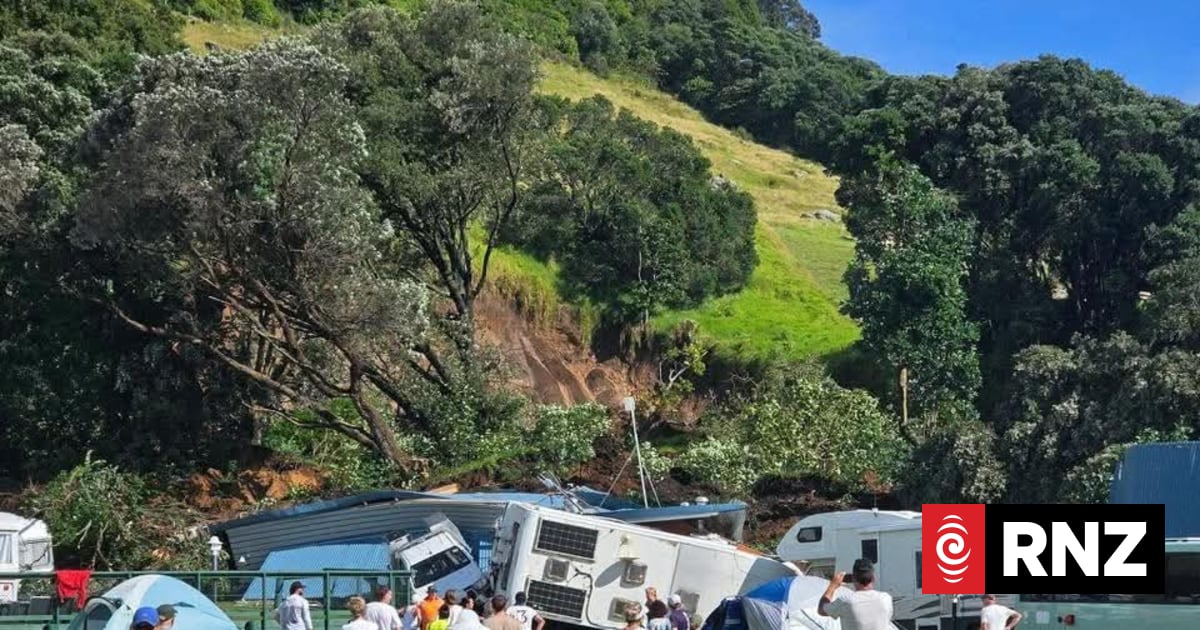
A Tauranga City Council manager says "very few" people understood the gravity of reports into the risk of landslides at Mt Maunganui.Elected officials and staff met on Tuesday to discuss the council's response to Paul Davison KC's report that said information showing a risk to life from a landslide was received, filed, discussed, forwarded, and then left.He found the risk was known decades before six people died in a landslide on January 22 2026.They were Lisa Maclennan, Susan Knowles, Jacqualine Wheeler, Måns Loke Bernhardsson, Sharon Maccanico, and Max Furse-Kee.Deputy mayor Jen Scoular asked staff about "media responses" that the chief executive and leadership team did not know abut the risks.Chief executive Marty Grenfell told RNZ that no senior staff saw those reports."These reports were never escalated to a point where anybody at a senior level within the organisation could provide guidance, direction, and ensure that they were appropriately managed," he told Checkpoint.Scoular questioned what was being done to help "middle tier staff" escalate information."Escalation of a risk requires that you understand it, that you know what your escalation requirements are, and that you feel psychologically safe to do so," general manager of strategy, partnerships and growth Reneke van Soest said."The first step there is actually recognising the hazard. People received reports but very few actually understood the gravity of what was said in those reports. That means we haven't appropriately helped our staff understand these things."RNZ / Kim Baker WilsonShe said risk assessment, identification and training is one of the recommendations to implement, but there's also elements of culture and systems."Staff with the benefit of hindsight are deeply affected by what happened."Davison found the failure was not the fault of any one person, it was the failure of a system that enabled an identified risk to life to remain unowned, un-escalated and unmanaged."The central conclusion of this review is sobering in its simplicity. This was not a hazard that was unknown, hidden, or beyond the reach of foresight."For more than two decades, one competent consultant after another identified the landslide hazard to the campground, located it on the very slope that failed, and explained - sometimes in stark terms - what the consequences of a landslide occurring could be."Davison said his recommendations are directed at building a single accountable ownership of every risk to life.The council has committed to implementing all of the recommendations, which it said was "embedded in a broader program of organizational transformation focused on culture, risk management, governance, systems and processes"."The program will focus on strengthening risk ownership, improving visibility of critical risks, embedding accountability, consolidating risk information, enhancing emergency management capability and ensuring a consistent organization-wide approach to identifying and managing risks that could result in loss of life or serious harm."
'Very few' middle tier staff understood the gravity of reports into Mt Maunganui landslide risks
Full Article
Original Source
Read the full article at Rnz →KhanList aggregates and links to publicly available news content. We do not host full articles from third-party sources. Always verify important information with original sources.