
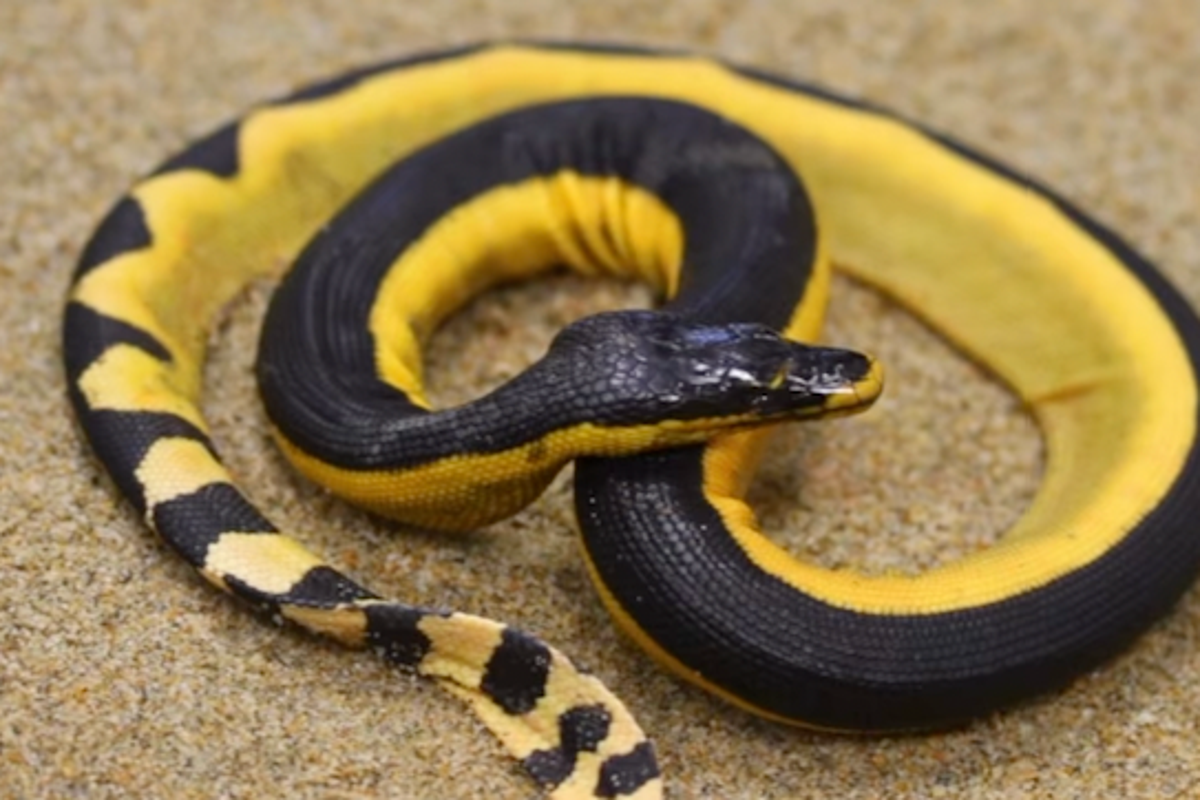
An eighth yellow-bellied sea snake has washed ashore in Southern California, the Natural History Museum of Los Angeles County said. The snake, recorded last weekend, is only the eighth of its kind ever documented along the Southern California coast.Both that species and the olive ridley sea turtle are rare in the region, but both are now appearing in unusually warm El Niño waters. Scientists at the museum are responding by asking beachgoers to help spot and report them.Greg Pauly, the museum's curator of herpetology, and colleagues from the U.S. Fish and Wildlife Service have also identified what the museum said was the northernmost and earliest olive ridley sea turtle nesting site yet recorded in California.A yellow-bellied snake was spotted this week in the waters off of Southern California (Natural History Museum of Los Angeles County)The nest was found on a Santa Barbara County beach. According to NHMLAC, it may have been laid before nesting events documented in Orange County in mid-September. Salvaged eggs and embryos were examined, and some were likely within days of hatching.The discovery suggests olive ridley eggs may incubate successfully in California under certain environmental conditions, museum officials said. Warmer ocean waters associated with El Niño can draw yellow-bellied sea snakes into currents that become too cold for them during winter, according to the museum.Scientists believe olive ridley sea turtles may also be following warmer waters, as some of their tropical nesting beaches become too warm. "The best time to look for any of this stuff is at least an hour and a half after the high tide," Pauly said.The eighth yellow-bellied sea snake ever recorded in Southern California washed ashore last weekend (Natural History Museum of Los Angeles County)The museum has launched a community-science effort, called the Fangsgiving and Hissmas Sea Snake and Sea Turtle Search, to encourage beachgoers to look along the high-tide line. They should look for sea turtle eggshell fragments, exposed eggs, or stranded yellow-bellied sea snakes.High tides through Sunday are more likely to bring sea snakes ashore or expose previously unknown turtle nests, the museum said. Additional windows when sea snake activity is expected are Dec. 4-11 and Dec. 20-27, although onshore winds and storm surges can also bring them ashore.Anyone who finds a nesting sea turtle, or possible sea turtle eggs exposed by beach erosion, was urged to notify local lifeguards. If no lifeguard is available, people can report sightings to the NOAA California Sea Turtle Stranding Line at 562-506-4315 or through the West Coast Sea Turtle Sightings Submission Form.Yellow-bellied sea snakes are venomous and should not be handled. The museum advised people to photograph them from a distance and notify lifeguards.
Venomous sea snakes are washing ashore on Southern California beaches as officials issue urgent warning
Full Article
Original Source
Read the full article at Independent →KhanList aggregates and links to publicly available news content. We do not host full articles from third-party sources. Always verify important information with original sources.