
May el-Toukhy is in competition at the Venice Film Festival with post-World War Two psychological thriller Woman Unknown as one of just two female directors in the running for the Golden Lion this year. Set in Denmark in the summer of 1945, the picture revolves around nanny and housemaid Marie (Mathilde Arcel), who is on the cusp of marrying her wealthy, older, widowed employer (Carsten Bjørnlund). Amid the jubilation, there is a darker side to the liberation as women who fraternized with German soldiers are tracked down and publicly shamed. A painful secret from Marie’s past threatens her imminent but fragile social ascension and she will stop at nothing to prevent it from being revealed. Mathilde Arcel as Marie in Woman Unknown Nordisk Film Production When Venice announced its lineup last July, el-Toukhy was the only woman in the main competition alongside 19 men. She has since been joined by Rachel Szor, co-director with Yuval Abraham of late addition Neza. Watch on Deadline It was a surprising move for a festival, which has feted three female directors with its top Golden Lion prize since 2020, and left many woman across the film industry wondering whether the drive for gender equality born out of the MeToo era was a mirage. El-Toukhy tells Deadline that while she is “delighted” and “honored” to be in competition, the lack of other women in the running for the Golden Lion this year has weighed on her since. “It tells us there’s still lots of work to do,” she says. “I think it’s very, very much a structural problem that I myself have lots of experience with. I’ve been the only woman in many, many settings.” “Going all the way back to when we get out of film school film as female filmmakers, to getting our first film done, and getting our second film done, the budgets we work under, and even sometimes the actors that say yes and the actors that say no,” she continues. “The way the media creates stories around male directors as geniuses… I’ve never heard a female director being called a genius. “We’re all part of this structure and it’s just been on my mind since how severe this problem is and how structural it is. It’s as old as cinema and even older than that. And of course, my film also speaks about some of these matters, such as the invisibility of women, in a historical context.” From Reformation Witch Hunts To Post-WW2 Purges Woman Unknown is el-Toukhy’s first film in seven years, with the director taking credits on dramas Cry Wolf and The Crown in between. The new feature grew out of research into witch hunts in Denmark sparked by its Protestant Reformation of 1536 which resulted in more than 1,000 executions. “I thought I was going to do a film about that but as I dived into the witch hunts in Denmark, I found it difficult to relate to the perpetrators, the witch hunters. I always gravitate towards telling stories where it’s more hazy, messy and sticky,” she explains. As she and longtime writing partner Maren Louise Käehne moved away from the idea, they came across pictures of Danish women being punished in public after World War Two for their relationships with German soldiers. Women having their heads shaved and being beaten and stripped in the street for fraternizing with Germans happened across Europe in the wake of the war. “It started a discussion around the fact that both sides were wrong and both sides were right and the idea that after the war, you punish whomever you can get your hands on and whomever you can punish without being punished yourself… and that’s often the women… that was really the starting point,” says el-Toukhy. The pair then came across the work of Danish academic Annette Warring and her 1994 paper entitled “Pro-German girls – during occupation and judicial reckoning”. Warring estimated that at least 50,000 Danish women had been in relationships with German soldiers over the course of the five-year occupation, but that only a handful had been informers or supporters of Nazi Germany. Her paper noted that under Denmark’s policy of cooperation with Germany following its 1940 invasion, fraternizing with German soldiers was not unlawful, either during the occupation or under post-World War Two legislation. She suggested that the post-world war purges and humiliations had been sparked rather by sexist notions around appropriate female sexuality and morality and the belief that “woman’s sexuality was national property”. “She got a lot of heat for that at that time in the 90s, the war generation was still alive and continued to dominate the narrative on the war… we dug into her study and that was really the starting point.” El-Toukhy suggests Denmark’s tactical appeasement of Germany, because as a small nation it had little other choice, blurred the lines between cooperation and collaboration, with the resistance only really strengthening in the lead up to the end of the war. “We kept our government and our society going, but we were at the same time oppressed by the Germans… that became the whole discussion after the war,” she says. “People got punished for having collaborated, and the ‘horizontal collaborators’ would be part of that cleaning up,” she continues. “Then there would be people who were never punished because they were too vital a part of society… people with factories, doctors. It became too complicated to punish them, because then everything would come to a standstill. The women were an easy target”. The shame carried by these women after they were outed, publicly humiliated and then ostracised carried down through generations. “Their children are now around my mother’s age, 70, 80 and even the next generation live in the shadow of that story,” says el-Toukhy. Tapping into Hitchcock & Scola Protagonist Marie is not based on one single real-life character but is rather a composite drawing on all of el-Toukhy’s research. “She’s based on everyone and no-one. She’s not a specific person,” she explains. Marie’s story also grew out of el-Toukhy’s questions around what kind of societal structures allow for a woman to humiliated and physically attacked with public approval on the street. “While working with the subject matter of the female body as a battlefield, I became interested in how fellow citizens can do that to a person. What structures are in place in a society in order for that to happen, and how do these structures look at home. The story grew from there.” The idea of telling the story through the genre of a psychological thriller came with time, as el-Toukhy and Käehne grappled with how to being something new to the the World War Two setting. “It is easy to fall into the trap of making a pastiche of everything you’ve seen over the years,” she says. “I also felt people glazed over a little bit when I pitched the idea, even if I think that’s unfair because there’s so many stories we haven’t told about women so let’s tell those stories and then say we’re over and done with that period. “The idea was to make it entertaining, for lack of better words, to make it a thrill to watch even though the subject matter is quite serious. We also had the ambition of doing something that doesn’t look like a classic Second World War or post-World War Two film.” The feature follows Marie over the course of five days with “camera almost sitting on her shoulder”. “The camera is never alone with other with characters apart from these drops of zeitgeist where we dive into the energy, the chaos and the time on a more philosophical level, but the idea of always sticking to her was very much also because I had this visionthat if I were to do a World War II film or a post-World War II period drama, it should have a different flavor. I was digging to find that.” There is also a Hitchcock feel as Marie observes other inhabitants of the swanky mansion block which is the main location through the windows of other apartments, and the spectator is left asking who is watching her back. El-Toukhy also cites Ettore Scola’s 1977 period drama A Special Day (Una giornate particolare), starring Sophia Loren as a Rome housewife opposite Marcello Mastroianni as her neighbour who remain at home the day Adolf Hitler visits Benito Mussolini. “There were the windows there as well and a sense that everyone is watching, that constant fear that someone can see you and what do they see?… It seemed like a good symbol also of Marie’s alienation in a way… she’s part of this fancy setup, but at the same time she’s standing on the outside of it.” Woman Unknown TrustNordisk El-Toukhy also had clear ideas for aesthetics of the film, with the color red running as leitmotif throughout the film, captured in Marie’s clothing, the red of the Danish flag or swastikas daubed on the homes of suspected collaborators. “I had this idea that while I was not going to do a black and white film, I wanted it to be almost desaturated but in color, so we would only work with black, red, white. The Danish flag is red and white and of course the Nazi flag is black and white on red and then we had the greys and the browns. We ended up with this film which almost looks like it’s black and white with a splash of red,” she says. El-Toukhy sees the color scheme as a way of showing the Danish population’s efforts to reassert a sense of national identity after the war. “As a filmmaker, there are so many decisions and you spend so much time figuring out, or at least I do, on how to infuse a film with a subconscious, like that something that speaks to the audience’s subconscious,” she explains. “The color scheme is like my own interpretation, and probably the audience will never see this, but nationalism was really on the rise… We had to kind of rebuild our narrative because we were collaborating with the Germans, and of course also because of the atrocities and the complicity during the war… that idea of having these colors as almost a nationalist signature was a big inspiration and energized me during the shooting of the film.” Woman Unknown is produced by Mikael Rieks (Land of Mine) for Nordisk Film Production A/S in co-production with Nafta Films, Nordisk Film Production Sweden and Film i Väst. TrustNordisk handles international sales.
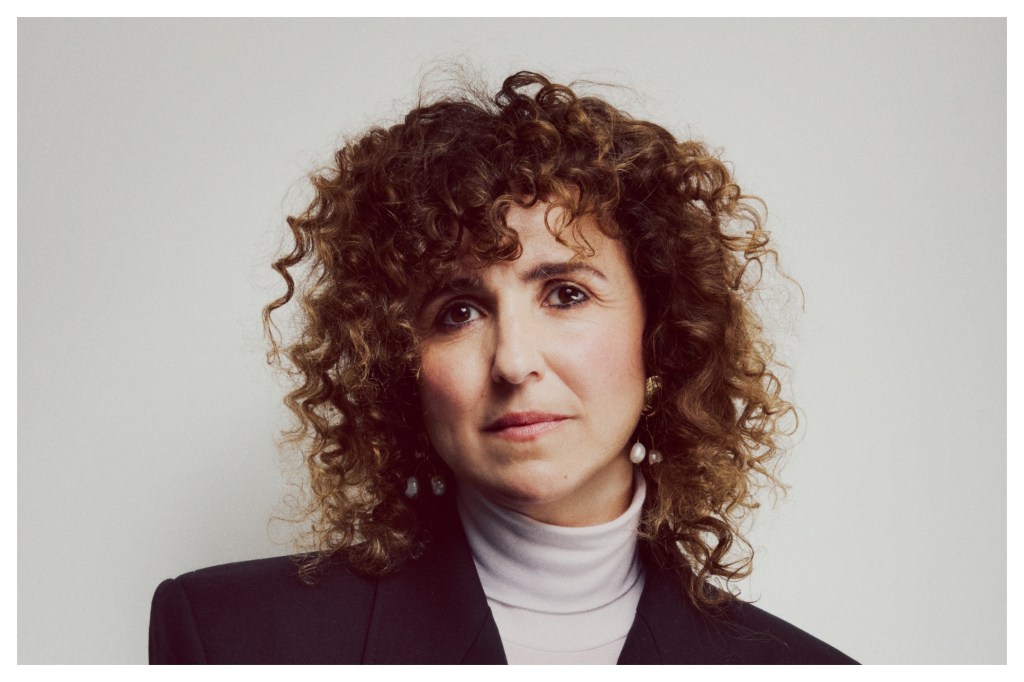
Venice Competition Filmmaker May El-Toukhy On Gender Imbalance: “I’ve Been The Only Woman In Many, Many Settings”
Full Article
Original Source
Read the full article at Deadline →KhanList aggregates and links to publicly available news content. We do not host full articles from third-party sources. Always verify important information with original sources.