
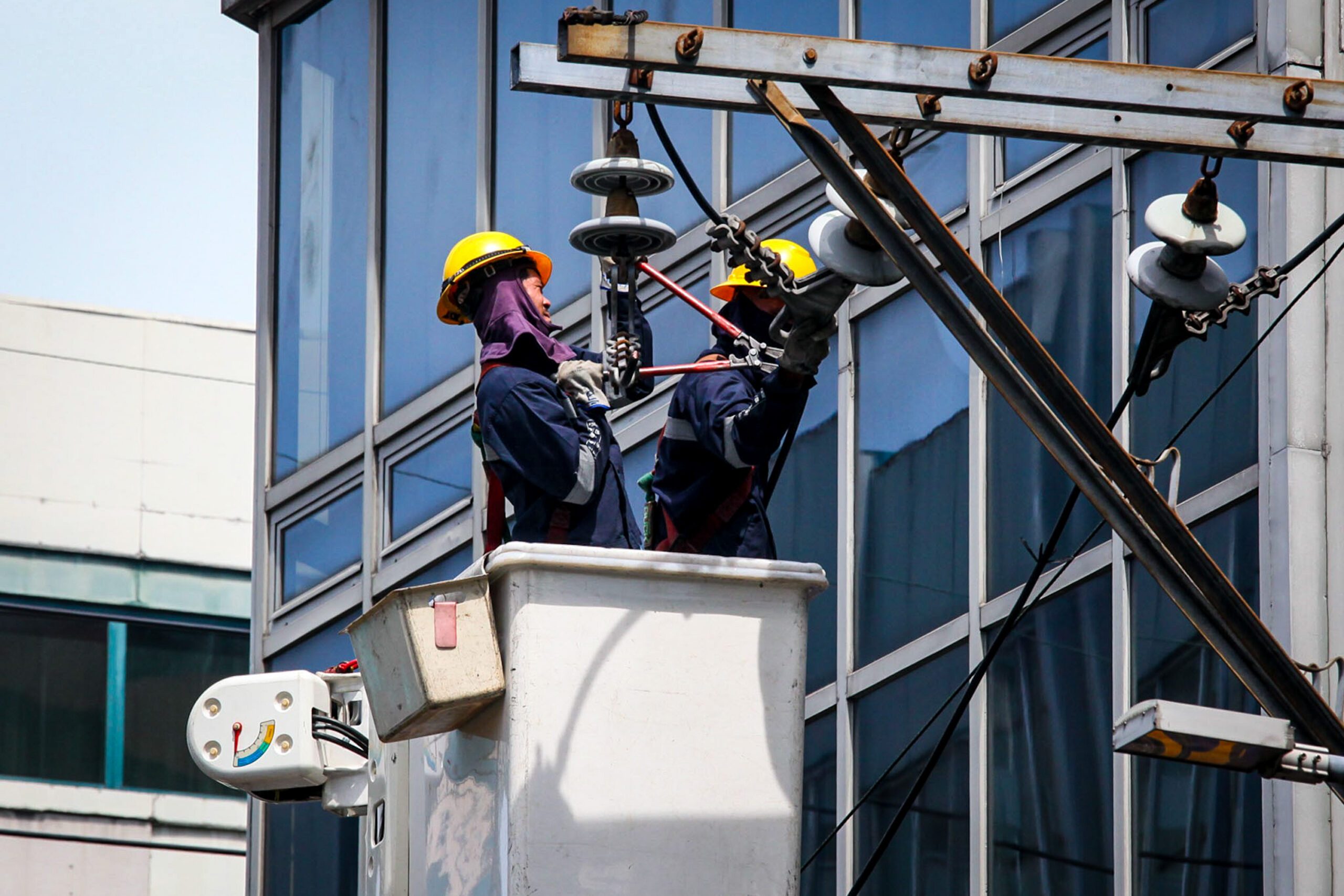
Electricity provider linemen repair a power line in Manila on July 15, 2026. Rappler The Department of Energy says reducing or eliminating the system loss charge itself will take time, requiring a phased program and billions of pesos in investments Filipino consumers may see the 12% VAT on system loss charges removed from electricity bills by November at the earliest, but eliminating the system loss charge itself will take longer and require significant investments. The Bureau of Internal Revenue is preparing a memorandum to implement the VAT exemption, recognizing that system loss is a cost rather than income for electricity providers. Eliminating the system loss charge will involve a phased approach, addressing non-technical and technical losses, with estimates suggesting it could require around P7 billion for necessary improvements. This is AI-generated. Read the article for full context. Report any errors. MANILA, Philippines – Filipino consumers may see the 12% value-added tax (VAT) on system loss charges disappear from their electricity bills as early as November, but removing the underlying system loss charge itself will take considerably longer and require billions of pesos in investments. Energy Regulatory Commission (ERC) Chairperson Francis Saturnino Juan said during the Department of Energy’s (DOE) budget hearing on Wednesday, September 2, that the Bureau of Internal Revenue (BIR) is drafting the revenue memorandum circular needed to implement the VAT exemption. The ERC has already issued Resolution No. 26, Series of 2026, which classifies system loss as a government-mandated pass-through cost that should not form part of the VAT base of generation companies, the National Grid Corporation of the Philippines (NGCP), and distribution utilities. Juan said the target now is for the BIR issuance to come out in September. Once effective, ERC would direct distribution utilities to modify their billing formats and systems. “Hopefully after September, kung October meron na po ‘yan, at the earliest is November po ang implementation (if it comes out in October, the earliest implementation can be is in November),” Juan said. The BIR later confirmed that it was preparing the Revenue Memorandum Circular and would issue it after the lapse of the 15-day period following publication of the ERC resolution. BIR Commissioner Charlito Martin Mendoza said the change recognizes that system loss is a cost recovered through electricity bills rather than income earned by generators, the NGCP, or distribution utilities. “In simple terms, consumers should not be paying VAT on electricity that never actually reaches their homes or businesses,” Mendoza said in a statement. The upcoming VAT relief, however, does not mean the system loss charge itself will disappear by November. (READ: Meralco may absorb system loss, but ERC says its rates may need adjusting) ‘This will take time’ During the hearing, Akbayan Representative Chel Diokno pressed officials on how soon consumers could expect the system loss charge itself to disappear. Energy Secretary Sharon Garin cautioned that this could not be done simply by ordering utilities to stop collecting it. “You cannot just say ERC, i-zero mo na ‘yan (bring it down to zero). So we have to go on phases,” Garin said. “This will take time, a lot of work for the electric co-ops, and also money.” System loss generally falls into two categories. Non-technical losses include electricity theft or pilferage, illegal connections, defective meters, and billing problems. Technical losses occur naturally as electricity moves through lines and transformers, but can be reduced through better equipment and network design. Image from DOE’s presentation during the House of Representative budget hearing. The DOE has previously estimated that its phased plan to eliminate non-technical system loss charges could require around P7 billion, covering measures such as anti-pilferage enforcement, meter management, improved billing and collection, consumer database cleanup, and institutional reforms. Under the plan, the allowable recovery of non-technical losses would be reduced in stages until it reaches zero. (READ: Meralco chair Pangilinan: Power industry ‘may not survive’ if asked to absorb system loss) Technical losses are more difficult to address because utilities would have to invest in their physical networks, Garin said. Electric cooperatives may need to replace or upgrade power lines, transformers and meters, and redesign portions of their distribution networks to improve the flow of electricity. She said electric cooperatives would need around six months to assess their systems and draw up their plans, after which the ERC could determine appropriate limits on recoverable technical losses. Garin said the government could report on the technical loss component by the first half of 2027. Juan said the ERC could lower existing system loss caps even under current law, in coordination with DOE and the National Electrification Administration, while ensuring distribution utilities remain financially capable of maintaining their networks. Meanwhile, an outright statutory prohibition on passing system losses to consumers would require Congress to amend the Electric Power Industry Reform Act, which currently allows distribution utilities to recover system losses subject to regulatory caps. – Rappler.com How does this make you feel? Loading
VAT on system loss may be removed by November – ERC
Full Article
Original Source
Read the full article at Rappler →KhanList aggregates and links to publicly available news content. We do not host full articles from third-party sources. Always verify important information with original sources.