
Ferdinand Marcos Jr. can help settle his father’s estate tax and show Filipinos that the law applies with equal force when the taxpayer is the President’s own family. When President Ferdinand Marcos Jr. opened the 2025 tax campaign of the Bureau of Internal Revenue (BIR), he asked Filipinos to pay what they owe. That call for civic duty gained urgency on November 13, when he swore in Rolando Ligon Jr. as BIR commissioner. Ligon takes office facing a test that strikes at his bureau’s credibility: what has the government done to collect the unpaid estate tax of Ferdinand Marcos Sr.? While the duty to account and collect rests with the commissioner, the President can make that work far easier. By publicly assuring the BIR that it has his full backing to pursue every lawful remedy—even when the taxpayer is his own family—Marcos Jr. can turn a decades-old stalemate into an act of true statesmanship. Understanding what is at stake begins with the record. The starting figure is P23,293,607,638, per the assessment made by the BIR in July 1991 after a special audit found that no estate tax return had been filed. PCGG, BIR Letters Re Marcos Estate Tax by Nami Buan on Scribd Because Philippine jurisprudence, as affirmed in Lorenzo v. Posadas, establishes that succession taxes accrue at death, the original assessment is governed by the tax laws in force when the elder Marcos died in 1989. The flat 6% estate tax rate introduced decades later under the TRAIN Law (Tax Reform for Acceleration and Inclusion Act or Republic Act No. 10963) does not apply to that assessment. (READ: [Ask the Tax Whiz] Estate tax amnesty: Essential compliance guide) Instead, the tax code then in force imposed a graduated schedule peaking at 60% on any portion of a net estate exceeding P3 million, plus a P1,393,450 base tax on the first P3 million. Working backward from the P23.29 billion assessment—subtracting the base tax, dividing the remainder by 60%, and adding back the initial P3 million—implies a taxable net estate of roughly P38.82 billion if the assessment consisted entirely of basic tax. (READ: Facts and lies: the Marcoses’ unpaid estate tax) While that arithmetic illustrates the assessment’s scale, reconstructing the actual tax base requires the audit schedules showing which assets were included, how they were valued, and what deductions were allowed. Public debate, however, has often centered on P203.819 billion. That figure stems from a 2021 calculation by retired Supreme Court senior associate justice Antonio Carpio, who took the P23.294 billion assessment and added a 25% surcharge of P5.823 billion, P139.762 billion in interest at 20% a year over 30 years, and P34.940 billion in interest on the surcharge. (READ: [ANALYSIS] The estate tax liability of the Marcos Estate) The math explains how the headline number grew, yet its assumptions require an official accounting. The TRAIN Law changed how statutory interest is calculated starting January 1, 2018, and the Supreme Court has applied the transition from 20% to 12% in tax cases. The BIR should clarify which rates and periods govern this account, how each charge was computed, and what credits reduce the balance. What is beyond dispute is that the assessment itself is legally settled. Marcos personally challenged the collection measures decades ago, leading to the Supreme Court’s 1997 ruling in Marcos II v. Court of Appeals. The Court held that the assessment became final and unappealable after the heirs failed to protest it through proper channels, finding sufficient notice and timely levies under the three-year prescriptive period then applicable. Crucially, the justices ruled that the BIR could proceed against estate property without waiting for probate court approval. Though Marcos claimed in 2022 that his family could not argue its case while in Hawaii, the Court’s decision records that notices were served after his return to the Philippines—including papers for his mother delivered through his office at the House of Representatives. The coalition 1Sambayan is urging Ligon to act before December 2, marking five years since the BIR sent a written demand to the heirs—a notice confirmed by then-commissioner Caesar Dulay. Determining whether another demand letter is legally necessary to preserve the government’s claims requires reviewing the statute and the collection record. As the Supreme Court showed in Republic v. Hizon—where a collection suit was deemed time-barred even as the BIR was allowed to proceed against properties covered by timely warrants—deadlines matter. Ligon must swiftly establish which remedies remain live and act accordingly before any applicable window closes. (READ: [Ask the Tax Whiz] The new BIR chief’s 3 crosses: Will he dare audit the powerful?) Just as importantly, the BIR owes the public a transparent accounting of past collection steps. Court records show that 11 Tacloban, Leyte, parcels went to auction in 1993. When no one bid, the properties were declared forfeited to the government. What became of those lands, and what value, if any, was credited against the tax? Subject to lawful disclosure limits, the bureau should lay out the full ledger: the original assessment, accrued charges, recoveries, and collectible balance. If any remedy has lapsed, it should explain when and why. After years of competing figures, Filipinos deserve a clear record they can examine. This moment gives Marcos a rare chance to show statesmanship. As an heir, he can help produce estate records, authorize disclosures where his consent can lawfully enable them, and work with the other heirs to settle what the BIR confirms is due. As President, he can give Ligon the space to reach and explain his own conclusions, even those inconvenient to the Marcos family. He can do both before December 2, while the bureau determines that date’s legal significance. Taking the high ground would give real substance to the President’s own appeals for tax compliance and hand revenue officers a powerful precedent the next time a well-connected taxpayer expects special treatment. Marcos has spent years asking Filipinos to judge his administration on its merits. Now, the choice is his. By using the authority of his office to protect the BIR’s independence in pursuing his father’s estate, he can show Filipinos that the law bends for no one. – Rappler.com Below are some Vantage Point pieces you might have missed: Click here for other Vantage Point articles.
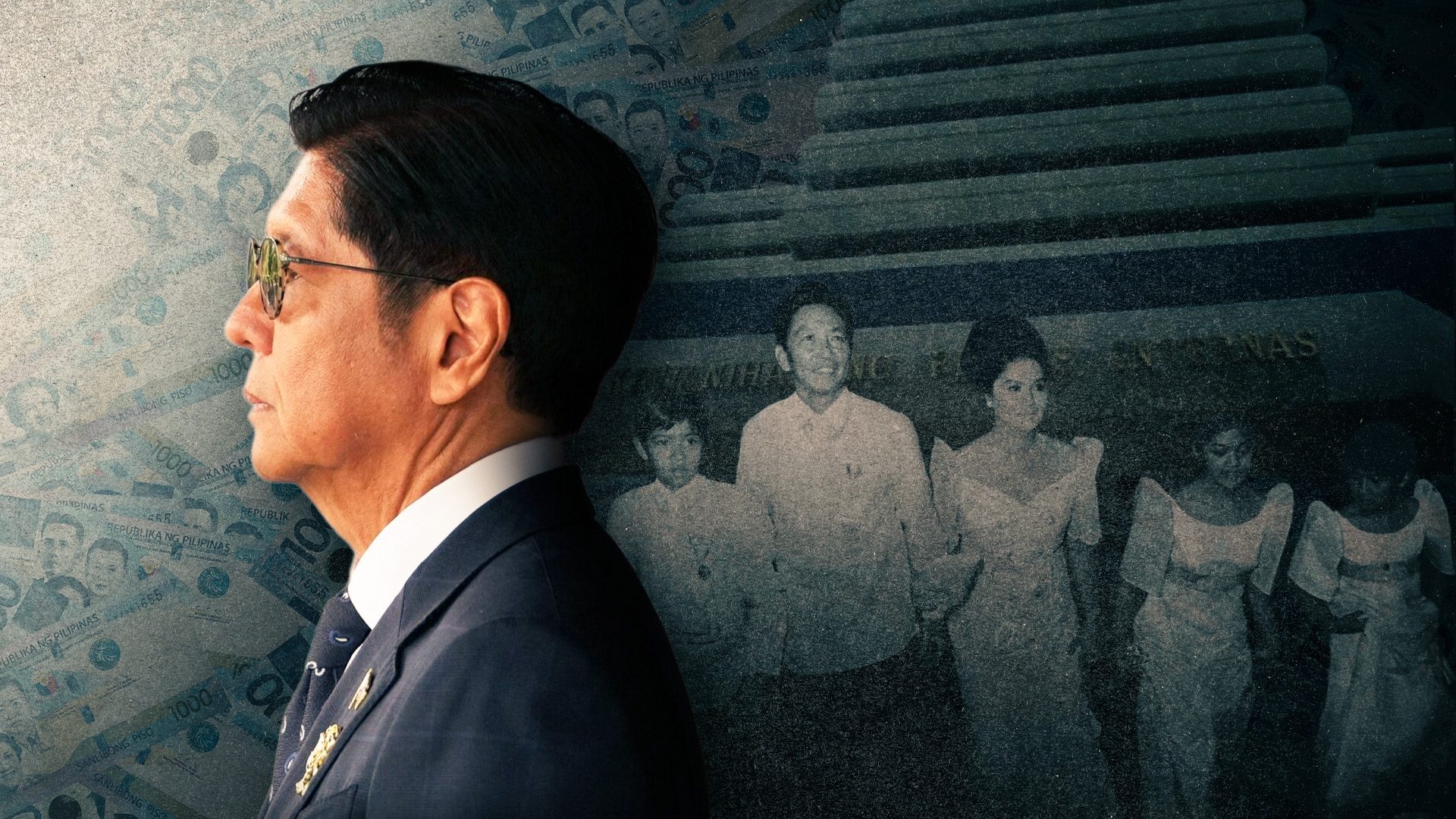
[Vantage Point] The Marcos estate tax: A test of presidential statesmanship
Full Article
Original Source
Read the full article at Rappler →KhanList aggregates and links to publicly available news content. We do not host full articles from third-party sources. Always verify important information with original sources.