
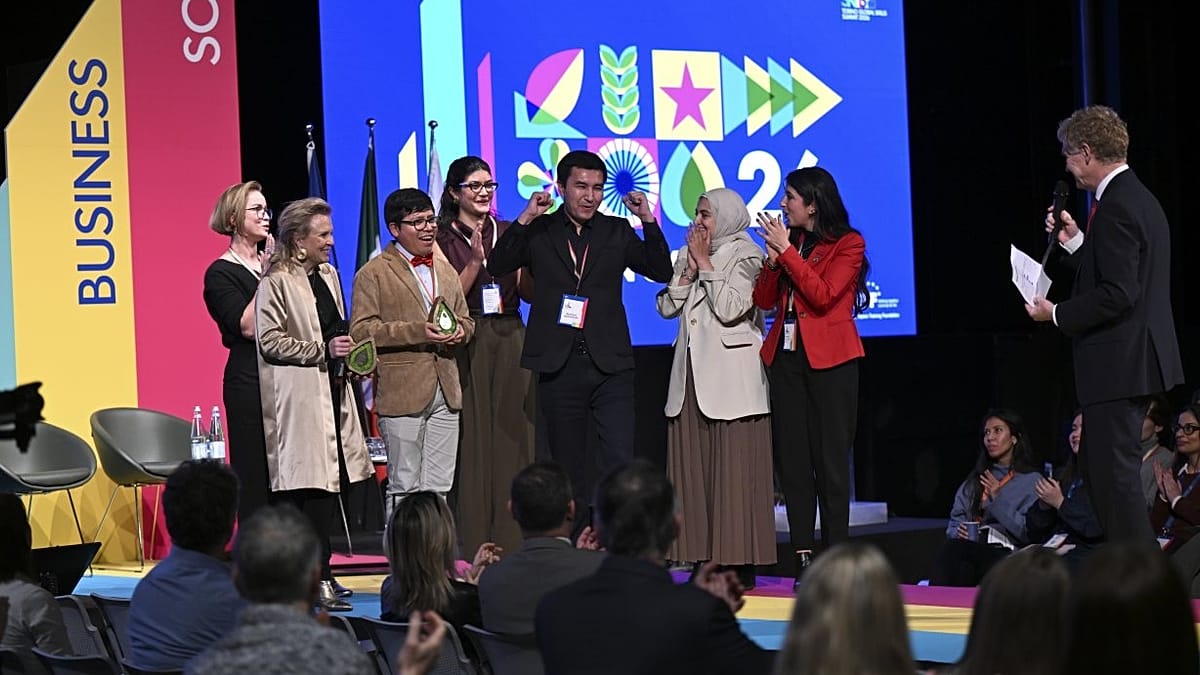
Published on 27 November 2026 - 18:11 GMT+1 When history teacher Abrorjon Sadriddinov noticed that his students were putting organic waste into recycling bins, he decided to rethink how environmental education was taught at his school in Namangan, eastern Uzbekistan. ADVERTISEMENT ADVERTISEMENT The initiative he developed with his students has since reached 25,000 people across 25 schools and won first prize at the European Training Foundation’s (ETF) Green Skills Award 2026 in Turin, Italy. The Uzbek team was among six finalists shortlisted by an expert jury from 369 applications submitted from 94 countries, with the winners determined through a public vote. Turning environmental education into action Named the Sustainable Future Society (SFS), the programme adapts the international Eco-Schools framework to the Uzbek educational system, giving students responsibility for identifying and tackling environmental problems. Students assess their schools’ environmental performance, develop solutions and measure their impact, acquiring practical skills in critical thinking, data analysis and project management. Within two years, the Presidential School in Namangan earned the internationally recognised Green Flag certification. The initiative has since generated 128 student-led projects, from recycling systems to energy-saving measures. According to the ETF, the model could be adopted by schools elsewhere without significant investment or sophisticated technology. Speaking after receiving the award, Sadriddinov stressed that environmental protection was everyone's responsibility, expressing his belief that together “we can build our sustainable future”. ETF Director Pilvi Torsti said the winning initiatives demonstrated that “the green transition is no longer an abstract ambition: it is already well underway, driven by communities, educators and innovators”. Peru took second place with its Young Glacier Ambassadors programme, while Nepal came third with an initiative teaching people to repair electronic devices and reduce waste. Projects from Bosnia and Herzegovina, Cyprus and Jordan completed the shortlist. Putting skills at the centre of economic development The awards were presented on the final day of the Torino Global Skills Summit, which brought together more than 250 participants and 80 speakers from 48 countries between 23 and 25 November. Organised by the ETF, a European Union agency working with 28 partner countries, the summit focused on the role of education and training in competitiveness, employment and social cohesion. European Commission Executive Vice-President Roxana Mînzatu stressed that investment in infrastructure, technology and industry must be accompanied by skills development, both in Europe and through the EU's international partnerships. Among the summit’s main outcomes was the presentation of voluntary guidelines developed by six multilateral development banks, including the European Investment Bank and the World Bank Group, to incorporate workforce training into investment projects from their earliest planning stages. The next Torino Global Skills Summit will take place in 2028.
Uzbek teacher turns school recycling problem into an award-winning green education project
Full Article
Original Source
Read the full article at Euronews →KhanList aggregates and links to publicly available news content. We do not host full articles from third-party sources. Always verify important information with original sources.