
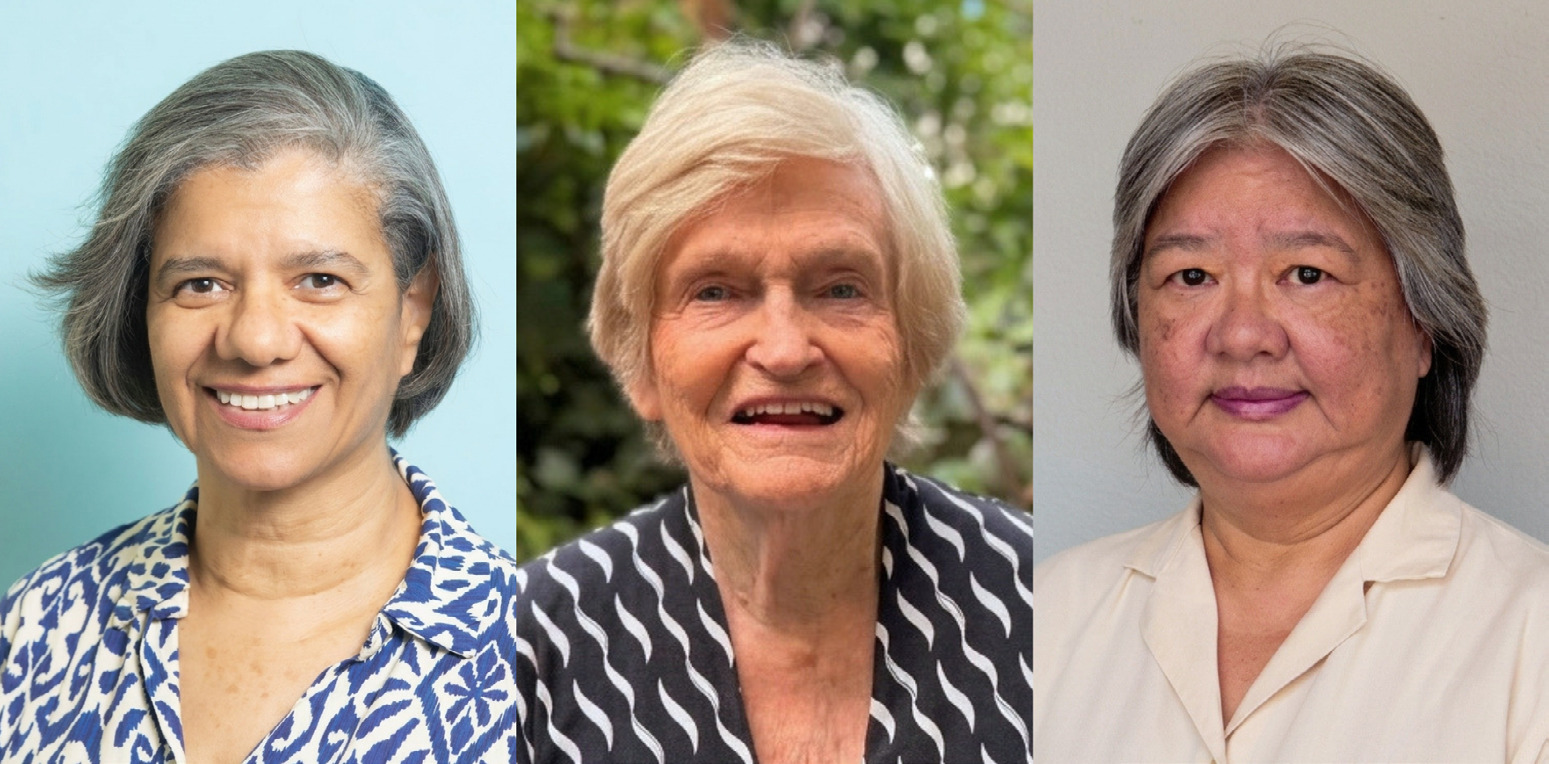
The 2026 Laureates for the Yidan Prize for Education Development are (from left) Professor Susan P. Walker, Emeritus Professor of Nutrition, Caribbean Institute for Health Research (CAIHR), UWI; Professor Sally Grantham-McGregor, University College London; and Dr Susan M. Chang-Lopez, Senior Lecturer at CAIHR, UWI. Two University of the West Indies (The UWI) researchers have been named 2026 Yidan Prize laureates for Education Development. Widely regarded as the world’s highest accolade in education, the award recognises over three decades of work that has transformed how we understand and support early childhood development globally. Professor Susan P. Walker, Emeritus Professor of Nutrition at The UWI’s Caribbean Institute for Health Research (CAIHR), and Dr Susan M. Chang-Lopez, Senior Lecturer at CAIHR, share the 2026 award with long-time collaborator Sally Grantham-McGregor, Emeritus Professor University College London. Professor Grantham-McGregor worked at the University Hospital of the West Indies (UHWI) from 1967 and subsequently joined the Tropical Metabolism Research Unit, UWI. She left as professor in 1995. The trio were recognised for creating Reach Up, an evidence-based, scalable, early childhood intervention that has grown from a 1986 research study in Jamaica to a programme reaching hundreds of thousands of children from vulnerable homes across 21 countries in Latin America and the Caribbean, Africa, Asia, and the Middle East, and is currently scaling to reach 1.5 million in Brazil. Announcing the laureates, Dorothy K. Gordon, Head of the Yidan Prize Judging Panel for Education Development, said the winners “have reshaped global education” with some of the strongest empirical evidence demonstrating the connection between early stimulation and pre-formal school learning and lifelong attainment. Acknowledging that one major cause of lower development in children growing up in poverty is a lack of early learning opportunities at home and limited access to pre-primary education, she commended the laureates’ generosity in sharing their findings and intervention techniques. According to Gordon, the resulting “practical innovation” in the Reach Up programme and the strong, international network of partner institutions around it demonstrate “how lasting change can be achieved through a combination of evidence, partnership and local leadership.” Reach Up provides low-cost, practical, culturally adaptable solutions to expand caregivers’ capacity to provide stimulation for children ages 0 to 4. The activities, built around everyday routines, help caregivers build in children the knowledge, skills and confidence to talk, play and respond in ways that support cognitive development. Implemented through a network of existing health, social protection, education and humanitarian systems, Reach Up’s curriculum and resources are free and continuously evaluated and adapted to keep the programme effective. (UWI)
UWI researchers win world’s largest education prize for transforming early childhood development
Full Article
Original Source
Read the full article at Barbadostoday →KhanList aggregates and links to publicly available news content. We do not host full articles from third-party sources. Always verify important information with original sources.