
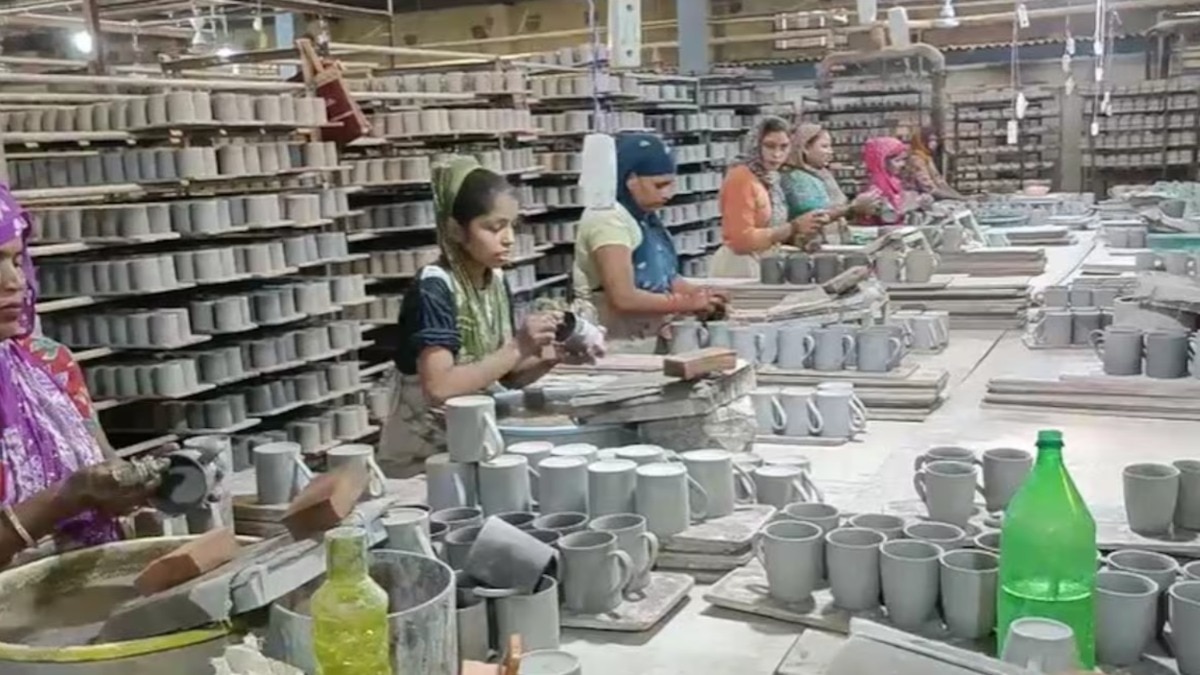
Government support under the ODOP scheme is helping Khurja's pottery units expand, modernise and reach overseas buyers. Gas connections, funding and training are reshaping a centuries-old ceramic industry for wider markets.Khurja, in Bulandshahr district, has long been known for its ceramic work. Khurja's pottery has been part of the town's identity for centuries. Now, government support under the One District, One Product (ODOP) scheme is helping local manufacturers expand production, upgrade their facilities and look beyond Indian markets.Khurja, in Bulandshahr district, has long been known for its ceramic work. The industry dates back to the Mughal period, and generations of artisans have built their livelihoods around pottery and ceramics.Today, the town produces a wide range of products, from tea sets and dinner sets to tiles and decorative pottery. Its blue pottery and Mughal-inspired designs remain particularly well known.The industry has also undergone a significant change in the way many factories operate. For years, manufacturers depended on coal and diesel furnaces. Around 300-400 units have now been connected to gas pipelines, with subsidised gas helping businesses reduce some of their operating costs.Government support has also extended beyond fuel. Under the ODOP initiative, businesses and artisans have received financial assistance, training and support for taking their products to exhibitions and overseas markets. From traditional pottery to a global marketFor local businesses, one of the biggest changes has been the opportunity to bring different products together and showcase them to buyers.Manufacturers say this has made it easier to display their products and find customers, including buyers from outside India. Training has also helped address the shortage of skilled workers that the industry faced earlier.According to local businesses, improved access to trained workers has helped increase production, while government-backed support has made it easier for new entrepreneurs to enter the sector.Some Khurja businesses have received financial assistance of around Rs 2 crore to Rs 2.5 crore under government schemes, according to the district administration.Dhananjay Singh, Deputy Commissioner at the District Centre, said businesses in the area have been provided benefits under the ODOP scheme and are periodically informed about the support available to them.What does ODOP offer Khurja businesses?The support comes through four broad components of the ODOP initiative.The first is ODOP funding, which supports the establishment of around 50 new units or the renovation of existing units every year. The Uttar Pradesh government also provides subsidy support under the scheme.The second focuses on training and skill development. Around 400 people receive 10 days of training every year and are subsequently provided toolkits to help them start or strengthen their livelihoods.The third component focuses on exports and participation in exhibitions. Large entrepreneurs can receive reimbursement of up to 75% of the cost of setting up stalls at exhibitions in India and abroad. Around 20-25 large entrepreneurs benefit from this support each year.The fourth is the Common Facility Centre, or CFC.Khurja is also expected to get an international-level laboratory and a raw material bank. The proposed facilities are aimed at helping manufacturers test the quality of their products locally.For exporters, this could address one of the practical problems faced by the industry — products being rejected because they do not meet required quality standards.Gas, funding and training change the businessThe shift from diesel generators and older fuel systems to gas-based generators has been another important change for local manufacturers.Business owners say diesel generators had created a significant pollution problem. With government support, most factories have now moved to gas-based generators.The subsidy available for this has also increased from Rs 5 lakh to Rs 10 lakh, according to the information provided by local businesses.New entrepreneurs, meanwhile, can access funding covering around 20-25% of the project cost, making it easier to set up new units.The combination of financing, training, fuel support and market access is intended to address several of the problems that have traditionally held back small manufacturing units.For an industry built around traditional skills, the challenge is not only to preserve the craft but also to make it commercially viable in larger markets.Khurja's pottery is now being positioned for exactly that.The town's products continue to carry the designs and techniques associated with its long ceramic tradition, but manufacturers are increasingly looking towards modern production, organised marketing and exports.The ODOP programme currently provides around 500 beneficiaries in Khurja with support through loans, training and exposure at exhibitions every year.For the pottery industry, the bigger test will be whether this support can translate into sustained orders, stronger exports and more businesses that can compete in international markets.- Ends(With inputs from Mukul Sharma)Published By: Koustav DasPublished On: Aug 31, 2026 12:33 IST
Uttar Pradesh's Khurja pottery gets a new push under ODOP, reaches global markets
Full Article
Original Source
Read the full article at Indiatoday →KhanList aggregates and links to publicly available news content. We do not host full articles from third-party sources. Always verify important information with original sources.