
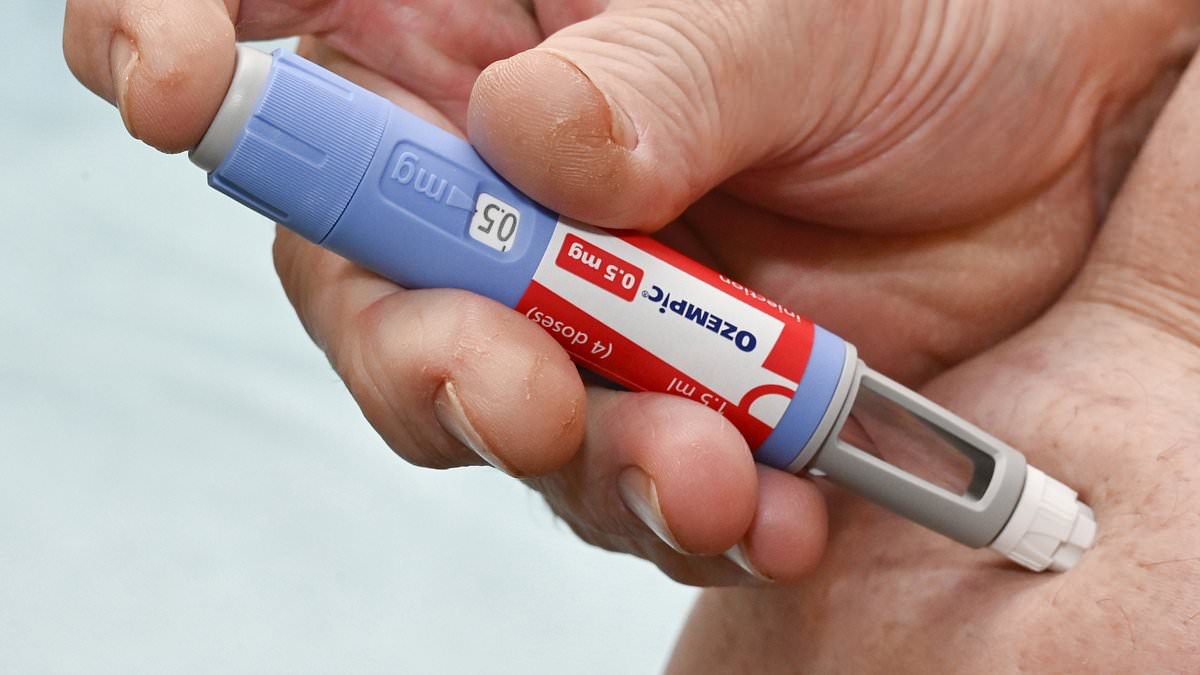
Using weight loss injections in older age could extend a woman's life by roughly a decade, an intriguing study has suggested.Blockbuster jabs like Ozempic and Mounjaro may be able to slow age-related body damage that accelerates death in women, when started around the age of 62.Other benefits include improvements in memory, reduced inflammation and stabilised blood sugar.The new findings add to previous research demonstrating the impact of calorie-restrictive diets on life span, scientists say.Users of the drugs – of which there are believed to be around 2.5 million in the UK – eat less because the jabs mimic a hormone that triggers the sensation of feeling full.The mice study, published in the journal Nature, also follows previous research suggesting the treatments may protect against a range of diseases in animals.Experts believe the new findings on ageing could help explain why. 'Most chronic diseases are deeply rooted in the ageing process,' said Rafael de Cabo, senior investigator at the National Institutes of Health, which funded the research, and author of a commentary on its results. Blockbuster jabs like Ozempic and Mounjaro may be able to slow the age-related body-wide damage that accelerates death in women, when started around the age of 62Everyone experiences dementia differently. Use this checklist to help you make a note of your symptoms before you talk to your GP.'If GLP-1 agonists do indeed slow it down, then a wide range of clinical benefits is exactly what you'd expect to see.'Naveed Sattar, professor of Cardiometabolic Medicine at the University of Glasgow, who was not involved in the study, added: 'Eating less over long periods reduces the burden placed on multiple organs, including the heart, liver, pancreas and kidneys, and may have broader health benefits on the brain and other tissues.'To test the drugs' effects on ageing, scientists from the University of California, Berkeley, gave semaglutide – otherwise known as Wegovy or Ozempic – to female mice who'd lived 75 per cent of their lifespan, meaning they were 20-month-old female mice.In human terms, this would be roughly equivalent to a 62-year-old woman starting treatment, experts said.Compared with mice that did not receive the medicine, those given the drug for three months had improved muscle and brain function – key in protecting against diseases like dementia.They also had lower levels of inflammation, better blood-sugar control and an improved ability to heal wounds – hallmarks of healthier ageing. Mice that continued receiving the treatment until the end of their lives lived around 100 days longer.Experts said this amounted to extending lifespan by around 11 per cent. In the average British woman, who lives to around 83, the equivalent increase would amount to more than nine years of life. To find out whether the benefits were caused by eating less, researchers compared the semaglutide-treated mice with another group given 24 per cent fewer calories. While many of the effects were similar, the semaglutide-fed mice showed improvements in memory and blood sugar control – important for preventing diabetes.'These differences point to the possibility that GLP-1 drugs tap into a biological pathway independent of calorie restriction,' said Danica Chen, corresponding author of the study and professor of metabolic biology and nutrition at University of California, Berkeley.'Uncovering this potential route and the benefits that may stem from it is an important direction for future research into longevity-enhancing interventions.' The researchers stressed that the findings do not mean the drugs can immediately be considered life-extending for humans, and that further trials are required.Scientists could eventually investigate whether the drugs benefit healthy older people – potentially opening the door to their use far beyond obesity and diabetes.Dr Laura Sinclair, a lecturer in healthcare at the University of Exeter, who was not involved in the study, said the results are 'interesting'.She continued: 'What we do know is that losing weight to be within a healthy range gives lots of health benefits, even if the individual later regains that weight. Naturally, the longer you maintain a healthy weight, the better for your biological ageing and risk of disease.'Dr Sinclair added that there were reasons for caution, including potential risks of an older woman using semaglutide for the rest of her life. Professor Tara Spires-Jones, division lead in the UK Dementia Research Institute at the University of Edinburgh, said: 'If these results from mice hold true in people, this is a promising hint that people taking [the drugs] may have an age-slowing benefit as well as benefits to reducing diabetes and obesity.'But she added: 'The main limitations of this study are that while well-conducted, this experiment was in mice and only female mice.'Mice are quite different from humans in many ways including lifespan and the range of environmental exposures of laboratory animals is limited. 'Women and men also have different physiology in ageing including factors such as the menopause. 'It will be interesting in the future to determine whether these results hold true in male mice and ultimately in people taking these drugs.'
Using weight loss jabs from age 62 could extend life by a decade, new study suggests
Full Article
Original Source
Read the full article at Dailymail →KhanList aggregates and links to publicly available news content. We do not host full articles from third-party sources. Always verify important information with original sources.