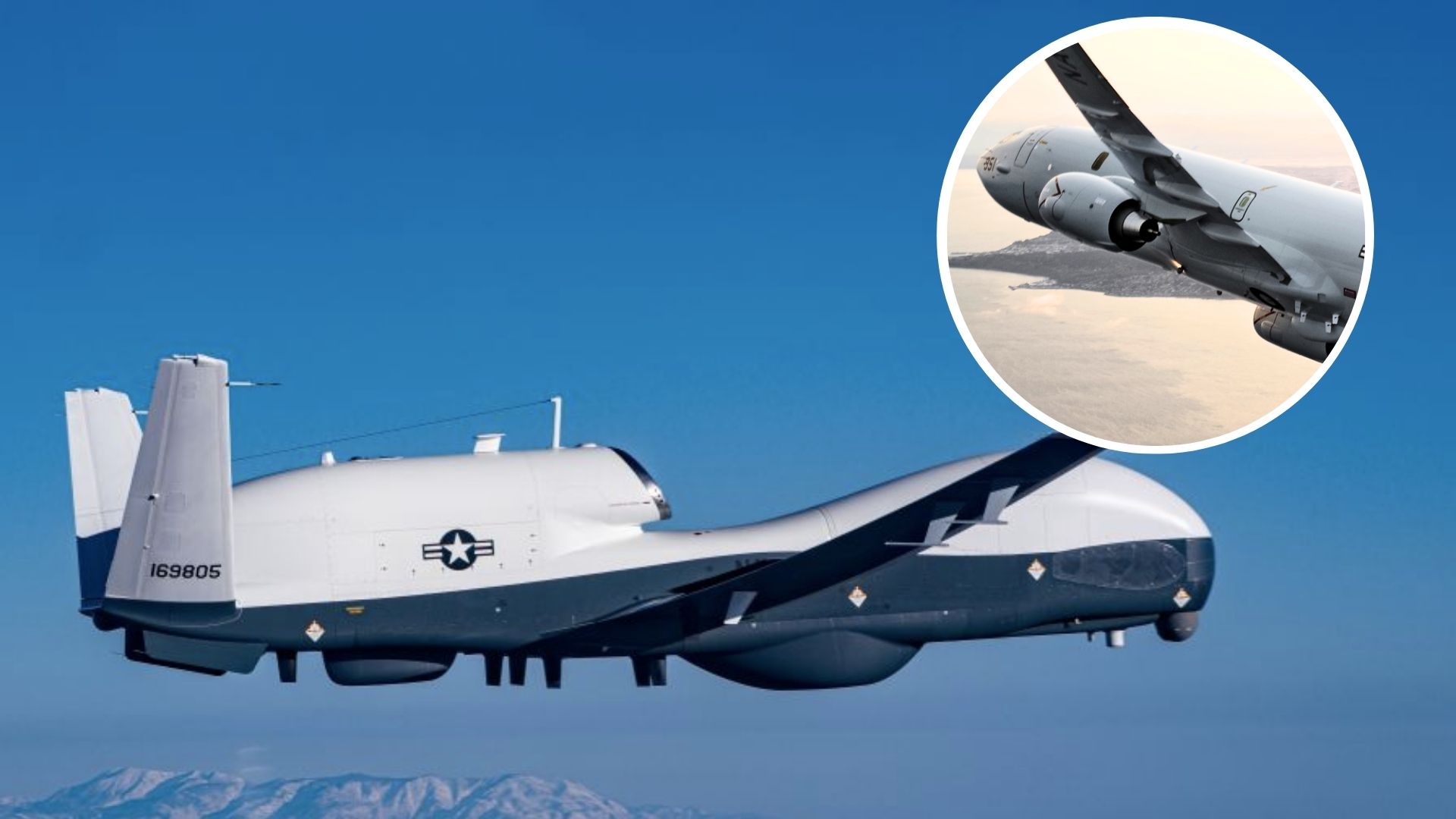
The P-8A could effectively direct the Triton toward a designated area. Once the task was received, the unmanned aircraft autonomously planned and executed its transit, employed its sensors according to the assigned mission, processed the information it collected and then transmitted its findings back to the Poseidon.This represents an important shift in the concept of manned-unmanned teaming. Instead of the human crew having to manually control every element of an unmanned mission, the aircraft can receive a defined objective and perform much of the subsequent work autonomously.Boeing said that the demonstration also incorporated satellite relay communications to create a more realistic operational environment. The mission-management and autonomy components communicated through OMS and UCI rather than through custom point-to-point interfaces. “MQ-4C Triton and P-8A are the backbone of the U.S. Navy’s maritime patrol and reconnaissance force, delivering complementary capabilities unmatched by any other platforms,” said Jane Bishop, vice president and general manager, global surveillance division, Northrop Grumman. “This demonstration underscores the flexibility of our systems, our unwavering industry investment and the strength of our industry relationships. Our commitment to pushing the boundaries of advanced technology ensures that the U.S. and allied nations operators maintain an unparalleled edge against evolving maritime threats.”The MQ-4C Triton and P-8A Poseidon are designed to perform complementary missions.The Triton is a high-altitude, long-endurance unmanned aircraft built to provide persistent maritime intelligence, surveillance, reconnaissance and targeting. Northrop Grumman describes the aircraft as capable of operating above 50,000 feet for more than 24 hours, allowing it to maintain surveillance over large maritime areas for extended periods. The P-8A, meanwhile, is a manned multi-mission maritime patrol aircraft capable of conducting anti-submarine warfare, anti-surface warfare, intelligence, surveillance and reconnaissance, and search-and-rescue missions. The combination therefore makes operational sense: the Triton can provide persistent, wide-area surveillance while the P-8A can concentrate on missions requiring a manned aircraft, including detailed investigation, prosecution of contacts and other tactical activities.“This Poseidon-Triton teaming demonstration unlocks real-world capability and interoperability for the U.S. and allies,” said Tory Peterson, vice president, Boeing P-8 Program. “We’re investing so that current and future global P-8A operators can expand the scope and effectiveness of their missions with low risk, evolutionary enhancements on the most advanced maritime patrol and reconnaissance aircraft already in service.”The U.S. Navy already considers the two platforms part of its broader Maritime Patrol and Reconnaissance Force family of systems. One of the biggest advantages demonstrated by the new approach is speed.In a traditional operational environment, information may have to pass through multiple human operators and system interfaces before a new task reaches another aircraft. Standards-based machine-to-machine communications can shorten that chain.In the demonstration, the P-8A effectively told the Triton where it needed to go. The Triton then handled the navigation, sensor employment, onboard processing and reporting associated with the task.That could allow crews to focus more heavily on decisions rather than manually coordinating every step of an unmanned aircraft’s mission.Boeing and Northrop Grumman say that UCI could also allow platforms to collaborate with other U.S. or allied systems using the same interface. That is potentially significant because modern military operations increasingly depend on networks containing aircraft, ships, unmanned systems, sensors and command-and-control nodes from multiple organizations.
US’ unmanned plane shares intelligence with submarine-hunter aircraft in landmark collaboration
Full Article
Original Source
Read the full article at Interestingengineering →KhanList aggregates and links to publicly available news content. We do not host full articles from third-party sources. Always verify important information with original sources.