
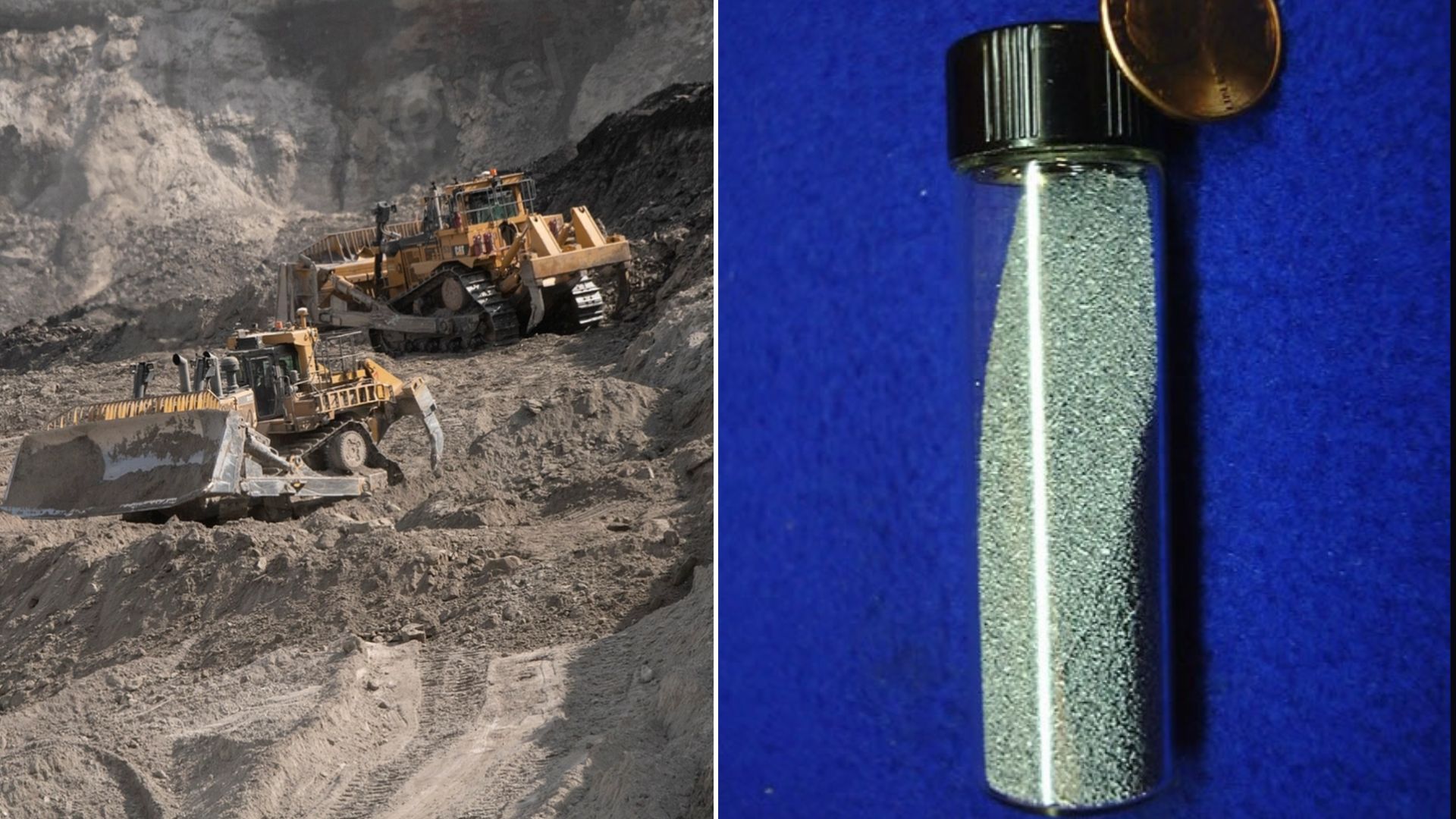
The US Army is committing up to $40 million to advance a potential domestic tungsten source, a critical metal used in defense and industrial applications, as the United States seeks to reduce its reliance on foreign mineral supplies. Perpetua Resources announced a 36-month award through the Army’s Defense Ordnance Technology Consortium (DOTC) to evaluate the technical and economic feasibility of producing tungsten concentrate at the historic Stibnite Mining District in Idaho. The cost-share program requires Perpetua to match the government’s contribution, bringing the planned joint investment to as much as $80 million. The funding will support exploration drilling, laboratory testing, engineering, and permitting work to assess whether the district can support tungsten production. It does not yet represent approval for commercial mining. Why the US wants a domestic tungsten source Tungsten is valued for its exceptional hardness, high density, and ability to withstand extremely high temperatures. These properties make it useful in industrial cutting tools, specialized alloys, and defense applications, including components designed to withstand demanding mechanical and thermal conditions. According to Perpetua, there has been no commercial tungsten mining in the United States since 2015, leaving the country reliant on imports from a limited number of suppliers. Chinese export controls and tighter federal sourcing requirements have added to concerns about the reliability of supply chains for defense manufacturing and other industries. The Stibnite district has a history of producing both tungsten and antimony. During World War II, the site supplied roughly half of the tungsten and 90 percent of the antimony the United States used, according to the company. Mining for the two metals ended after the war, leaving mineralized material that could potentially support renewed production. Drilling will assess high-grade tungsten deposits The Army-backed program will focus largely on tungsten mineralization beneath the proposed Hangar Flats pit. Perpetua plans an initial surface drilling campaign to better define a potential tungsten resource, alongside metallurgical testing to determine how the material could be processed. Previous drilling by the company identified several zones containing both tungsten and antimony. Reported results included a 9.8-meter (about 32.2 feet) interval grading 4.6 percent tungsten and 8.3 percent antimony, as well as a 22.9-meter (about 75.1 feet) interval grading 1.2 percent tungsten and 3.2 percent antimony. These are exploration results, rather than estimates of recoverable metal from an operating mine. The program will also test an existing 550-kilogram (about 1,213 pounds) sample collected during earlier exploration. The material reportedly grades 4.2 percent tungsten and 9.2 percent antimony. Metallurgical work will help determine whether the metals can be recovered efficiently enough to support a viable operation. Further work could include designing and permitting an underground exploration decline, potentially allowing access to mineralization beneath Hangar Flats. Construction would depend on the results of technical work and the required approvals. First phase expected to cost $18 million The initial 18-month phase is expected to cost approximately $18 million, split equally between Perpetua and the US government. Later phases will depend on drilling results, metallurgical testing, engineering, permitting, and approval of additional funding. The company also plans to continue exploring gold and antimony resources beneath the currently permitted Hangar Flats pit. Perpetua reports approximately 1.37 million ounces of gold resources and more than 95 million pounds of antimony resources in that area that are not included in its current mine plan or reported mineral reserves. Any activity outside the existing mine plan would require additional regulatory review and permits. The new award brings total US government awards to Perpetua for critical minerals to $126 million since 2022, according to the company. The immediate goal is to establish whether Stibnite’s tungsten deposits can be developed into a technically and economically viable source. Even if the exploration program proves successful, the site would still need additional permitting, development, and production work before it could supply commercial quantities of tungsten to US supply chains. Get the latest in engineering, tech, space & science - delivered daily to your inbox.Kaif Shaikh is a journalist and writer passionate about turning complex information into clear, impactful stories. His writing covers technology, sustainability, geopolitics, and occasionally fiction. A graduate in Journalism and Mass Communication, his work has appeared in the Times of India and beyond. After a near-fatal experience, Kaif began seeing both stories and silences differently. Outside work, he juggles far too many projects and passions, but always makes time to read, reflect, and hold onto the thread of wonder.
US turns to Idaho tungsten after 11 years without commercial mining amid China curbs
Full Article
Original Source
Read the full article at Interestingengineering →KhanList aggregates and links to publicly available news content. We do not host full articles from third-party sources. Always verify important information with original sources.