
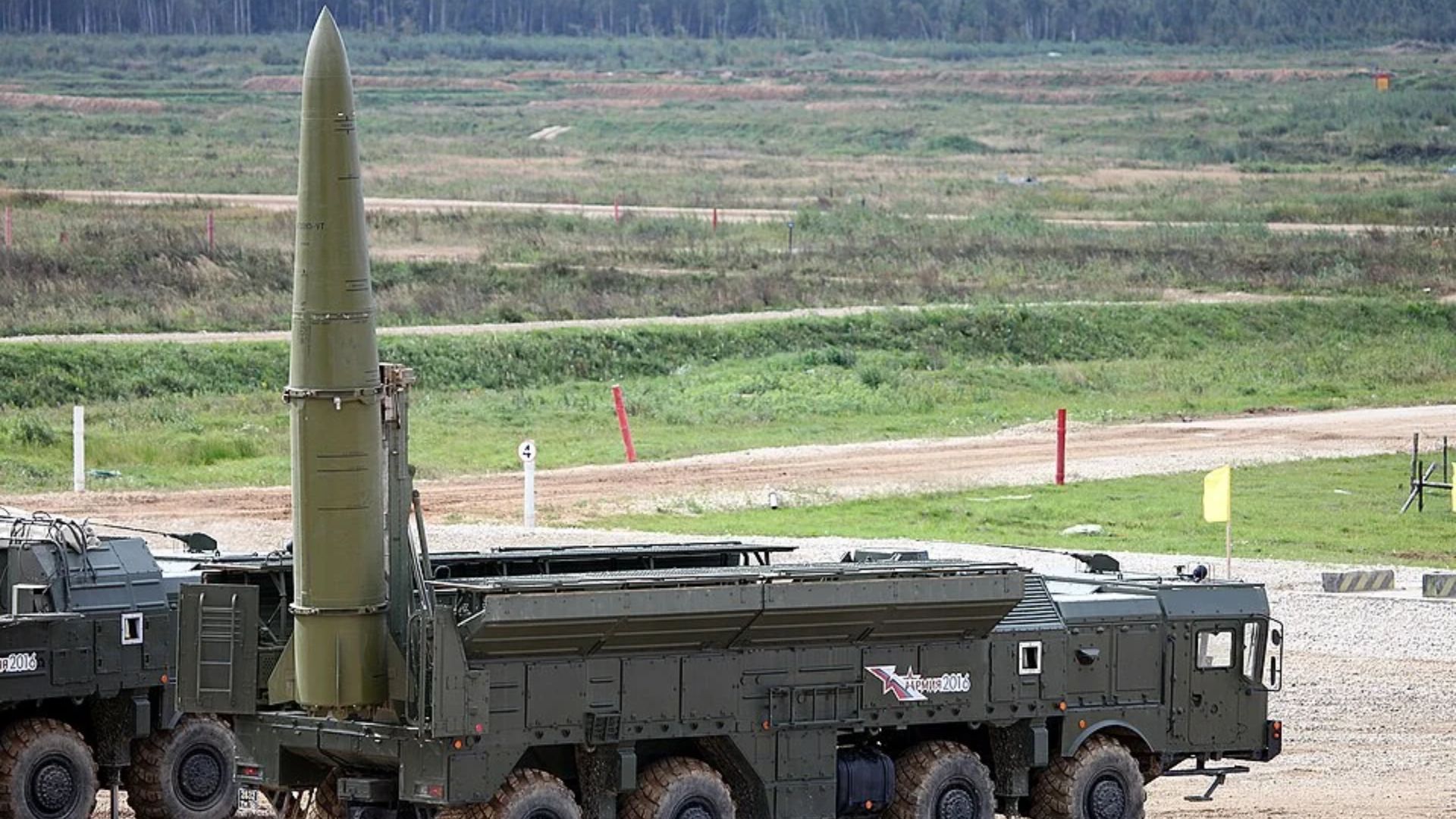
Russia has added optical and radar-homing upgrades to its Iskander ballistic missiles in a bid to improve their accuracy along the Dnipro River in Ukraine. The improved accuracy aims to sever logistical ties between the left and right banks of the river and degrade living conditions in Ukrainian cities ahead of the upcoming winter. Since early October, Russia has stepped up attacks on key bridges and power grids in Ukraine in a bid to bring down infrastructure and logistical support available in key cities. On October 1-2, Russia attacked the South Bridge in Kyiv, while targeting the North Bridge on October 3-4. The Central Bridge in Dnipro city was struck on October 30, while the cable-stayed bridge in Zaporizhzhia was made a target on Oct. 6. The North Bridge was attacked again last week. But with a difference. While the previous attacks consisted of jet-powered drones, the attack last weekend consisted of Iskander ballistic missiles with upgraded homing heads. Why use ballistic missiles? Since the beginning of the conflict, Ukraine has deployed smarter electronic warfare (EW) to counter Russian aggression where possible. This layer of defense jams the electronics of incoming projectiles and minimizes the damage caused. While bridges are narrow structural targets, the drone attacks could not achieve the desired results, forcing Russia to change its strategy. Ballistic missiles are rocket-propelled weapons with a wide range spectrum and can carry a range of powerful warheads. The Iskander is a short-range ballistic missile with a range of 310 miles (500 km) and can carry high-explosive fragmentation, fuel-air explosives, and even thermonuclear warheads. Irrespective of the range or warhead, ballistic missiles work on the same principle: they take powered flight to gain speed and altitude. The engine then shuts off, and the missile follows a parabolic arc and heads toward the target at high velocity. When the missile reaches its desired altitude, the onboard computer positions it in the line of its target. However, the path is guided by gravity and comes with a wide margin for error. This makes the missiles unsuitable for precise targets like bridges. But Russia’s upgrade changes that completely. Russia’s upgraded missiles Russian upgrade of the Iskander ballistic missiles features radar and optical homing seekers. These enable the missiles to alter flight trajectories in the terminal phase of their flight, increasing accuracy to a few meters. The aim is to hit the bridges more accurately, as was seen through four Iskander missile strikes on the North Bridge in Kyiv last weekend. Ukrainian authorities expect these attacks to intensify as they head into the winter. According to Ukrainian media reports, Russian strategy is to target key bridges along the Dnipro River to paralyze both military and civilian logistics on both the banks. Military strategy and technology experts have confirmed that Russian upgrades have likely increased the accuracy of the missiles. However, their ability to bring down Kyiv’s key bridges is also dependent on the quality of engineering of Ukraine’s bridges. Key river crossings in Ukraine are heavily engineered and for now the likelihood of Russia being able to destroy them remains fairly low. Get the latest in engineering, tech, space & science - delivered daily to your inbox.Ameya is a science writer based in Hyderabad, India. A Molecular Biologist at heart, he traded the micropipette to write about science during the pandemic and does not want to go back. He likes to write about genetics, microbes, technology, and public policy.
US’ top nuclear rival upgrades Mach-6 speeding ballistic missile that hit targets with accuracy
Full Article
Original Source
Read the full article at Interestingengineering →KhanList aggregates and links to publicly available news content. We do not host full articles from third-party sources. Always verify important information with original sources.