
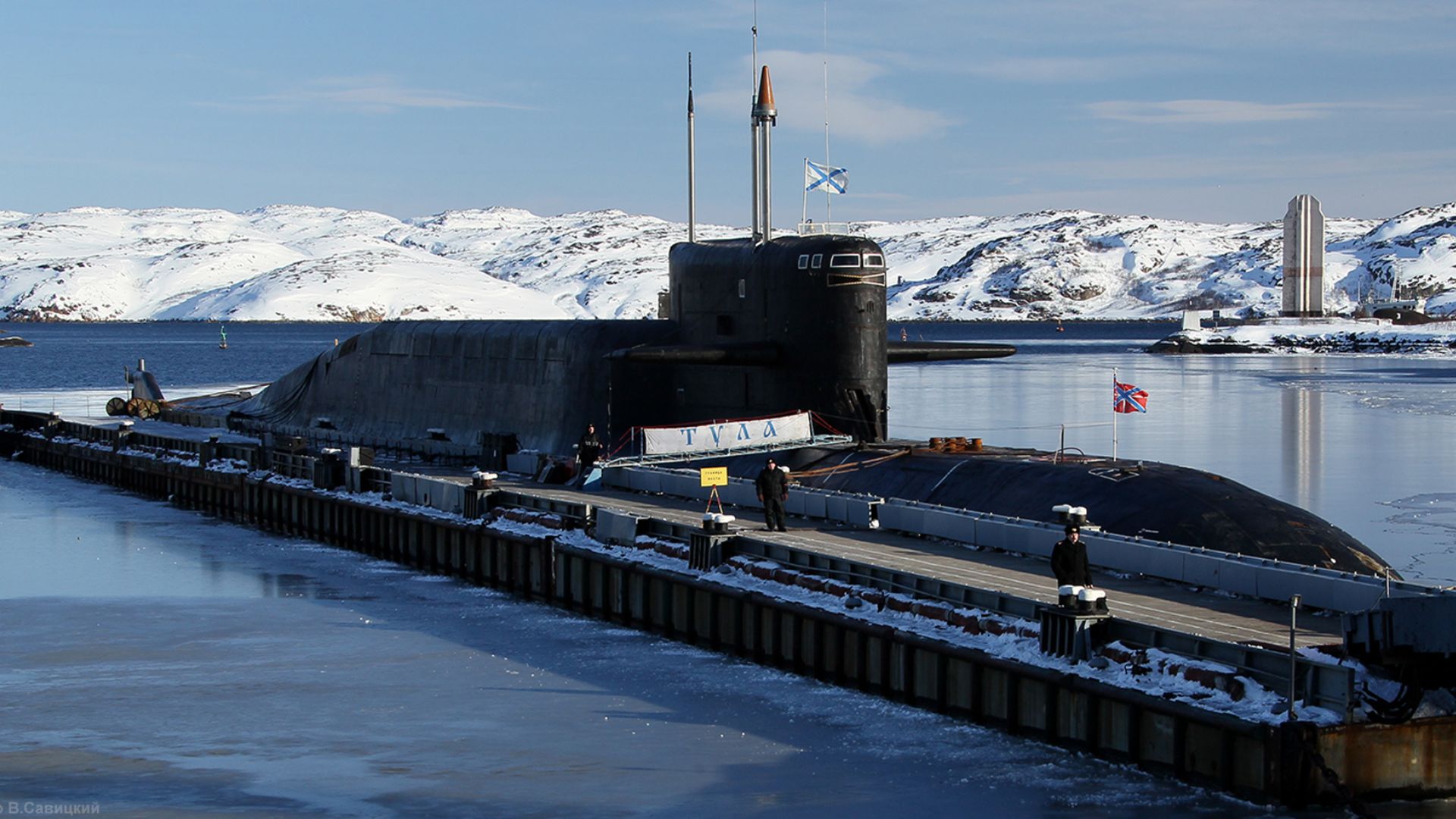
The United States Navy is facing a growing challenge beneath the ocean’s surface, with China rapidly expanding its nuclear-powered submarine fleet and Russia continuing to invest in advanced underwater weapons and strategic missile submarines. Rear Adm. Chris Cavanaugh, commander of Submarine Forces, US Pacific Fleet (COMSUBPAC), outlined the growing threat during the Navy Submarine League’s 2026 Annual Symposium. His assessment highlighted not only the increasing number of adversary submarines but also improvements in their capabilities, supporting infrastructure, and underwater surveillance networks. China is building submarines at an accelerating pace According to Naval News, which reported on Cavanaugh’s presentation on November 13, the People’s Liberation Army Navy (PLAN) has brought eight Type 093B, or Shang III, nuclear-powered attack submarines into service in less than four years. Cavanaugh said US assessments indicate that Chinese shipyards could sustain a similar production pace for at least another decade, potentially adding 20 to 40 Shang III or improved submarines during that period. The USNI News report on Cavanaugh’s remarks also highlighted his warning that China’s growing submarine numbers are being accompanied by improvements in individual vessel capabilities. The Shang III represents a significant step up from earlier Chinese nuclear attack submarines. Cavanaugh pointed to improved acoustic quieting, propulsion changes, and 24 vertical launch cells that could accommodate missiles. He suggested that the scale of these changes makes the Shang III effectively a new submarine class rather than a simple upgrade. China is also developing the Type 095 nuclear-powered guided-missile submarine and the Type 096 ballistic missile submarine, which would strengthen its sea-based nuclear deterrent. The latter is particularly important to China’s second-strike capability: the ability to retaliate with nuclear weapons even after an initial attack. China’s undersea ambitions extend beyond submarines Cavanaugh also highlighted China’s growing investment in oceanographic research, seabed mapping, unmanned underwater vehicles (UUVs), and supporting infrastructure. These activities could give Chinese submarines a better understanding of underwater conditions, including ocean currents, temperature layers, and seabed geography. Such information can influence how submarines navigate, conceal themselves, and detect other vessels. A Reuters investigation into China’s ocean-floor mapping activities documented research and monitoring operations around Taiwan, the Philippines, Guam, and Hawaii. Although these activities can serve legitimate scientific purposes, military experts told Reuters that the resulting data could also help prepare for submarine operations. Russia remains a major undersea threat Russia presents a different but equally important challenge to the US Pacific submarine force. Cavanaugh highlighted the country’s Borei-class nuclear-powered ballistic missile submarines, including newer Project 955A vessels, which provide a key component of its sea-based nuclear deterrent. He also pointed to the Yasen-class guided-missile submarines, known for their ability to carry a combination of cruise and other advanced missiles. Their quieting technology and weapons capacity make them significant threats to US naval forces. Another concern is Poseidon, Russia’s proposed nuclear-powered, nuclear-armed autonomous underwater vehicle. Also known as Status-6, the system is designed for long-range underwater operations and represents an unconventional addition to Russia’s strategic nuclear capabilities. North Korea adds another layer of uncertainty North Korea’s submarine program was another concern in Cavanaugh’s assessment. The country has revealed designs for a new nuclear-powered submarine, while also claiming advances in torpedo and propulsion technology. However, the US Navy remains cautious about how much operational capability these announcements reflect. The submarine’s actual performance and the maturity of its systems have not been independently established. Taken together, developments in China, Russia, and North Korea point to an increasingly complex underwater operating environment. Cavanaugh warned that the combined growth of adversary submarine fleets could make it harder for the US Navy to maintain awareness across the vast Pacific. The challenge is not simply keeping pace with the number of submarines being built. It is maintaining the sensors, infrastructure, technology, and fleet capacity needed to detect and track them. Get the latest in engineering, tech, space & science - delivered daily to your inbox.Kaif Shaikh is a journalist and writer passionate about turning complex information into clear, impactful stories. His writing covers technology, sustainability, geopolitics, and occasionally fiction. A graduate in Journalism and Mass Communication, his work has appeared in the Times of India and beyond. After a near-fatal experience, Kaif began seeing both stories and silences differently. Outside work, he juggles far too many projects and passions, but always makes time to read, reflect, and hold onto the thread of wonder.
US’ top 3 nuclear rivals expand undersea capabilities, China could add 40 nuclear attack submarines
Full Article
Original Source
Read the full article at Interestingengineering →KhanList aggregates and links to publicly available news content. We do not host full articles from third-party sources. Always verify important information with original sources.