
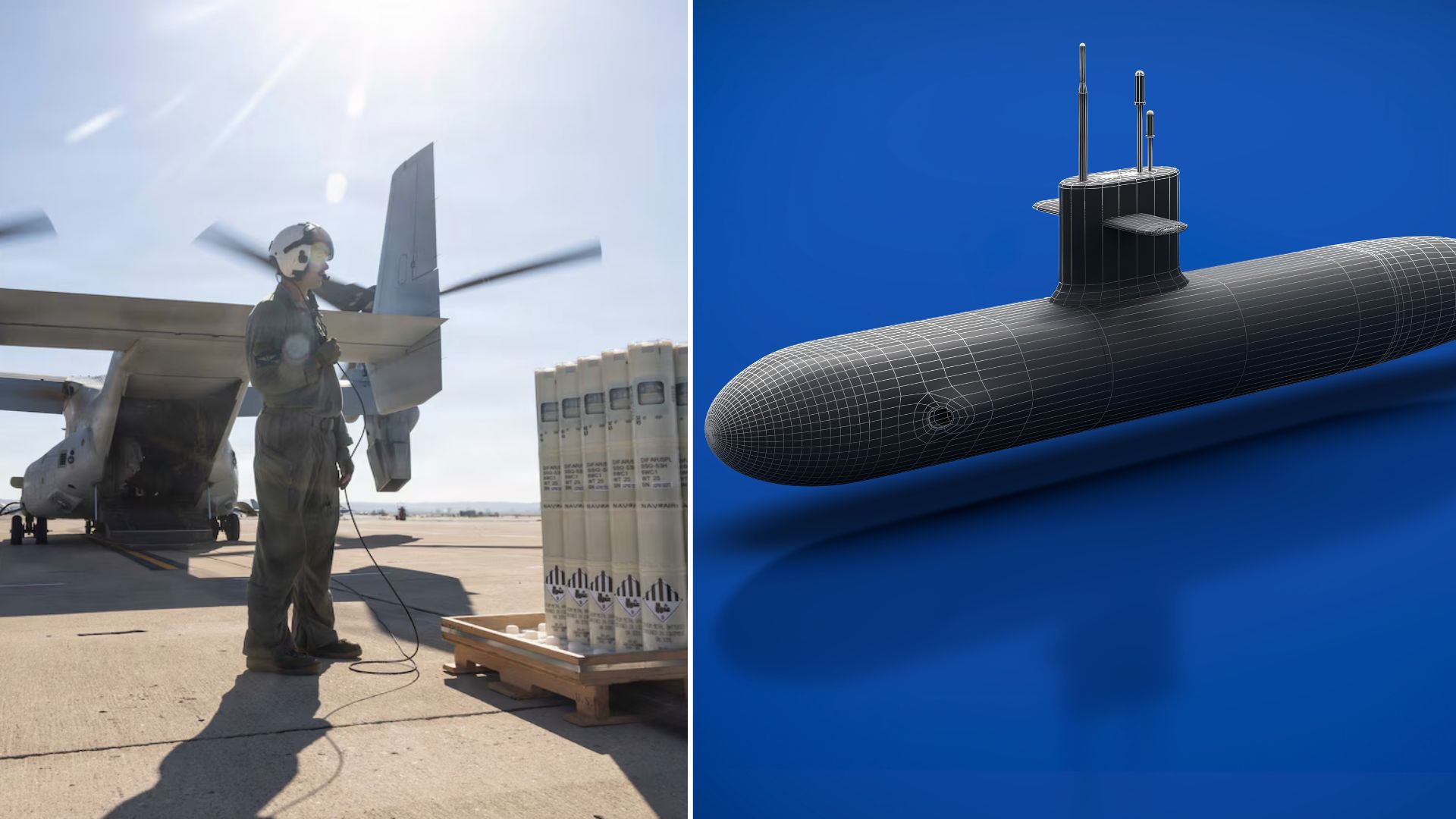
“Our primary focus in the quality assurance program is making sure the sonobuoys delivered to the fleet perform exactly as expected,” said Navy Capt. Greg Hinkle, program manager of the Air Anti-Submarine Warfare Systems Program Office. “By utilizing the [Osprey] for this type of mission, we are reinforcing our supply chain and ensuring front line aircrews have the mission-ready stores they need to detect and track undersea threats. Historically, the Navy has relied on P-3C Orion aircraft assigned to Air Test and Evaluation Squadron 30 to conduct these quality assurance drops using automated launch systems. The introduction of the Osprey as an alternative platform provides an additional option when the primary aircraft are unavailable.This flexibility could help prevent testing backlogs and reduce disruptions to sonobuoy delivery schedules, ultimately supporting the availability of mission-ready stores for operational units.The test also highlighted a significant difference between operating the Osprey and the P-3C Orion for sonobuoy deployment.The Orion uses automated launch containers operated from the cockpit. The Osprey, by contrast, requires its crew to manually release the sonobuoys through the aircraft’s open rear cargo ramp.“From an aircrew standpoint, this event provided an invaluable opportunity for our pilots and crew chiefs to build proficiency working through the mechanics of manual sonobuoy drops in a controlled setting,” said Marine Corps Lt. Col. Brandon Pope, Osprey pilot and advanced projects lead assigned to the Marine Operational Test and Evaluation Squadron 1. “Hand-launching from an open ramp requires split-second coordination; the crew must be deliberate with timing, airspeed control and internal communication. This test demonstrated how the [Osprey’s] range, speed and versatility can support broader maritime domain awareness and distributed fleet operations.” During the test, crew chiefs removed container caps and inverted launch tubes before releasing the sonobuoys into the aircraft’s slipstream. This process requires considerably more coordination among the flight crew and cargo-bay personnel.Manual deployment also produces greater intervals between individual buoy releases. To compensate, the evaluation aircrew reduced the aircraft’s speed, allowing them to maintain the required spacing and target pattern for acoustic testing.The procedure therefore became more than simply a test of the sonobuoys themselves. It also provided the Marine Corps with practical experience in operating the Osprey in a mission profile different from its traditional transport and assault-support roles.The test demonstrated the importance of precise coordination when launching sonobuoys from the Osprey’s rear ramp.The pilot must maintain stable flight parameters while the copilot manages navigation, timing and communications. At the same time, crew chiefs in the cargo compartment must prepare, program and release the sonobuoys according to the required sequence.
US to conduct anti-submarine operations perfectly with tiltrotor that deploys undersea sensors
Full Article
Original Source
Read the full article at Interestingengineering →KhanList aggregates and links to publicly available news content. We do not host full articles from third-party sources. Always verify important information with original sources.