
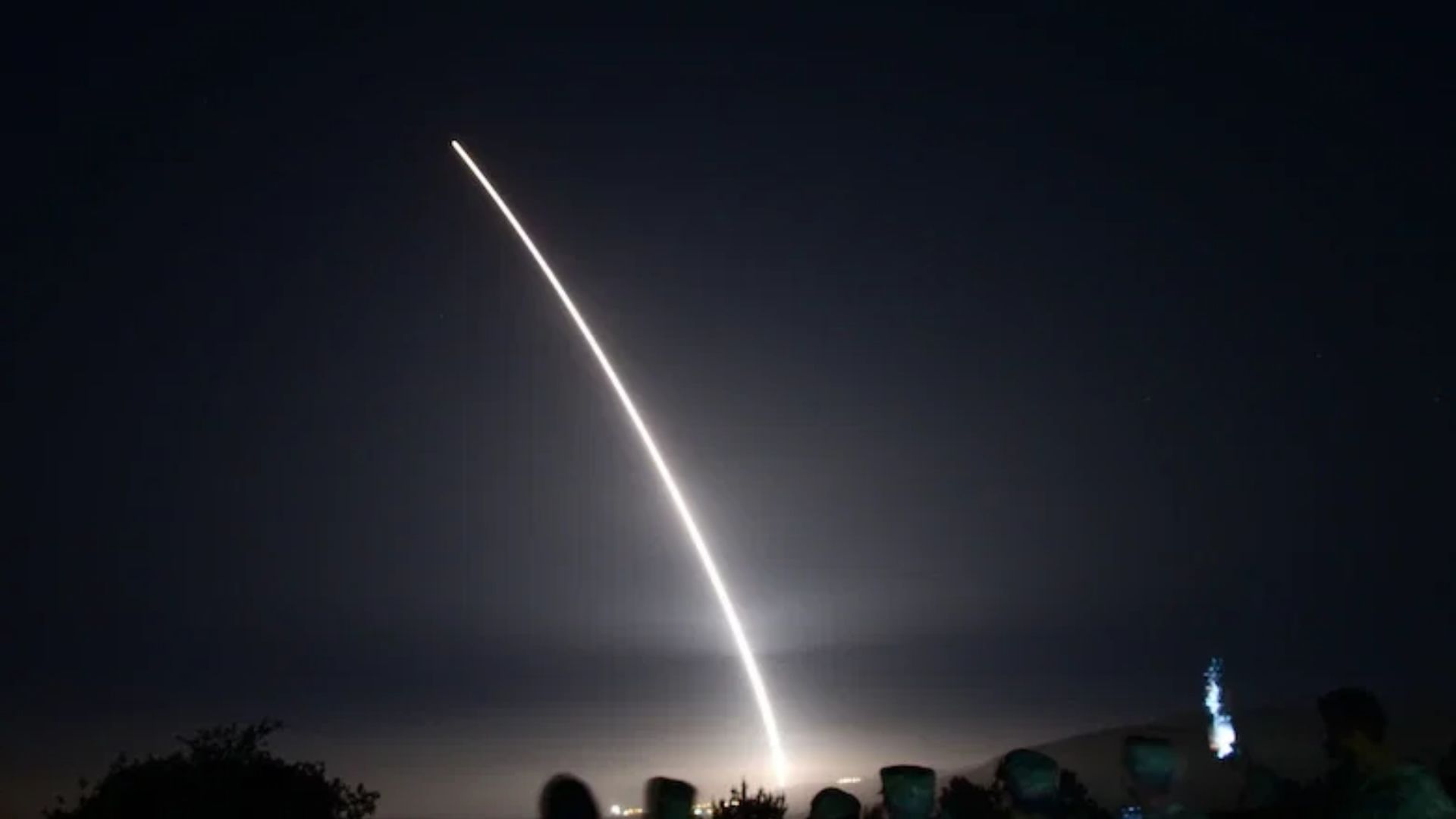
The unarmed intercontinental ballistic missile (ICBM) flew from California to a test range in the Marshall Islands as the Air Force gathered data for the missile’s remaining service life before Sentinel entered service. The US Air Force has successfully conducted another operational test of its aging LGM-30G Minuteman III intercontinental ballistic missile (ICBM), validating the reliability of the country’s land-based nuclear deterrent as it prepares for a generational transition to the next-generation LGM-35A Sentinel. The launch, designated GT-257, lifted off Tuesday, from Vandenberg Space Force Base in California and involved an unarmed Minuteman III missile. Air Force Global Strike Command (AFGSC) stressed that the test was scheduled years in advance and not related to ongoing geopolitical events, a standard message accompanying routine ICBM evaluations. Test of weapon system, personnel According to the Air Force, the launch served as a comprehensive evaluation of both the weapon system and the personnel responsible for operating and sustaining America’s land-based nuclear force. Engineers monitored the missile throughout its flight, collecting data on propulsion, guidance, flight performance, and reentry to support sustainment, engineering, and lifecycle management of the nearly six-decade-old system. “The ability to conduct these rigorous, realistic tests relies on the dedication of our Airmen and is foundational to ensuring the safety and surety of the Minuteman system,” Air Force Global Strike Command Commander Gen. S.L. Davis said in a statement. The command noted it has now completed more than 300 Minuteman III test launches since the program began. Ahead of the launch, authorities issued navigational warnings for areas extending across the Pacific Ocean, with local officials in California advising residents that the nighttime launch from Vandenberg could be visible across much of the Central Coast. As with previous tests, the missile was expected to travel roughly 4,200 miles (6,760 km) to the Ronald Reagan Ballistic Missile Defense Test Site at Kwajalein Atoll in the Marshall Islands. Backbone of US nuclear triad First deployed in 1970, the Minuteman III remains the land-based leg of the US nuclear triad, complementing submarine-launched ballistic missiles and strategic bombers. The current force consists of 400 operational missiles distributed across underground silos at F.E. Warren Air Force Base in Wyoming, Malmstrom Air Force Base in Montana, and Minot Air Force Base in North Dakota. Missile combat crews remain on alert around the clock from hardened underground launch control centers. Although originally designed during the Cold War, the Minuteman III has undergone repeated modernization programs covering propulsion, guidance systems, command electronics, and reentry vehicles to keep the missile operational well beyond its intended service life. Routine flight tests allow engineers to verify that those upgrades continue to perform as expected while generating data for future maintenance decisions. The latest launch comes as the Pentagon continues development of the LGM-35A Sentinel, which will eventually replace the Minuteman III fleet. Until the new missile is fielded, the Air Force said routine tests such as GT-257 remain essential to ensuring the aging ICBM force continues to provide a safe, secure, and credible strategic deterrent. Get the latest in engineering, tech, space & science - delivered daily to your inbox.
US tests GT-257 Minuteman III missile to validate 56-year-old nuclear deterrent
Full Article
Original Source
Read the full article at Interestingengineering →KhanList aggregates and links to publicly available news content. We do not host full articles from third-party sources. Always verify important information with original sources.