
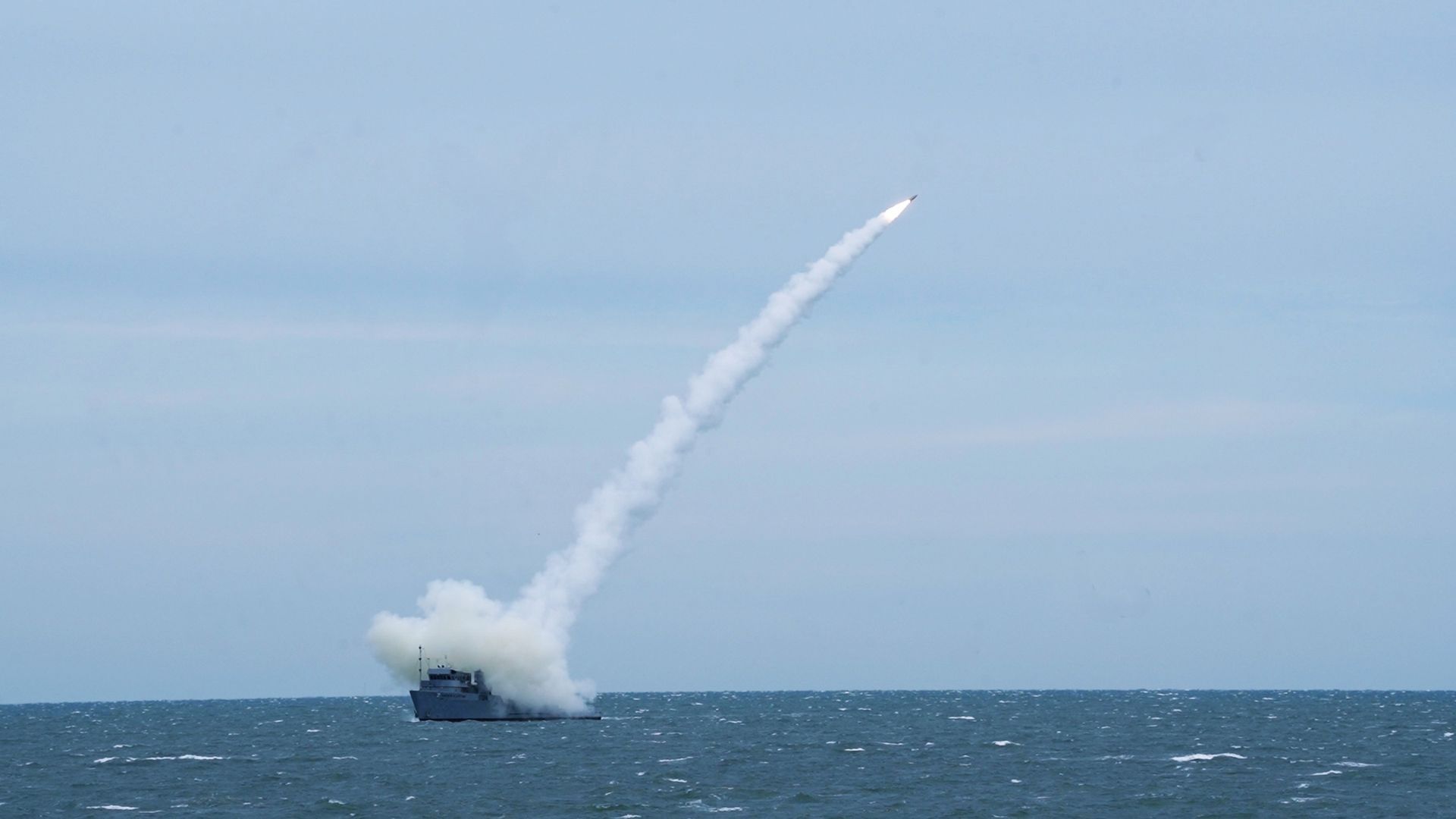
Hanwha Defense USA has demonstrated a new way to deploy precision-guided missiles at sea, launching its Chunmoo rocket system from a vessel off Mississippi’s coast. The November 15 test used a palletized launcher aboard a missile test range vessel operated by The Spaceport Company (TSC). The demonstration brings land-based rocket artillery technology closer to maritime operations. It also explores how the U.S. Navy could deploy long-range strike weapons from different types of vessels. Hanwha conducted two Chunmoo missile launches as part of the testing campaign. Testing maritime missile capabilities Hanwha designed the demonstration to evaluate how its Multiple Fixed-Launch Module (MFOM) platform operates in a maritime environment. The palletizable configuration allows operators to move the launcher between platforms without relying on permanently installed weapon systems. That flexibility could prove useful for naval operations involving smaller vessels. It could also expand weapon deployment options across crewed and uncrewed ships. The test focused on validating the launcher and its electronic systems during offshore operations. Engineers also collected technical data to assess the platform’s performance. Those findings will help guide further development of maritime precision-strike capabilities. Hanwha Defense USA Executive Vice President for Missiles Kevin Schoonover said the company wants to address the U.S. Navy’s demand for modern maritime strike systems. He described the combination of Chunmoo missiles and palletized launchers as a potentially lower-cost option. Schoonover also pointed to the platform’s compatibility with next-generation crewed and uncrewed vessels. Data from the demonstration could inform future distributed maritime operations. It may also help shape expeditionary strike systems using palletized and containerized launcher configurations. Offshore testing infrastructure The Spaceport Company provided the vessel and offshore launch infrastructure for the demonstration. The Mississippi-based provider specializes in mobile launch platforms for commercial spaceflight and national security missions. Its operations include launches from ships, barges and semi-submersible offshore platforms. TSC says it has supported more than 10 launches using its mobile infrastructure. Magnet Defense also participated in the exercise. The Hanwha partner monitored and evaluated the missile launch using its Magnet Research Vessel. The involvement of both companies adds another dimension to the demonstration. Offshore missile testing requires more than a functioning launcher. Range infrastructure and tracking capabilities also play important roles in collecting reliable performance data. Hanwha expands naval ambitions Hanwha’s maritime testing program aims to establish a repeatable process for demonstrating sea-based missile launches. The company plans to use the results to refine future maritime weapons configurations. Its work with Magnet Defense also extends beyond missile testing. The companies announced a strategic partnership in April to develop medium unmanned surface vessels (MUSVs) for the U.S. Department of War. Such vessels could eventually offer additional platforms for distributed naval operations. Pairing unmanned surface vessels with modular weapon systems could give military planners more deployment flexibility. As of now, the Mississippi demonstration represents a test milestone, not confirmation of an operational Navy deployment. Further testing and evaluation will determine how the Chunmoo system performs in maritime environments.Get the latest in engineering, tech, space & science - delivered daily to your inbox.Aamir is a seasoned tech journalist with experience at Exhibit Magazine, Republic World, and PR Newswire. With a deep love for all things tech and science, he has spent years decoding the latest innovations and exploring how they shape industries, lifestyles, and the future of humanity.
US test-fires 180-mile Chunmoo missile from modular launcher aboard offshore ship
Full Article
Original Source
Read the full article at Interestingengineering →KhanList aggregates and links to publicly available news content. We do not host full articles from third-party sources. Always verify important information with original sources.