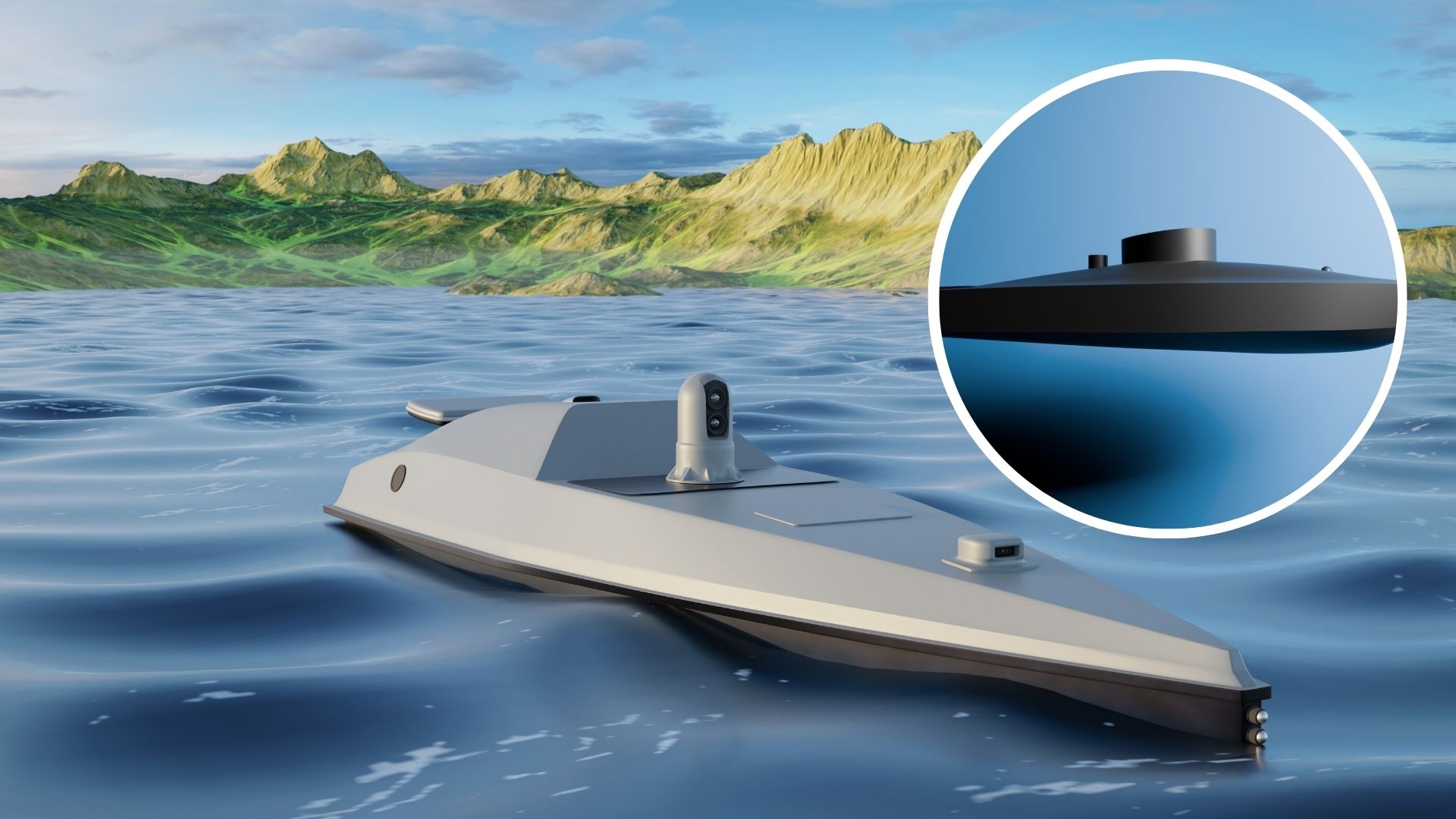
U.S.-based defense technology company Shield AI and Taiwan’s Thunder Tiger have successfully completed the first demonstration of Hivemind-enabled multi-asset autonomous maritime teaming in Taiwan. This marks a significant milestone in the evolution of AI-driven naval operations. The demonstration showcased how multiple unmanned maritime systems can operate collaboratively with minimal human intervention, highlighting the growing role of artificial intelligence in modern defense. The exercise featured Shield AI’s Hivemind, an AI-powered autonomy software that enables unmanned platforms to navigate, coordinate, and execute missions without relying on continuous GPS connectivity or human control. During the trial, several autonomous maritime assets worked together as a coordinated team, demonstrating intelligent decision-making and real-time mission execution in a challenging operational environment. Hivemind proves true mission autonomy can scale across domains “Hivemind continues to prove that true mission autonomy can scale across domains, platforms, and functional assets, unlocking new capabilities for distributed intelligence and maritime security missions,” said Nathan Michael, chief technology officer at Shield AI. “As we continue working with Thunder Tiger to expand the scale and sophistication of autonomous maritime teams, these systems will fundamentally reshape maritime surveillance operations and strengthen deterrence through resilient, intelligent operations.” Autonomous capabilities for unmanned surface vessels According to Shield AI, the demonstration is the first step in a broader collaboration with Thunder Tiger aimed at integrating Hivemind across the Taiwanese company’s portfolio of unmanned systems. The partnership focuses on improving autonomous capabilities for unmanned surface vessels (USVs) and expanding coordinated operations across multiple domains in the future. Unlike conventional remotely controlled systems, Hivemind allows autonomous platforms to continue operating even when communications or GPS signals are degraded. This capability is increasingly viewed as essential for modern military operations, where electronic warfare and signal jamming are becoming common challenges. The companies stated that the collaboration follows a phased development approach, beginning with simulation-based testing, progressing through hardware-in-the-loop integration, and culminating in live demonstrations. The successful maritime teaming trial validates the software’s ability to coordinate multiple autonomous systems in real-world scenarios. Shield AI revealed that the company has already proven Hivemind across numerous platforms and operational domains, and the Taiwan demonstration represents another step toward enabling intelligent, coordinated autonomous operations. He noted that the collaboration is intended to strengthen Taiwan’s ability to deploy advanced asymmetric defense capabilities through AI-enabled unmanned systems. Maritime domain is increasingly critical to Taiwan’s security “As an island nation, the maritime domain is increasingly critical to Taiwan’s security. By integrating AI pilots into our portfolio, we can enable distributed, networked teams that coordinate dynamically to build a more complete understanding of the maritime environment – improving the ability to detect, classify, and identify contacts while helping operators respond with greater speed, scale, and effectiveness,” said Gene Su, board director and general manager of Thunder Tiger Corp. “This demonstration marks an important step forward in advancing resilient, autonomous maritime capabilities, and we expect our partnership with Shield AI to continue delivering increasingly sophisticated autonomous systems that strengthen Taiwan’s defense posture.”Thunder Tiger, one of Taiwan’s leading manufacturers of unmanned aerial and maritime systems, believes the integration of Hivemind will significantly enhance the autonomy of its platforms. The company expects AI-driven decision-making to improve mission effectiveness while reducing operator workload, enabling a single operator to supervise multiple autonomous assets simultaneously, according to a press release. The demonstration reflects a broader global trend toward integrating artificial intelligence into defense technologies. Autonomous teaming—where multiple unmanned systems cooperate with limited human oversight—is increasingly viewed as a force multiplier for surveillance, reconnaissance, logistics, and maritime security missions.As regional security concerns continue to drive investment in advanced defense technologies, the successful Hivemind demonstration underscores Taiwan’s growing emphasis on autonomous systems and highlights the expanding role of AI in future maritime operations.
US tech helps unmanned surface vessel conduct search mission, spot target autonomously
Full Article
Original Source
Read the full article at Interestingengineering →KhanList aggregates and links to publicly available news content. We do not host full articles from third-party sources. Always verify important information with original sources.