
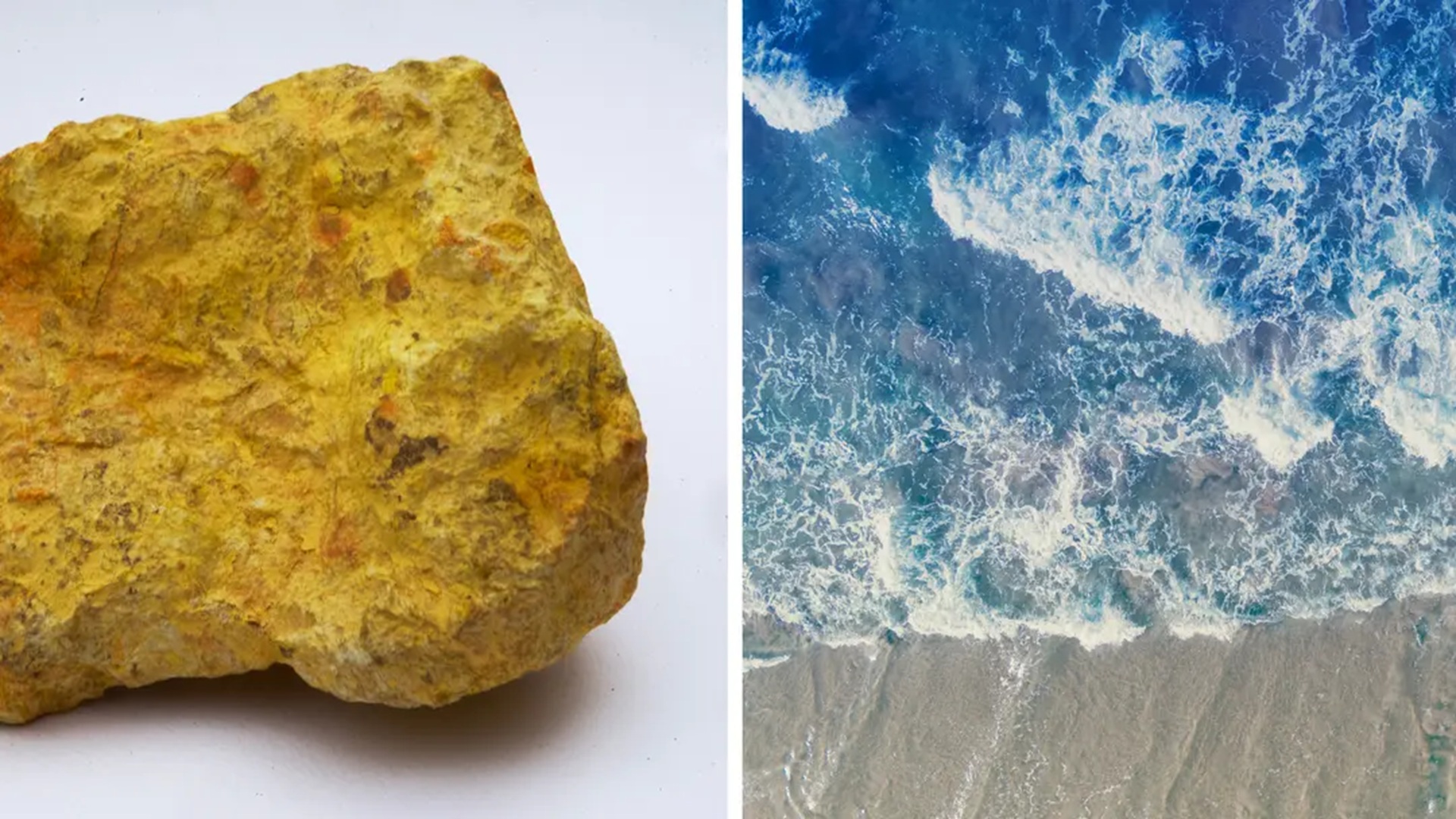
SuperCritical Materials has partnered with the University of Michigan to engineer and test offshore systems that could take its uranium-from-seawater technology toward industrial-scale deployment. The company already holds an exclusive license to a patented adsorbent technology designed to capture dissolved uranium from seawater. The new research will focus on the mechanical systems needed to deploy, expose and repeatedly retrieve that material in marine environments. The work will be led by Maha Haji, an assistant professor of mechanical engineering at the University of Michigan and director of its Symbiotic Engineering and Analysis Laboratory. Her research includes designing offshore systems for recovering critical resources from the ocean. The partnership targets a major engineering challenge facing seawater uranium extraction. While the oceans contain an estimated 4.5 billion metric tons of dissolved uranium, a commercial system would need to handle large amounts of adsorbent efficiently through repeated offshore operating cycles. Taking extraction technology offshore University researchers will mechanically characterize SuperCritical’s uranium adsorbent and study how it responds to stresses during packing, deployment, ocean exposure and retrieval. They will also evaluate different ways to pack the material into nearshore systems before designing and building multiple prototypes of equipment capable of deploying and retrieving it. “The question is no longer simply whether uranium can be extracted from seawater. The question is whether the adsorbent can be deployed, exposed and retrieved efficiently and repeatedly at industrial scale,” said Alexander Canon Bryan, president and CEO of SuperCritical Materials. Testing is expected to take place at the University of Michigan’s Aaron Friedman Marine Hydrodynamics Laboratory. Its towing and wind-wave tanks can reproduce waves, currents and other marine conditions under controlled conditions. Researchers can therefore test multiple equipment designs and study their hydrodynamic behavior before moving to offshore trials. Haji has previously worked on this problem. During her doctoral research at MIT, she helped develop concepts for deploying and retrieving uranium adsorbents and participated in the fabrication and ocean testing of recovery systems. Building repeatable recovery systems SuperCritical’s licensed technology uses adsorbent material that captures dissolved uranium as seawater passes across its surface. After a defined exposure period, the material is retrieved and processed to recover the captured uranium. The partnership does not change that underlying extraction process. Instead, it addresses how large quantities of the adsorbent could be physically handled and cycled through an offshore system reliably enough to support future commercial operations. “Extracting critical materials from the ocean requires more than a high-performing absorbent. It requires an offshore system that can operate efficiently, reliably and responsibly under demanding marine conditions,” Haji said. Results from the program are expected to guide SuperCritical’s future offshore pilot projects. The data will also feed into feasibility engineering, operating and capital cost modeling, and the design of future demonstration-scale systems.The company ultimately wants to determine whether seawater uranium recovery can operate competitively at industrial scale and contribute to US nuclear fuel supplies.Get the latest in engineering, tech, space & science - delivered daily to your inbox.With over a decade-long career in journalism, Neetika Walter has worked with The Economic Times, ANI, and Hindustan Times, covering politics, business, technology, and the clean energy sector. Passionate about contemporary culture, books, poetry, and storytelling, she brings depth and insight to her writing. When she isn’t chasing stories, she’s likely lost in a book or enjoying the company of her dogs.
US team to build offshore system for industrial-scale uranium recovery from seawater
Full Article
Original Source
Read the full article at Interestingengineering →KhanList aggregates and links to publicly available news content. We do not host full articles from third-party sources. Always verify important information with original sources.