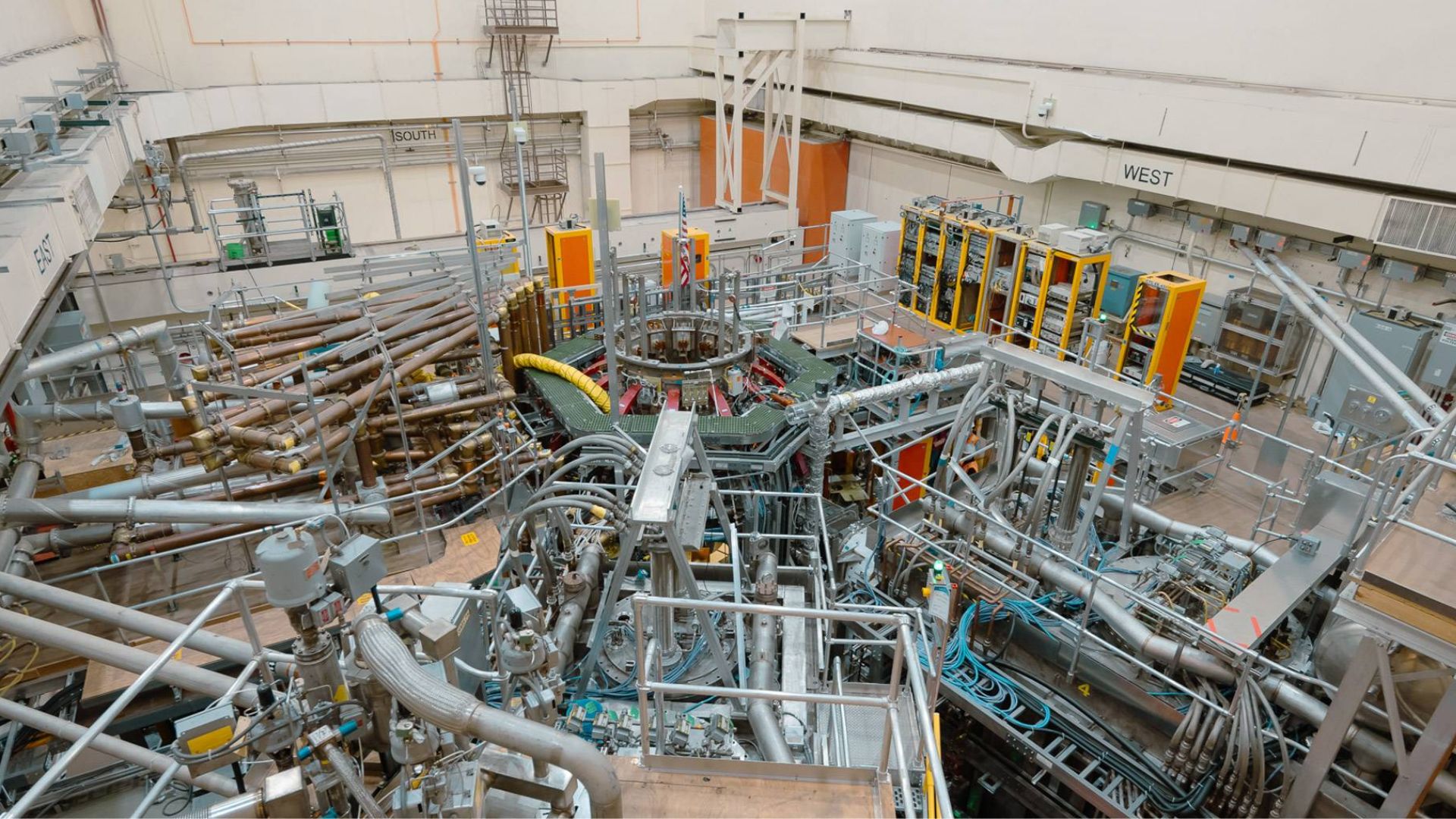
Scientists have developed a new technique to clean the inner walls of nuclear fusion reactors without opening them to the air. The method uses a combination of neon plasma and extreme heat to strip away unwanted contaminants. Published in the journal Nuclear Materials and Energy, the advance could clear a major hurdle in the development of commercial fusion energy. Inside a fusion reactor, internal armor must withstand temperatures hotter than the core of the sun. Standard solid metals often fail under these extreme conditions. To solve this, engineers use wall tiles made of porous tungsten. These tiles act like metallic sponges, absorbing liquid lithium and distributing it across the surface. The liquid metal forms a protective barrier that shields the underlying reactor structure from damage. “But this process also leaves the tungsten contaminated with other materials, such as carbon, oxygen or nitrogen,” said the researchers in a press release. “When exposed to the liquid lithium, the carbon and oxygen react to form solids that can plug the holes in the tungsten, preventing the lithium from flowing properly.” Barrier of tile contamination Cleaning the tiles before installation does not work. The moment the cleaned metal touches normal air during assembly, it absorbs fresh oxygen and carbon dioxide. To overcome this, a joint team from the Princeton Plasma Physics Laboratory, Princeton University, and Pennsylvania State University found a way to clean the tiles after sealing them inside the reactor. The researchers placed contaminated tungsten samples inside the Lithium Tokamak Experiment-Beta chamber (LTX-β). Once they pumped out the air to create a vacuum, they flooded the chamber with low-temperature neon plasma and heated the tiles to 800 degrees Celsius (1472°F). Neon was chosen because its heavy ions act like microscopic bowling balls. As these charged particles hit the tungsten, they physically knock off bound carbon and oxygen atoms. Simultaneously, the high heat forces deeper impurities to diffuse out to the surface, where the plasma can blast them away. “Combined, the heat and the plasma proved to be an effective cleaning treatment and significantly more effective than using the plasma alone,” added the press release. Experimental outcomes with future potential Before the treatment, the surface of the tungsten showed zero percent pure metallic tungsten due to heavy surface contamination. After exposure to the neon plasma and heat, pure metallic tungsten on the surface jumped to 87 percent. The physical transformation was clear to the naked eye, as the samples shifted from a dull dark gray to a bright metallic silver. “I initially thought we were depositing material on the sample, which would have been a terrible result,” concluded Camila López Pérez, who led the research. “Then the analysis showed that wasn’t the case. It was just being cleaned very effectively. It was very surprising and very exciting to see.” Specialized diagnostic probes confirmed that the process successfully cleared the internal channels of the metal. Because the cleaning takes place entirely inside the vacuum vessel, reactor operators can now prepare liquid-metal walls without exposing them to air, keeping the vital fluid pathways open for operation.Recommended ArticlesGet the latest in engineering, tech, space & science - delivered daily to your inbox.An active and versatile journalist and news editor. He has covered regular and breaking news for several leading publications and news media, including The Hindu, Economic Times, Tomorrow Makers, and many more. Aman holds expertise in politics, travel, and tech news, especially in AI, advanced algorithms, and blockchain, with a strong curiosity about all things that fall under science and tech.
US team achieves 87% nuclear fusion reactor wall purity using plasma and 1472°F heat
Full Article
Original Source
Read the full article at Interestingengineering →KhanList aggregates and links to publicly available news content. We do not host full articles from third-party sources. Always verify important information with original sources.