
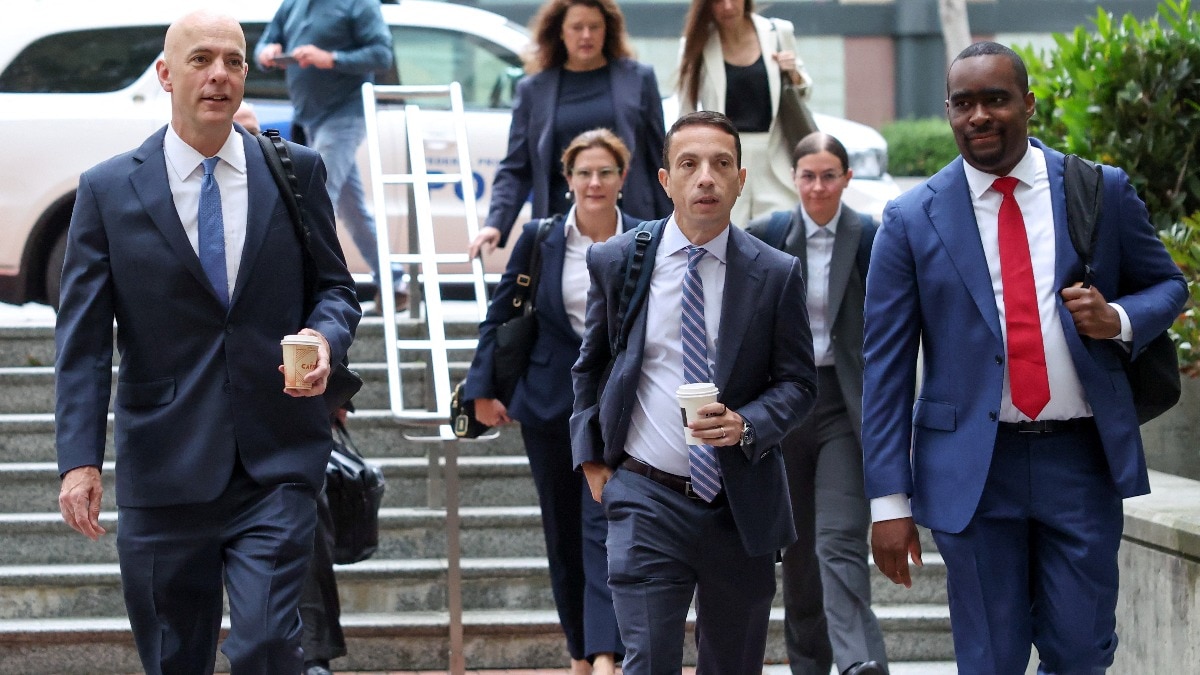
A coalition of 29 US states has opened its case accusing Meta of designing Facebook and Instagram to hook children and misuse their data. The trial could bring heavy penalties and force changes to features such as infinite scroll.Attorney Paul W. Schmidt arrives before opening statements as Meta faces a landmark trial in federal court over claims from 29 states that the company illegally collected and used children's data. (Photo: Reuters)Meta Platforms is facing a major legal test on Tuesday as a coalition of US states presents its case against the company over allegations that Facebook and Instagram are designed to keep young users hooked and that Meta has failed to properly protect children's personal data.The trial opened in a federal court in Oakland, California, with prosecutors portraying Meta's business model as one that prioritised prolonged engagement and data collection over the wellbeing of children. Megan O'Neill, a deputy California attorney general, told an eight-person jury that Meta's strategy was to "hook the users, hold them for as long as they can, harvest their data, and then hide the truth from the public"."It worked especially well for kids," she added. The case could have far-reaching consequences for Meta and potentially force changes to some of the world's most widely used social media platforms.STATES ACCUSE META OF TARGETING CHILDRENCalifornia, Colorado, Kentucky and New Jersey are leading a bipartisan coalition of 29 states in the lawsuit. The four lead states accuse Meta of deliberately designing Facebook and Instagram in ways that encouraged children and teenagers to become addicted to the platforms. Prosecutors say those design choices contributed to serious mental health problems among young users, including anxiety, depression and suicide. The states also accuse Meta of misleading parents and other consumers about the safety of its platforms. "Meta needed kids, and it needed to reassure the people who cared about those kids that the kids are safe," O'Neill told jurors.She also sought to frame the case as a broader question about how social media companies operate rather than an attempt to eliminate social media altogether. "This case is not about whether social media has some benefits for some people. It does," she said. The states are also pursuing claims involving children's privacy. They allege Meta improperly collected and used personal information from children who used its platforms, in violation of federal law.META REJECTS STATES' CLAIMSMeta is expected to argue that it has invested heavily in protecting young users and that the states have not established that the company caused the alleged harm. The company has denied misleading users about the safety of its platforms. It has also argued that the states failed to demonstrate that their residents were harmed as a result of Meta's conduct.In a statement issued before the trial, a Meta spokesperson described the states' allegations as unsubstantiated."The AGs offer no proof anyone in their states was misled, claim benign features like having an additional Instagram account somehow harmed their residents, and attempt to penalize Meta for industry-wide challenges like age verification," the spokesperson said as quoted by Reuters."Rather than sticking to the facts or the law, the states have instead decided to chase an outlandish payout," the spokesperson added.Meta co-founder and CEO Mark Zuckerberg and Instagram chief Adam Mosseri are expected to testify during the trial. The proceedings are scheduled to last six weeks.The jury's role in the case will be limited. Jurors are expected to issue an advisory verdict, while US District Judge Yvonne Gonzalez Rogers will ultimately decide whether Meta is liable. If Rogers rules against the company, she could impose civil penalties and order changes to Facebook and Instagram.The US states have proposed several changes to the platforms.Among them are age restrictions and changes to features that encourage users to remain online for longer periods. The states also want Meta to eliminate infinite scroll, a feature that continuously loads new posts and allows users to keep browsing without reaching an obvious stopping point.POTENTIAL PENALTIES COULD BE HUGEThe financial stakes are also enormous. Meta has said potential penalties could reach as high as $1.4 trillion. That figure is close to the company's market value. The states have not formally specified the amount they are seeking. However, attorneys general said during a hearing last week that the potential figure could be closer to $200 billion.That would amount to roughly three years of Meta's after-tax profits. The scale of the potential penalties makes the case one of the most consequential legal battles yet involving a major social media company. The lawsuit was filed in 2023 after a multistate investigation into the impact of Facebook and Instagram on children and teenagers. The investigation followed testimony from former Meta employee and whistleblower Frances Haugen before a US Senate committee in 2021.Haugen told lawmakers that Meta knew its products could harm young users and also knew about ways to make its platforms safer. She alleged that the company chose not to make some changes because of concerns about protecting profits.The states are expected to present internal Meta documents and research during the trial. They are also expected to call former employees and outside experts as witnesses.The evidence could offer a detailed look into how Meta evaluated the risks its platforms posed to young users and how those risks were weighed against the company's business interests.The case is part of a much larger legal battle involving the social media industry. Meta, along with Snap, TikTok parent ByteDance and YouTube parent Alphabet, faces thousands of lawsuits from states, municipalities, school districts and individuals over allegations that social media platforms harm young users. Recent cases have increased pressure on the industry.In March, a Los Angeles jury ordered Meta and Google to pay $6 million to a 20-year-old woman who said she became addicted to Instagram and YouTube as a child. Earlier this month, a New Mexico judge ordered Meta to pay $567 million into a mental health fund for teenagers. The state's attorney general had argued that Meta's platforms amounted to a public nuisance.The California case now puts Meta's design choices, data practices and handling of young users under a much broader spotlight.- EndsPublished By: Satyam SinghPublished On: Aug 18, 2026 22:32 IST
US states take Meta to trial over Facebook, Instagram addiction, child privacy
Full Article
Original Source
Read the full article at Indiatoday →KhanList aggregates and links to publicly available news content. We do not host full articles from third-party sources. Always verify important information with original sources.