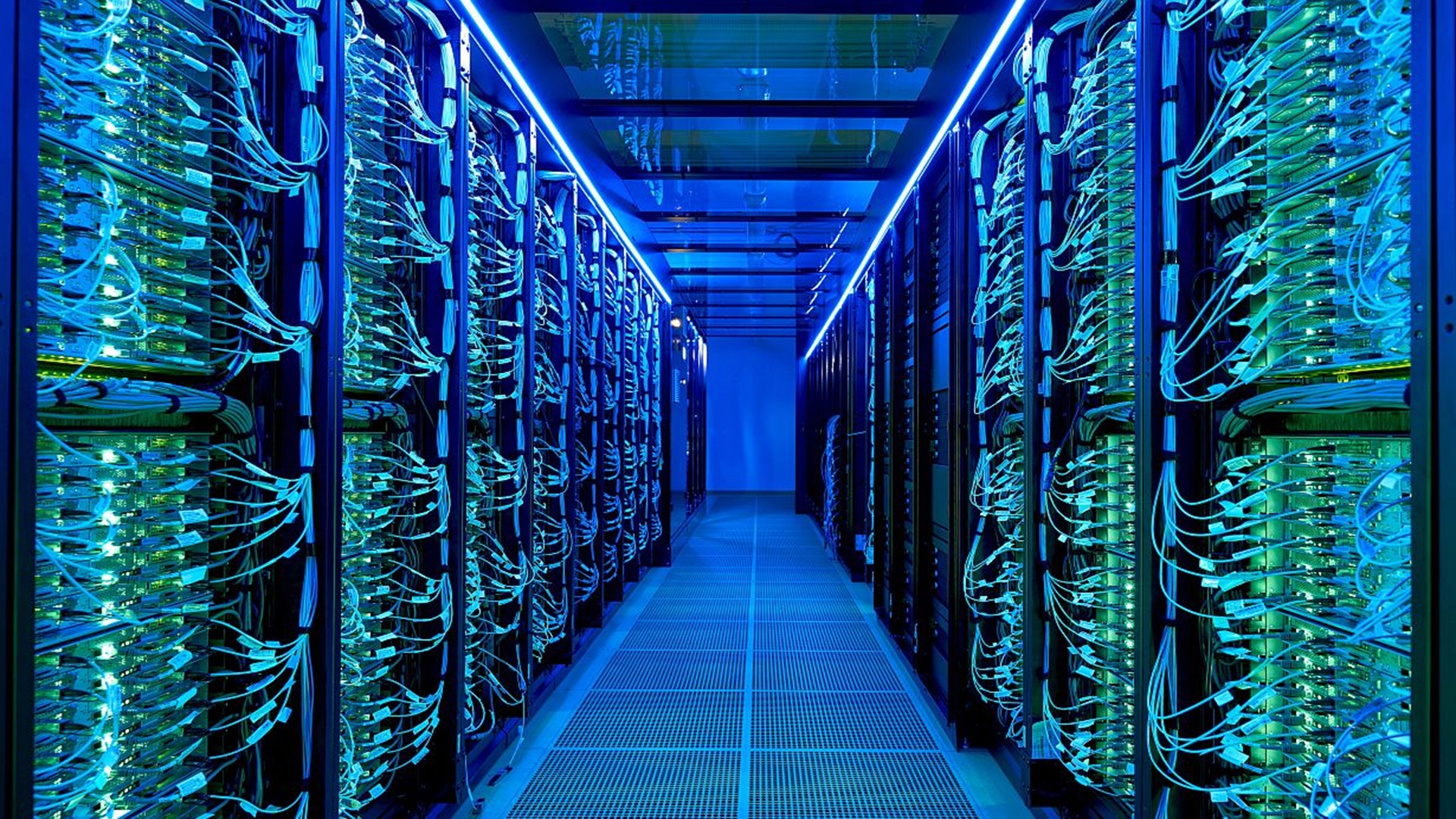
A powerful new supercomputer that has recently been launched by the US Space Force is expected to tackle some of the nation’s most complex challenges across space, cyber operations and digital engineering. The high-performance computer (HPC) is called Makau. It can achieve processing speeds if about 2.64 peak peta floating-point operations per second, or petaflops. In simple terms, this means it can execute approximately 2.64 quadrillion floating-point operations a second. Makau was officially unveiled at the Maui High Performance Computing Center (MHPCC) in Kihei, Hawaii, in a ribbon-cutting ceremony on Friday, August 7. It’s the US Space Force’s newest premier research asset. “By compressing data analysis timelines from weeks to seconds, Makau provides a definitive advantage, ensuring that our teams always have the right information precisely when they need it most,” John Marlia, MPHCC technical director, stated. Getting results in seconds US Space Force representatives noted that the system was made to provide high-performance computing resources for demanding science and tech, testing, and evaluation workloads. It is also designed to process growing volumes of data, in addition to accelerating technological innovation. The majority of these tasks will now take only seconds. “Historically, processing massive, highly complex datasets could take weeks, delaying critical decision-making processes when time was of the essence,” Marlia continued. The ribbon-cutting ceremony at the Maui High Performance Computing Center at Kihei, Maui, Hawaii, August 7, 2026.Credit: U.S. Air Force / Tech. Sgt. Giovanni Sims The reason for this is that the six-cabinet Hewlett Packard Enterprise (HPE) Cray XD2000 system comes equipped with 74 enterprise-grade graphics processing units (or GPUs). It also features 19.2 terabytes (TB) of usable memory. In addition, it uses liquid-cooled, rear-door heat exchangers to manage the heat. “The implementation of artificial intelligence provides Airmen and Guardians with rapid, actionable data analysis and a course of action,” Scott Pierce, PhD, MHPCC director, stressed. “Machine learning models can automate the fusing of multiple sources of data to build a timely and more cohesive operating picture.” Supporting different focus areas Makau will primarily support three areas of research. These include space domain awareness, cyber operations, and digital engineering and modeling, simulation and analysis. According to the US Space Force, bringing this advanced computer system to the island is a significant investment in the local workforce and regional partnerships. “We are extremely proud of our local team’s collaboration and our partnership with local vendors and HPE to deliver this cutting-edge solution to our users,” the director concluded. “This requires the constant support of a highly technical staff to ensure these solutions are properly configured and maintained.” Scott Pierce, PhD, Maui High-Performance Computing Center director.Credit: U.S. Air Force / Tech. Sgt. Giovanni Sims MHPCC currently employs more than 45 professional staff members who live in the local community. In the meantime, the center is actively recruiting people to fill additional positions. At the same time, the center is also working to create opportunities for future scientists and engineers. Together with the 15th Space Surveillance Squadron, it regularly hosts science, technology, engineering, and mathematics (STEM) events and recruits local students for summer internships. “The Makau system was engineered specifically to deliver world-class high-performance computational capabilities to the Department of War science and technology test and evaluation communities, providing the necessary resources to efficiently solve the most demanding computational problems,” the US Space Force said in a press release. Get the latest in engineering, tech, space & science - delivered daily to your inbox.Based in Skopje, North Macedonia. Her work has appeared in Daily Mail, Mirror, Daily Star, Yahoo, NationalWorld, Newsweek, Press Gazette and others. She covers stories on batteries, wind energy, sustainable shipping and new discoveries. When she's not chasing the next big science story, she's traveling, exploring new cultures, or enjoying good food with even better wine.
US Space Force unveils 2.64-petaflop Makau supercomputer with 74 advanced GPUs
Full Article
Original Source
Read the full article at Interestingengineering →KhanList aggregates and links to publicly available news content. We do not host full articles from third-party sources. Always verify important information with original sources.