
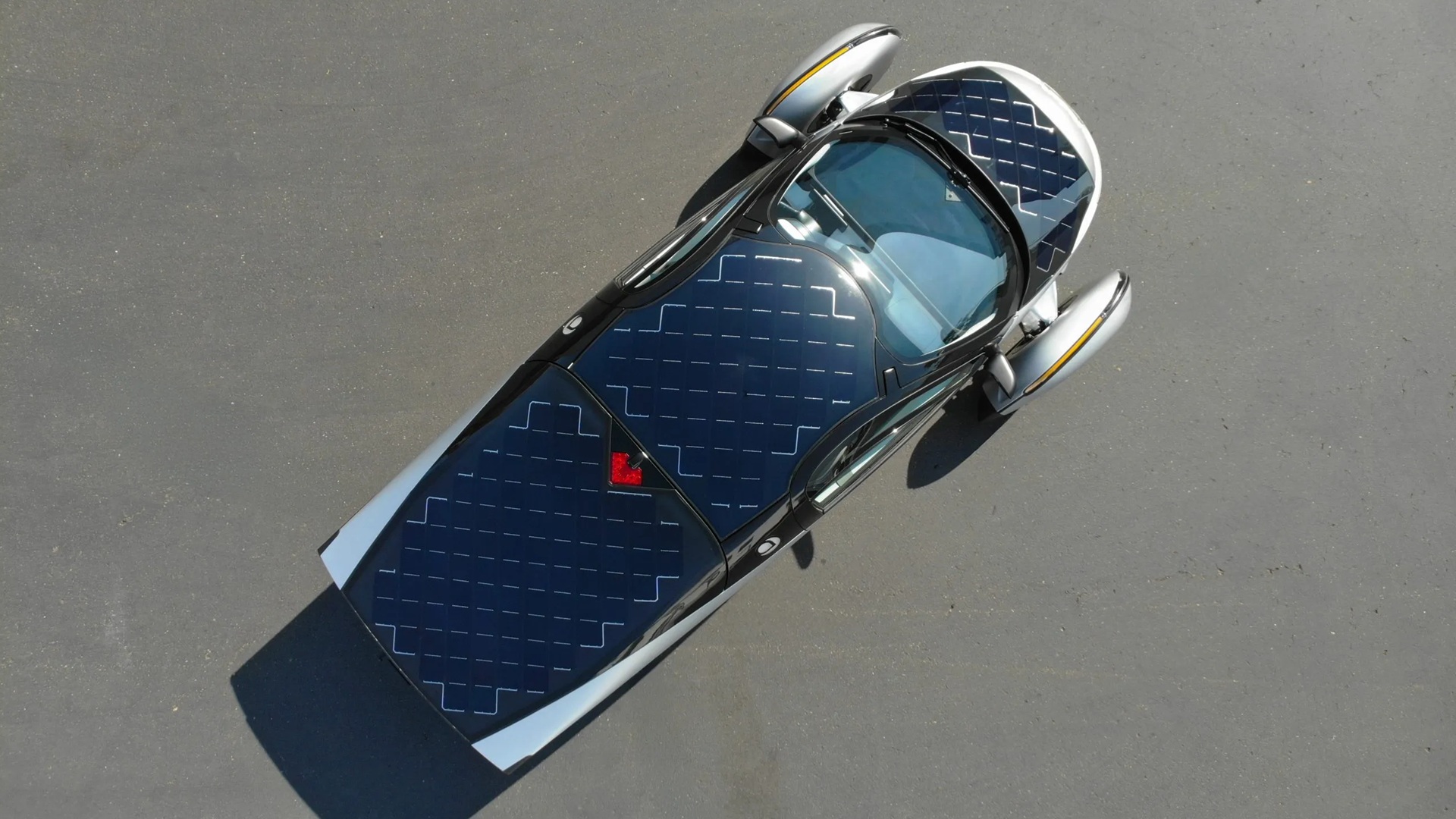
A solar electric vehicle (EVS) designed in the US has just exceeded its daily solar energy target during independent testing, and produced enough electricity from sunlight to provide more than 40 miles of estimated driving range. Made by Aptera Motors, a Carlsbad-based solar mobility firm developing efficient vehicles, the model underwent three days of trials in Southern California in July. It delivered over four kilowatt-hours (kWh) of usable solar energy to its battery each day, surpassing the company’s daily target. Aptera Motors announced that German testing and certification organization TÜV Rheinland independently tested the solar power system integrated into the EV. In one test, the vehicle remained completely untouched from sunrise to sunset and generated 4.23 kWh of energy. Based on the firm’s targeted energy consumption of 100 watt-hours per mile, that would provide about 42 miles (68 kilometers) of driving range. “The most exciting result is the day we simply parked the vehicle in the sun and let it do the work,” Steve Fambro, Aptera co-founder and co-CEO, said. Hitting daily solar targets Aptera said it has long targeted up to 40 miles (64 kilometers) of daily solar range under favorable conditions. That figure assumes the vehicle consumes 100 watt-hours per mile and its solar panels deliver at least four kWh of usable energy to the battery during the day. To independently assess that target, TÜV Rheinland solar expert Giorgio Bardizza conducted three separate tests at Aptera’s final assembly facility in California. The team measured solar generation from sunrise to sunset using its own calibrated instruments. The team evaluated the electricity where it entered the car’s battery rather than at the solar panels. In the first test, the researchers left the vehicle parked in a fixed position with its rear hatch closed for the entire day. It generated 4.23 kWh. For the second test, they repositioned the vehicle once at solar noon to simulate an owner changing parking direction during the day. That increased generation to 4.40 kWh, which is equivalent to around 44 miles (71 kilometers) of range. “We built this system because we believed the sun could do this much work, and now an independent lab has measured it,” Fambro continued.” Solar mobility is here.” Solar energy adds miles On top of that, the highest output came during a test designed to maximize solar generation. The team raised the vehicle’s rear hatch and angled it toward the sun throughout the day. The system delivered 4.75 kWh to the battery. This is roughly 47 miles (76 kilometers) of estimated range. The result was achieved on the day with the least available sunlight of the three test days. Aptera said that the findings apply to clear July conditions in Southern California. Real-world solar generation will vary depending on location, weather, season and how the vehicle is parked. Aptera’s vehicle during the three days of testing.Credit: Aptera Motors / YouTube screenshot Aptera’s solar system includes compound-curved solar panels integrated into the vehicle’s body. The company also developed its own multi-channel solar charge controller, custom firmware and power distribution architecture. The car isn’t limited to sunlight for charging. Owners will also be able to connect it to a standard electrical outlet or EV charging station. The company emphasized that its validation program will continue. Chris Anthony, Aptera co-founder and co-CEO, said the technology could reshape how people travel and has now been independently verified. “For drivers in sunny climates, that means everyday driving powered by the sun instead of fuel or the grid,” he concluded in a press statement. “This is the high standard we’re holding ourselves to as we move toward production.”Get the latest in engineering, tech, space & science - delivered daily to your inbox.Based in Skopje, North Macedonia. Her work has appeared in Daily Mail, Mirror, Daily Star, Yahoo, NationalWorld, Newsweek, Press Gazette and others. She covers stories on batteries, wind energy, sustainable shipping and new discoveries. When she's not chasing the next big science story, she's traveling, exploring new cultures, or enjoying good food with even better wine.
US solar EV gains 4.23 kWh and 42 miles of range from sunlight while simply parked
Full Article
Original Source
Read the full article at Interestingengineering →KhanList aggregates and links to publicly available news content. We do not host full articles from third-party sources. Always verify important information with original sources.