
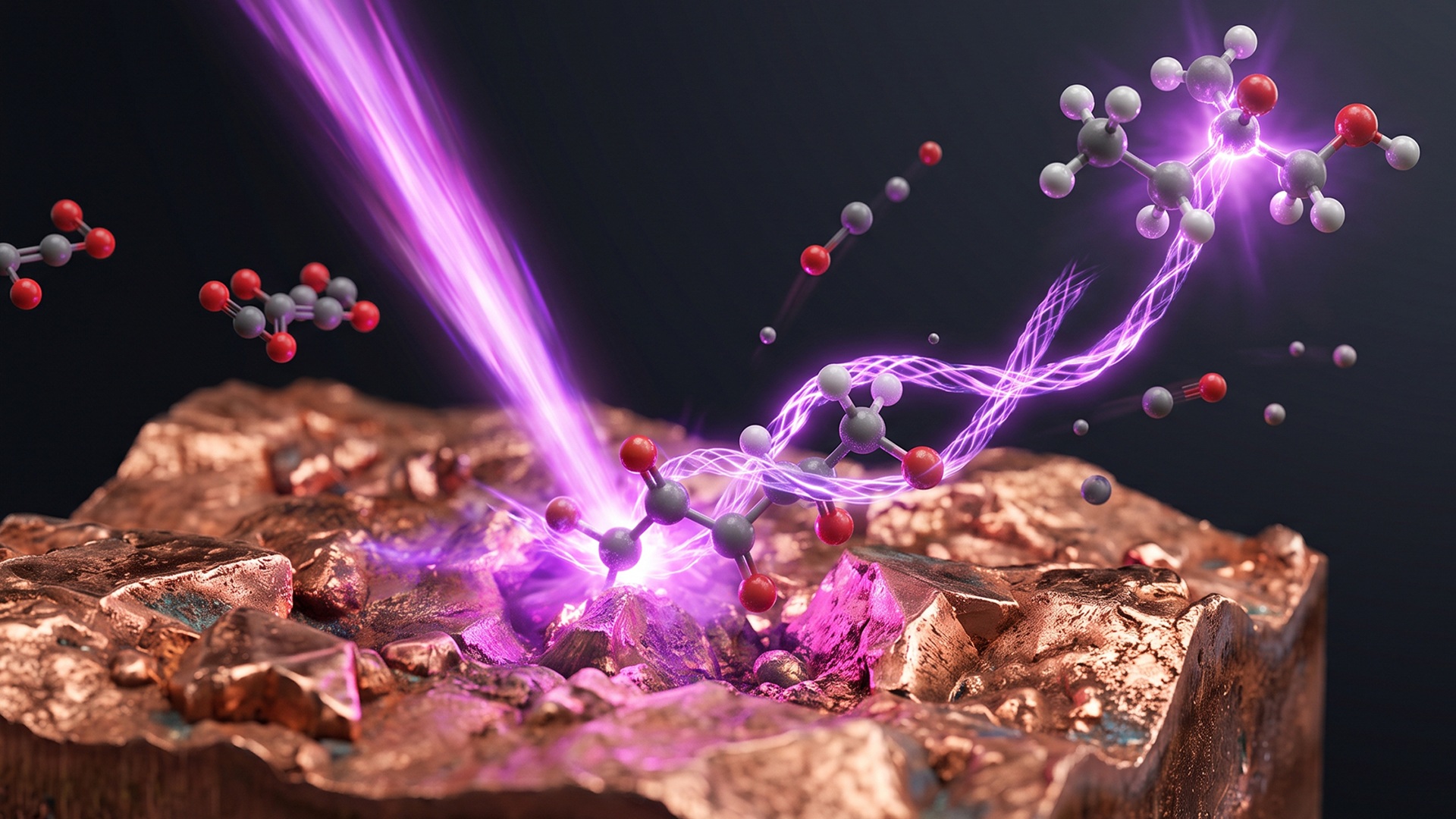
Scientists at Yale University have developed a system that combines plasma and electricity to transform carbon dioxide (CO2) into valuable chemicals, including methanol and butane. The study was carried out by Lea Winter, PhD, an assistant professor of chemical and environmental engineering at Yale. For the project Winter and her team tired coupling plasma with electrocatalysis. Plasma is often called the fourth state of matter, after solids, liquids, and gases. It is a highly energized gas in which electrons have been stripped from atoms, thus creating electrically charged particles. Winter said the approach could convert CO2 into fuels, pharmaceuticals, solvents, and other chemicals made from fossil fuels. “The sorts of multi-carbon products we generate with this approach are really useful for a lot of chemical industries,” she added. It could also produce precursor chemicals for sustainable aviation fuel. Breaking down CO2 While CO2 is abundant, it has yet to be widely used to produce valuable products. That’s because it is a highly stable and inert molecule, which makes it difficult to convert into something useful without a lot of energy. Electrocatalysis is a promising solution. It utilizes electricity and a catalyst to drive chemical reactions that transform CO2 into other compounds. Still electrocatalysis on its own typically produces a relatively limited range of simple carbon products. That’s when the Yale team thought of pairing electrocatalysis with plasma, which contains highly energetic electrons. These electrons excite the CO2 molecules and weaken their bonds before they reach the electrocatalyst. The catalyst can then use the activated species to form different products. Winter said that plasma opens up chemical pathways that electrocatalysis cannot access on its own. However, these plasma-electrochemical processes typically rely on a water interface, which can limit their effectiveness. While the plasma activates the CO2 gas, the water can quench and neutralize the most reactive plasma species before they even reach the electrocatalyst. “It’s been challenging to figure out how to effectively couple plasma with catalysts in a way that allows us to actually see an effect of plasma – to get those plasma-excited species to participate in catalytic reactions,” Winter added. Overcoming the limits To overcome the issue, the scientists came up with a 3-phase interface that brings together gas, liquid and solid components. It simultaneously prevents the plasma from directly interacting with the water. The system relies on a gas diffusion electrode, which is a membrane made of the same type of material used in non-stick cookware. It is partly coated with a thin layer of copper that serves as the electrocatalyst. Its pores are large enough to allow the plasma particles to pass through to the electrocatalyst layer, meet the protons from the water, and drive the chemical reactions. According to the scientists, the method achieved some of the highest production rates yet for valuable alcohols and three- and four-carbon atoms. These products can be used for liquid fuels, pharmaceuticals and other valuable products. The team will next optimize the catalyst and experiment with alterative materials. The system also operates at room temperature and atmospheric pressure, which potentially makes it easier to commercialize. “And it’s a turnkey process,” Winter concluded in a press release. “You can switch it on or shut it off at will based on when electricity is available. It can also operate directly with intermittent renewable electricity, so we could see retrofitting an existing plant, and then you don’t need to build an entire new factory around it.”The study has been published in the journal Nature Catalysis.Get the latest in engineering, tech, space & science - delivered daily to your inbox.Based in Skopje, North Macedonia. Her work has appeared in Daily Mail, Mirror, Daily Star, Yahoo, NationalWorld, Newsweek, Press Gazette and others. She covers stories on batteries, wind energy, sustainable shipping and new discoveries. When she's not chasing the next big science story, she's traveling, exploring new cultures, or enjoying good food with even better wine.
US scientists use plasma and electricity to turn CO2 into sustainable jet fuel
Full Article
Original Source
Read the full article at Interestingengineering →KhanList aggregates and links to publicly available news content. We do not host full articles from third-party sources. Always verify important information with original sources.