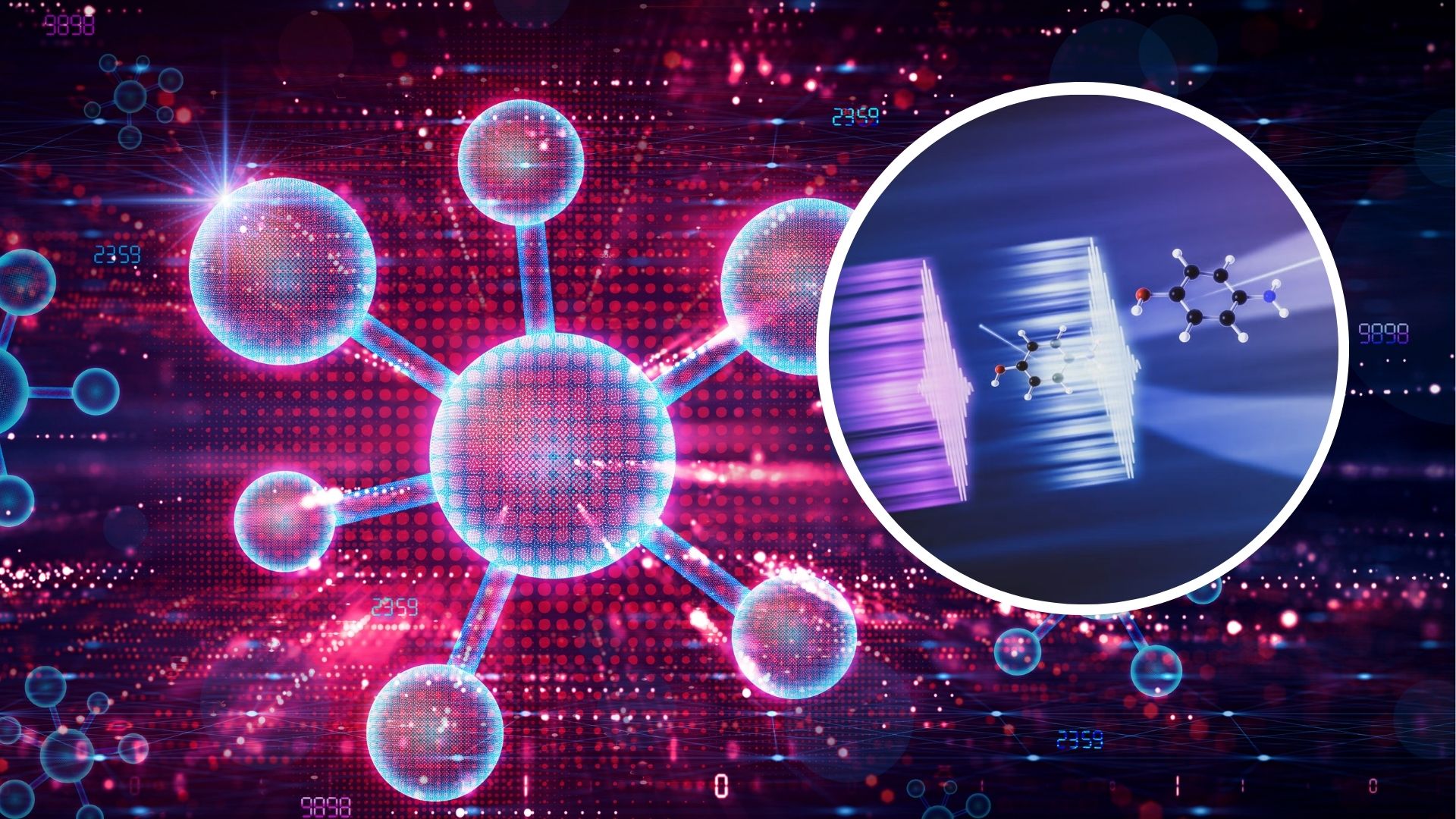
The team then used SLAC’s Linac Coherent Light Source (LCLS) X-ray free-electron laser to take snapshots of what happened next. The technique involved two precisely timed X-ray pulses. The first pulse triggered the process by removing an electron from the molecule. A second pulse arrived after a carefully controlled delay and allowed researchers to determine how the electrons had moved.By changing the delay between the two X-ray flashes, scientists could effectively reconstruct a frame-by-frame sequence of molecular events. The experiment produced 10 timestamps during the first 10 femtoseconds of the reaction. A femtosecond is longer than an attosecond, but it is still only a millionth of a billionth of a second.Together, these snapshots created something remarkably similar to a slow-motion movie of a chemical reaction. One of the most significant observations occurred within the first femtosecond.After the initial X-ray pulse removed an electron, the molecule rapidly relaxed by ejecting another, lower-energy electron from one of its inner electron shells. Scientists call this process Coster-Kronig decay.Although the phenomenon has been known theoretically, researchers had never before captured its evolution in real time on its natural timescale. This matters because the low-energy electrons produced during such processes can interact with surrounding molecules. In biological systems, for example, these electrons can contribute to radiation damage and can even play a role in breaking DNA strands.Being able to observe the process directly gives scientists a much clearer picture of how energy moves through matter following high-energy radiation. The experiment revealed another remarkable phenomenon over the following few femtoseconds.When the original electron was removed, it left behind what scientists describe as an electron hole—essentially a missing electron in the molecule. Instead of remaining in one place, this hole migrated through the molecule before another electron eventually filled it.Researchers believe this motion was driven by quantum coherence, a phenomenon in which quantum states maintain a well-defined relationship with one another.The observation is particularly important because this fleeting electronic motion may influence what happens later in the reaction, including the breaking and formation of chemical bonds.In other words, the researchers were able to observe the electronic events that occur before conventional chemistry becomes visible at the level of changing molecular bonds. The experiment showed that after roughly 10 femtoseconds, the consequences of the earlier electron movements began to appear in the molecular structure.
US scientists document ultrafast motion of electrons that drive making, breaking of chemical bonds
Full Article
Original Source
Read the full article at Interestingengineering →KhanList aggregates and links to publicly available news content. We do not host full articles from third-party sources. Always verify important information with original sources.