
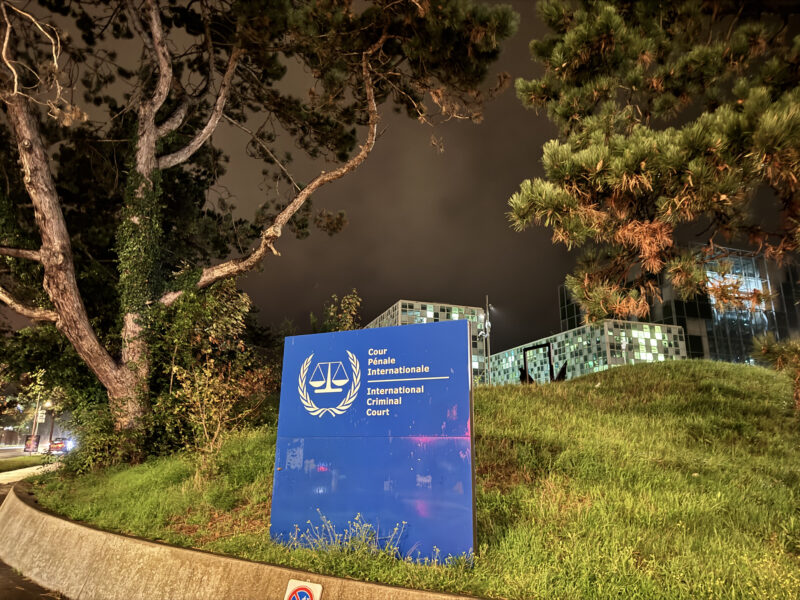
The world’s war crimes court is bringing its annual gathering home to The Hague after U.S. sanctions and visa restrictions complicated plans to meet at United Nations headquarters in New York.THE HAGUE, Netherlands (CN) — U.S. sanctions and visa restrictions have pushed the annual gathering of countries belonging to the world’s war crimes court out of New York and across the Atlantic.The International Criminal Court’s Assembly of States Parties willhold its 25th session in The Hague from Nov. 30 to Dec. 7 instead of at United Nations headquarters in New York, the court said Tuesday. The Assembly’s bureau approved the move on Sept. 28 over concerns about restrictions on participation.Elected court officials face U.S. sanctions, while visa restrictions affect some national delegations and nongovernmental representatives. The Assembly previously recognized the need to strengthen security.“The decision to relocate the Assembly session was taken following consultations with all States Parties,” the court said in a press release.The Assembly brings together countries that have joined the Rome Statute, the treaty establishing the court. It oversees the court’s management and serves as its legislative body.Washington’s confrontation with the court escalated after judges issued arrest warrants in November 2024 for Israeli Prime Minister Benjamin Netanyahu and then-Defense Minister Yoav Gallant over alleged war crimes and crimes against humanity in Gaza, including the use of starvation as a method of warfare.President Donald Trump signed an executive order imposing sanctions on the court Feb. 6, 2025, citing the warrants and the court’s investigations involving U.S. personnel. His administration rejected the court’s authority over American and Israeli nationals, noting that neither country is a party to the Rome Statute.The sanctions targeted prosecutor Karim Khan and later expanded to court judges. They freeze assets under U.S. jurisdiction, restrict entry into the United States and generally prohibit Americans and U.S. businesses from providing funds, goods or services to those listed. The restrictions can limit sanctioned officials’ access to U.S.-linked financial services and business relationships.Dutch officials are also preparing for potentially broader U.S. sanctions, reports say. A report early last week, citing diplomatic and government officials familiar with briefings, said the Netherlands had been notified that further measures were imminent. Officials were exploring ways to keep the court running, including paying staff, protecting witnesses and maintaining its detention facility.Assembly President Päivi Kaukoranta stressed that the move was a response to the specific circumstances of 2026. The Hague will host this year’s session, but the decision does not set a precedent for where member states will meet in the future.Courthouse News reporter Eunseo Hong is based in the Netherlands.Subscribe to our free newslettersOur weekly newsletter Closing Arguments offers the latest about ongoing trials, major litigation and rulings in courthouses around the U.S. and the world, while the monthly Under the Lights dishes the legal dirt from Hollywood, sports, Big Tech and the arts.Additional Reads
US sanctions push ICC member states’ annual meeting out of New York
Full Article
Original Source
Read the full article at Courthousenews →KhanList aggregates and links to publicly available news content. We do not host full articles from third-party sources. Always verify important information with original sources.