
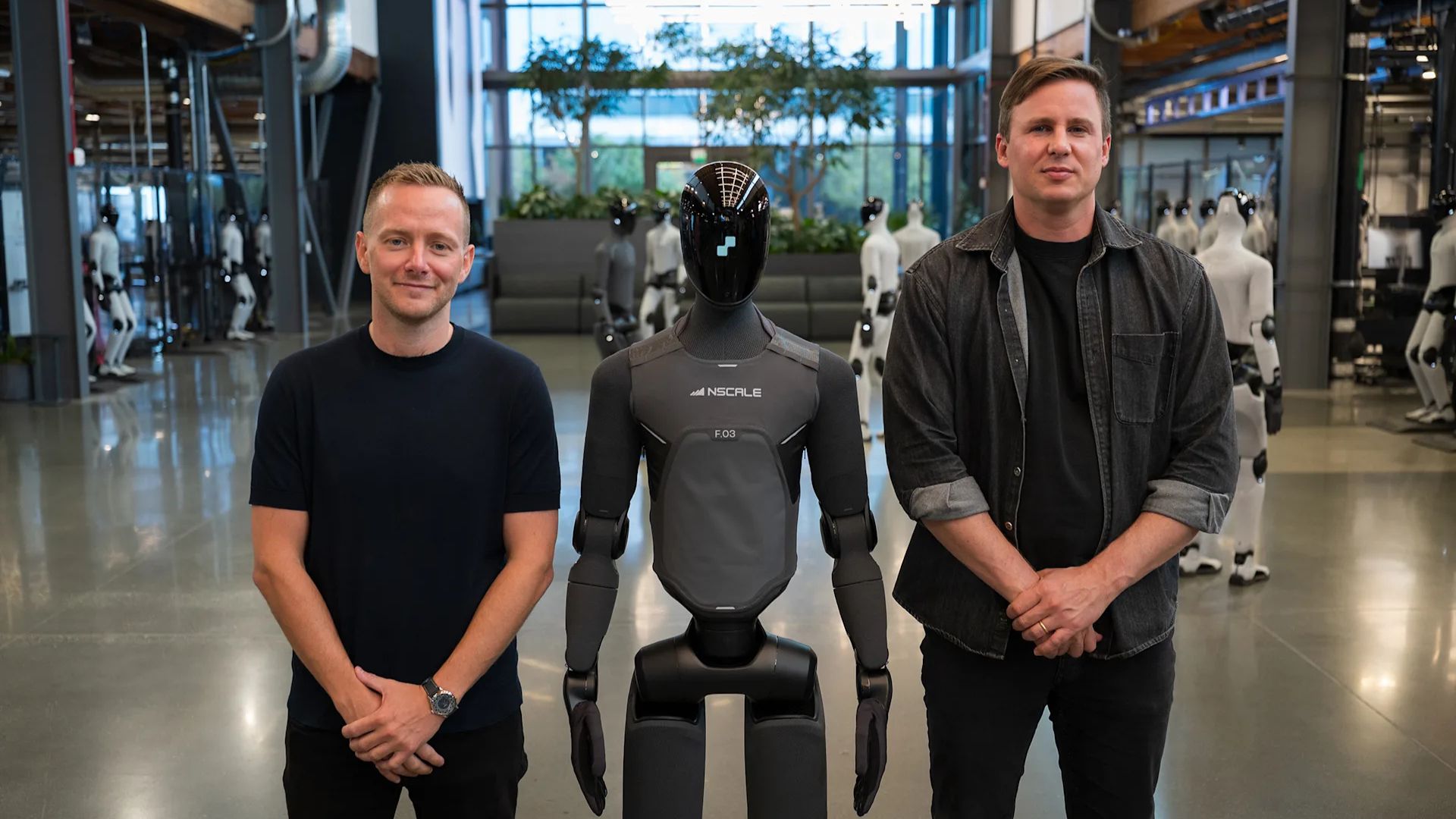
U.S. robotics firm Figure has signed a strategic partnership with UK-based Nscale to secure large-scale computing capacity for training its next generation of humanoid robot AI models. Under the agreement, Nscale will deploy up to 100,000 GPUs based on NVIDIA’s Vera Rubin platform for Figure’s AI development. The partnership aims to address the growing data and compute demands of training models for general-purpose robotics. Figure says the collaboration will provide the computing infrastructure needed to scale its physical intelligence efforts and advance the capabilities of its humanoid robots. Figure expands AI The new partnership aims to secure large-scale computing infrastructure for training the artificial intelligence systems that power its humanoid robots. The partnership will support deployment of up to 100,000 GPUs based on NVIDIA’s Vera Rubin platform, with initial deployment targeted for the second half of 2027 in Barstow, Texas. The agreement represents an initial $3.5 billion commitment for computing capacity, with plans to expand the investment to more than $6 billion. Nscale will also make a strategic investment in Figure, while both companies will explore using humanoid robots to support and scale Nscale’s supply chain operations. The computing infrastructure is being developed to address the growing demands of training Helix, Figure’s AI system for humanoid robots. As the company expands its training datasets, the growing volume of physical-world data requires substantially more computational capacity to process and train increasingly capable models. The partnership is designed to create a complete infrastructure pipeline for physical AI, combining large-scale model training with simulation and deployment. It will use NVIDIA’s computing hardware and robotics simulation technologies to train, test, and deploy AI models on humanoid robots, providing the computational foundation needed to advance general-purpose robotic systems. “Nscale and Figure have activated the robotics flywheel: training Figure’s models on NVIDIA Vera Rubin through Nscale’s AI cloud, validating them in NVIDIA Isaac Sim, and deploying them on NVIDIA GPUs in Figure’s robots. This is the physical AI flywheel that will accelerate the path from models to robots in the world,” said Brett Adcock, Founder and CEO, Figure, in a statement. Figure scales Index Recently, Figure announced that it is scaling Index – a large, continuously expanding dataset of real-world human activity. The platform has surpassed 264,000 downloads across 108 countries and has more than 44,000 weekly active users, with contributors uploading enough video to generate 30 minutes of data every second. According to Figure, Index is designed to capture the diversity and complexity of physical tasks needed to train general-purpose robotic intelligence. Its dataset spans household and workplace activities, covering hundreds of tasks, thousands of objects, and numerous environments, allowing AI models to learn from varied human behavior rather than highly controlled demonstrations. Figure has built its own data pipeline after conventional data suppliers failed to meet the required scale, diversity, and quality. The system automatically filters incoming videos for technical, visual, and semantic quality before human reviewers check samples for fraud and other issues. Videos are also processed for similarity, with duplicate or highly repetitive data removed to preserve dataset diversity. The remaining data is rebalanced according to task requirements and behavioral variation before hierarchical text descriptions are generated for training. The resulting data is intended to improve Helix, Figure’s AI system, by giving it broader exposure to real-world interactions and long-tail physical tasks.Figure has paid $15 million to contributors so far and plans to scale data and compute spending substantially. The broader goal is to create the training infrastructure needed to move humanoid robots from controlled demonstrations toward reliable, general-purpose physical work.Get the latest in engineering, tech, space & science - delivered daily to your inbox.Jijo is an automotive and business journalist based in India. Armed with a BA in History (Honors) from St. Stephen's College, Delhi University, and a PG diploma in Journalism from the Indian Institute of Mass Communication, Delhi, he has worked for news agencies, national newspapers, and automotive magazines. In his spare time, he likes to go off-roading, engage in political discourse, travel, and teach languages.
US robotics firm secures 100,000 GPUs to train next generation of humanoid robots
Full Article
Original Source
Read the full article at Interestingengineering →KhanList aggregates and links to publicly available news content. We do not host full articles from third-party sources. Always verify important information with original sources.