
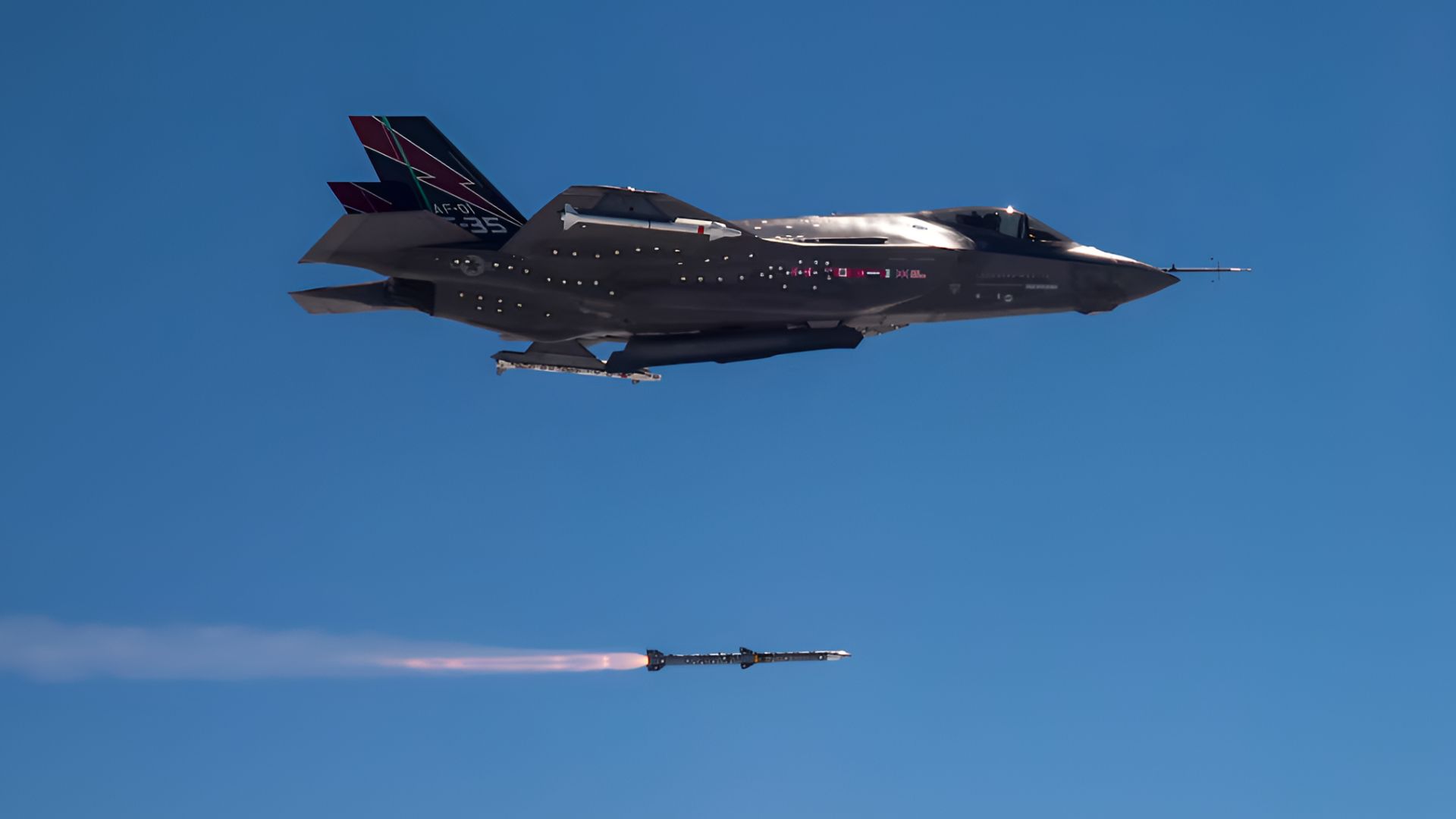
Lockheed Martin is preparing to ramp up production of the AIM-260 Joint Advanced Tactical Missile as the U.S. expands its next-generation air-to-air arsenal. The defense giant signed a framework agreement with the U.S. Department of War to accelerate manufacturing and deliveries of the missile. The arrangement could eventually support a multiyear procurement deal, though Congress must approve that contract. Longer reach, new threats The AIM-260 is designed to extend the reach of U.S. fighter aircraft against airborne threats. Its development addresses a key challenge in modern air combat, where aircraft can detect and engage targets from increasingly greater distances. Lockheed Martin says the missile offers greater range and effectiveness than existing air-to-air weapons. The company describes JATM as a major air-dominance capability for confronting current and emerging threats. The missile can integrate with several U.S. fighter platforms. Those include the F-22 Raptor and F-35 Lightning II. That compatibility gives U.S. forces another option for deploying the weapon across different fighter fleets. It also places the missile within a broader effort to improve long-range engagement capabilities. The AIM-260 program involves Lockheed Martin, the U.S. Air Force and the U.S. Navy. The three organizations have worked together on the weapon’s development and production. Lockheed Martin Missiles and Fire Control President Tim Cahill said the company will increase deliveries to meet demand from the United States and its allies. “We will deliver JATM at the speed our nation and allies demand,” Cahill said. Scaling missile production Increasing JATM deliveries will require more than additional orders. Lockheed Martin says it will make investments needed to expand production capacity under the new arrangement. The planned procurement structure could also give manufacturers greater visibility into future demand. That matters for a missile program requiring specialized components, production equipment and skilled labor. A multiyear purchase could provide that longer-term certainty. Congressional approval remains necessary before the planned procurement contract can proceed. The arrangement also reflects changes in how the Pentagon wants to acquire weapons. The Department of War has identified faster acquisition and higher production capacity as central parts of its acquisition transformation strategy. For the industrial base, predictable orders can support additional manufacturing capacity. Suppliers can also make longer-term decisions around equipment, workforce and component production. That becomes increasingly important as Washington seeks to replenish and expand inventories of advanced weapons. Air-to-air missiles form a critical part of that broader stockpile. Australia adds demand International demand is adding another dimension to the program. Australia recently announced an investment of nearly $736 million to equip the Royal Australian Air Force with AIM-260 missiles. Australia’s planned acquisition would connect its fighter force more closely with U.S. air-combat capabilities. It could also strengthen interoperability between the two countries during combined operations. The Australian commitment gives the program another source of demand beyond U.S. procurement. It also demonstrates how JATM could become part of allied air forces operating alongside American fighters. The next major step will depend on congressional approval of the proposed multiyear procurement.Get the latest in engineering, tech, space & science - delivered daily to your inbox.Aamir is a seasoned tech journalist with experience at Exhibit Magazine, Republic World, and PR Newswire. With a deep love for all things tech and science, he has spent years decoding the latest innovations and exploring how they shape industries, lifestyles, and the future of humanity.
US ramps up 120+ mile strike range AIM-260 missile production with $736M Australia deal
Full Article
Original Source
Read the full article at Interestingengineering →KhanList aggregates and links to publicly available news content. We do not host full articles from third-party sources. Always verify important information with original sources.