
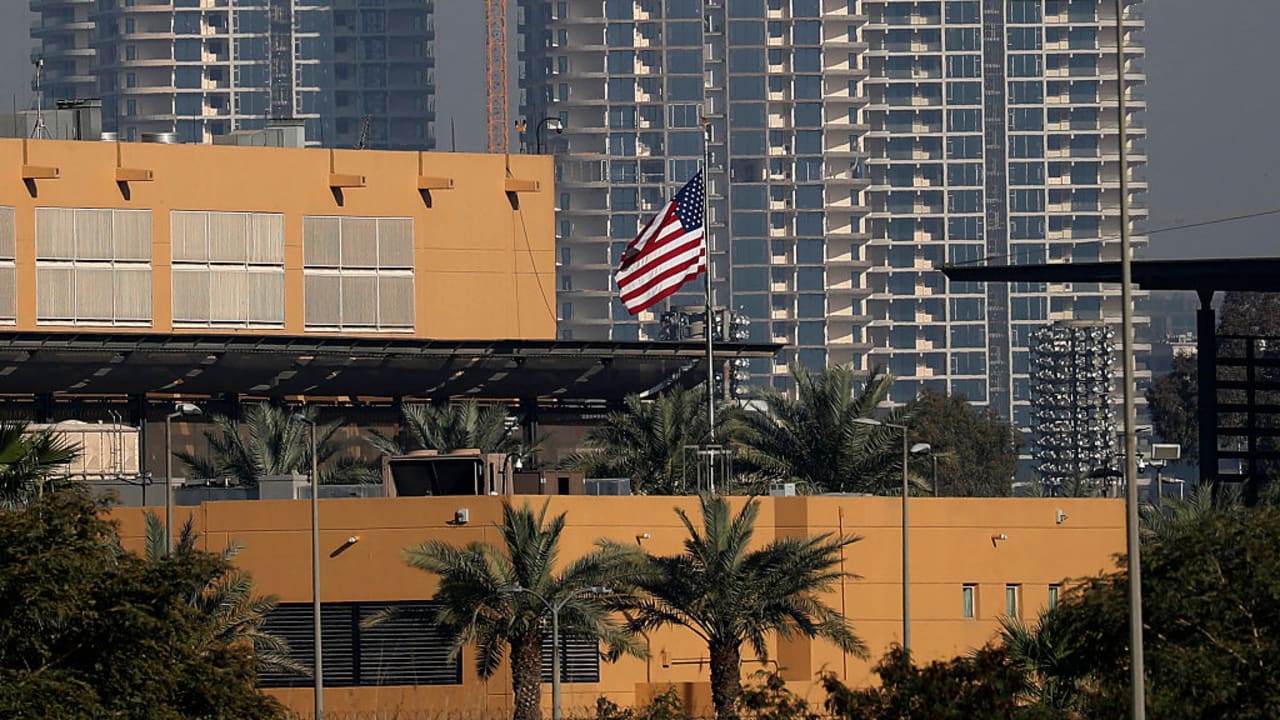
Foreign Service officers could begin returning to their posts as early as this week, according to the report. Follow us on GoogleThe US flag flutters outside the US Embassy, seen across the Tigris River in Baghdad's fortified Green Zone on March 17, 2026.(photo credit: AHMAD AL-RUBAYE / AFP via Getty Images)ByJERUSALEM POST STAFFAUGUST 25, 2026 12:58Updated: AUGUST 25, 2026 13:31The US State Department is preparing to return diplomats to Middle East embassies that were evacuated before and during the war with Iran, the New York Times reported on Tuesday, citing an internal State Department document.Foreign Service officers could begin returning to their posts as early as this week, according to the report. Emergency measures introduced at US diplomatic missions across the region could also begin to be scaled back.The planned redeployment would mark a shift in Washington's diplomatic security posture after months in which US missions operated with significantly reduced staffing because of the conflict. The report did not indicate that all affected embassies would immediately return to normal operations.Earlier in August, the State Department was reported to have asked US embassies across the Middle East to prepare reduced-operations plans. At the time, officials were considering a prolonged period with smaller numbers of personnel on the ground as the war with Iran continued and diplomats displaced from their assignments faced uncertainty over when they could return.The drawdown began after the US and Israel launched their military campaign against Iran on February 28. As the conflict intensified and American diplomatic facilities faced missile and drone threats, Washington ordered nonemergency personnel and family members to leave missions in Bahrain, Iraq, Jordan, Qatar, Saudi Arabia, and the United Arab Emirates. Israel and Lebanon had already been operating under departure arrangements before the wider regional drawdown.View of the US Embassy Branch Office in Tel Aviv, May 7, 2024. (credit: MIRIAM ALSTER/FLASH90)Iran subsequently retaliated against targets across the Middle East, including Gulf states and US military facilities. The regional confrontation has continued despite periods of reduced military activity, with Washington maintaining military and economic pressure on Tehran.Tensions remain unresolved as US heavily sanctions IranThe apparent easing of restrictions on diplomatic personnel comes as tensions between Washington and Tehran remain unresolved. On Tuesday, the US imposed additional sanctions connected to Iranian military activity and petroleum exports, while US Defense Secretary Pete Hegseth said Washington had not ruled out further military strikes around Iran or the Strait of Hormuz.The Strait of Hormuz remains a central point of friction. US President Donald Trump said last week that no negotiations with Iran were scheduled and that the US naval blockade remained in effect, as efforts to reach a lasting arrangement over the strategic waterway remained stalled. Follow us on Google
US preparing to send diplomats back to Middle East embassies after Iran war evacuations - report
Full Article
Original Source
Read the full article at Jpost →KhanList aggregates and links to publicly available news content. We do not host full articles from third-party sources. Always verify important information with original sources.