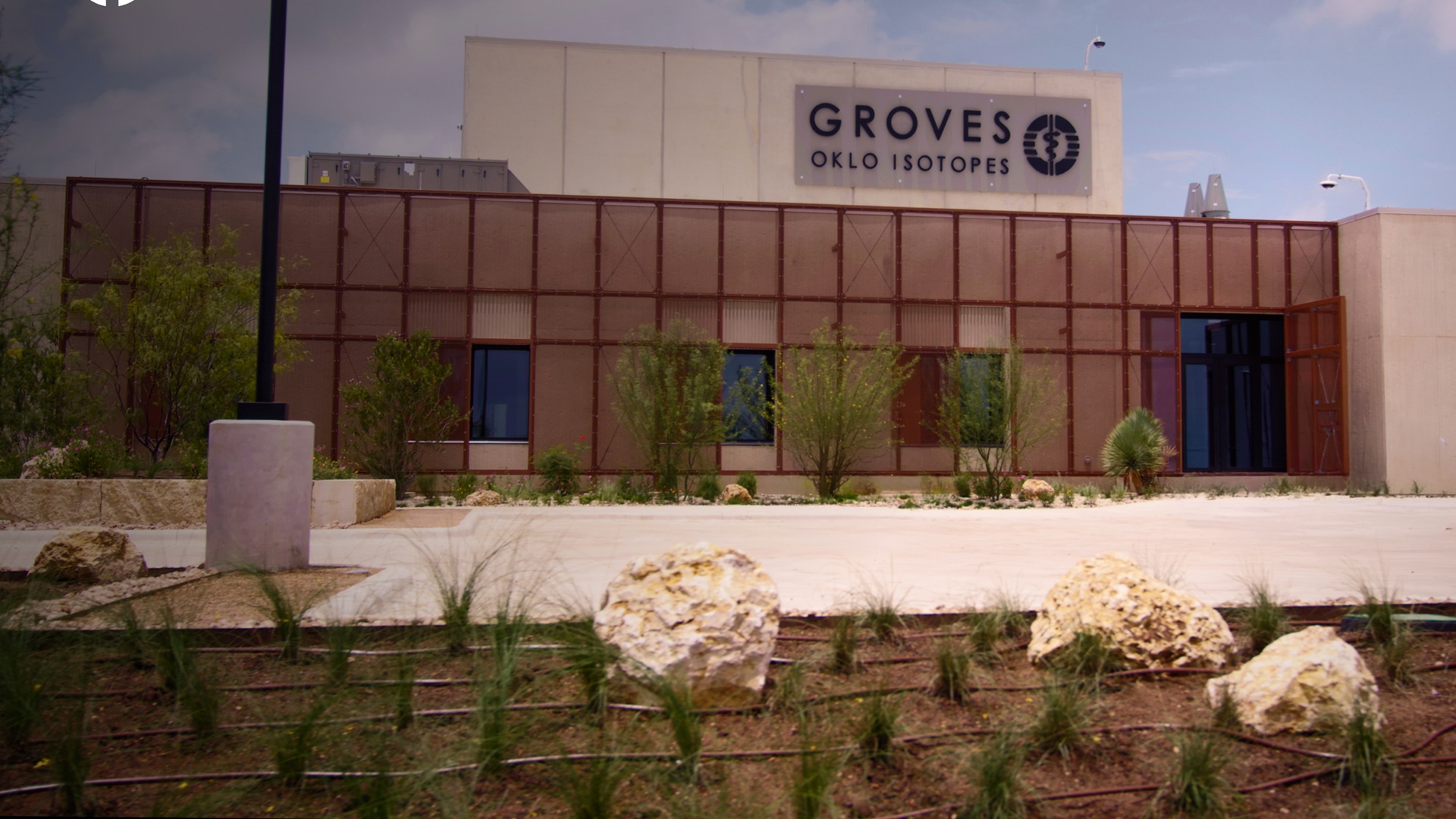
The Groves test reactor in Texas Oklo, a California-based advanced nuclear technology company, has achieved first criticality at its Groves Isotope Test Reactor in Texas, reaching the milestone less than a year after breaking ground. The low-power reactor was built under the US Department of Energy’s Reactor Pilot Program and is the first reactor under the program to reach criticality on private land. First criticality means the reactor has established a controlled, self-sustaining nuclear chain reaction. Groves is a test facility rather than a commercial power reactor, but the milestone gives Oklo an operating platform for developing its planned isotope production business. The reactor was built from the ground up on a greenfield site. Oklo says it handled the project’s engineering, construction, procurement, operating programs and startup preparation, with components including fuel either manufactured or commercially procured. Groves is part of Oklo Isotopes’ broader plan to develop domestic isotope production for healthcare, industry, research, space and national security applications. The company says the project has also given it practical experience that can be applied to future isotope facilities and other nuclear deployments. Reactor startup breaks timeline The project’s speed is notable because nuclear projects typically involve lengthy design, construction, regulatory and commissioning processes. Oklo says the Reactor Pilot Program allowed those activities to move forward alongside the DOE’s safety review and authorization. “Reaching criticality in less than a year is an incredible milestone for our team,” said Oklo co-founder and CEO Jacob DeWitte. “Oklo developed Groves from a greenfield site on private land, completed full-scale civil excavation and construction, manufactured or commercially procured all components, including fuel, and developed its operating programs in-house.” The company said this integrated approach helped it move from a vacant site to reactor startup in months rather than years. The project also required Oklo to establish procedures for reactor operations, commissioning, safety readiness and workforce training. “Taken together, we believe these accomplishments establish a new benchmark for the Reactor Pilot Program and set the stage for the future of advanced nuclear deployment at scale,” DeWitte said. The DOE created the Reactor Pilot Program to provide a pathway for selected reactor projects to move through development and authorization more quickly. Groves now provides a real-world test case for that approach, although the timeline for future commercial reactors could differ depending on their design, licensing and construction requirements. Isotopes drive next phase The immediate significance of Groves is tied to isotopes rather than electricity generation. Oklo Isotopes plans to use the experience gained from the test reactor to build capabilities for producing radioactive materials used across several industries. Medical applications are one potential area, where certain isotopes are used in diagnostic imaging and cancer treatments. Other uses include industrial testing, scientific research, space applications and national security. The project has also allowed Oklo to develop engineering practices, operating procedures, training programs and commissioning experience that could be reused across its future facilities. “Thanks to President Trump’s precedent-setting directive to create the Reactor Pilot Program, Oklo’s Groves Isotope Test Reactor is part of the revival of America’s nuclear energy industry. We applaud the work of the Oklo, DOE, and Idaho National Laboratory staff who helped achieve this milestone,” said Assistant Secretary for Nuclear Energy Ted Garrish. Oklo is also developing fast-fission power plants, nuclear fuel recycling technologies, and a domestic supply chain for critical isotopes. The company says the Groves project will help reduce uncertainty and execution risks as those efforts move forward. The Groves reactor’s first criticality does not mean Oklo has completed its commercial isotope rollout. Instead, it establishes an operational foundation from which the company can continue testing, gaining operating experience, and developing its future isotope production facilities.Recommended ArticlesGet the latest in engineering, tech, space & science - delivered daily to your inbox.With over a decade-long career in journalism, Neetika Walter has worked with The Economic Times, ANI, and Hindustan Times, covering politics, business, technology, and the clean energy sector. Passionate about contemporary culture, books, poetry, and storytelling, she brings depth and insight to her writing. When she isn’t chasing stories, she’s likely lost in a book or enjoying the company of her dogs.
US nuclear startup achieves first reactor criticality in under one year at Texas site
Full Article
Original Source
Read the full article at Interestingengineering →KhanList aggregates and links to publicly available news content. We do not host full articles from third-party sources. Always verify important information with original sources.