
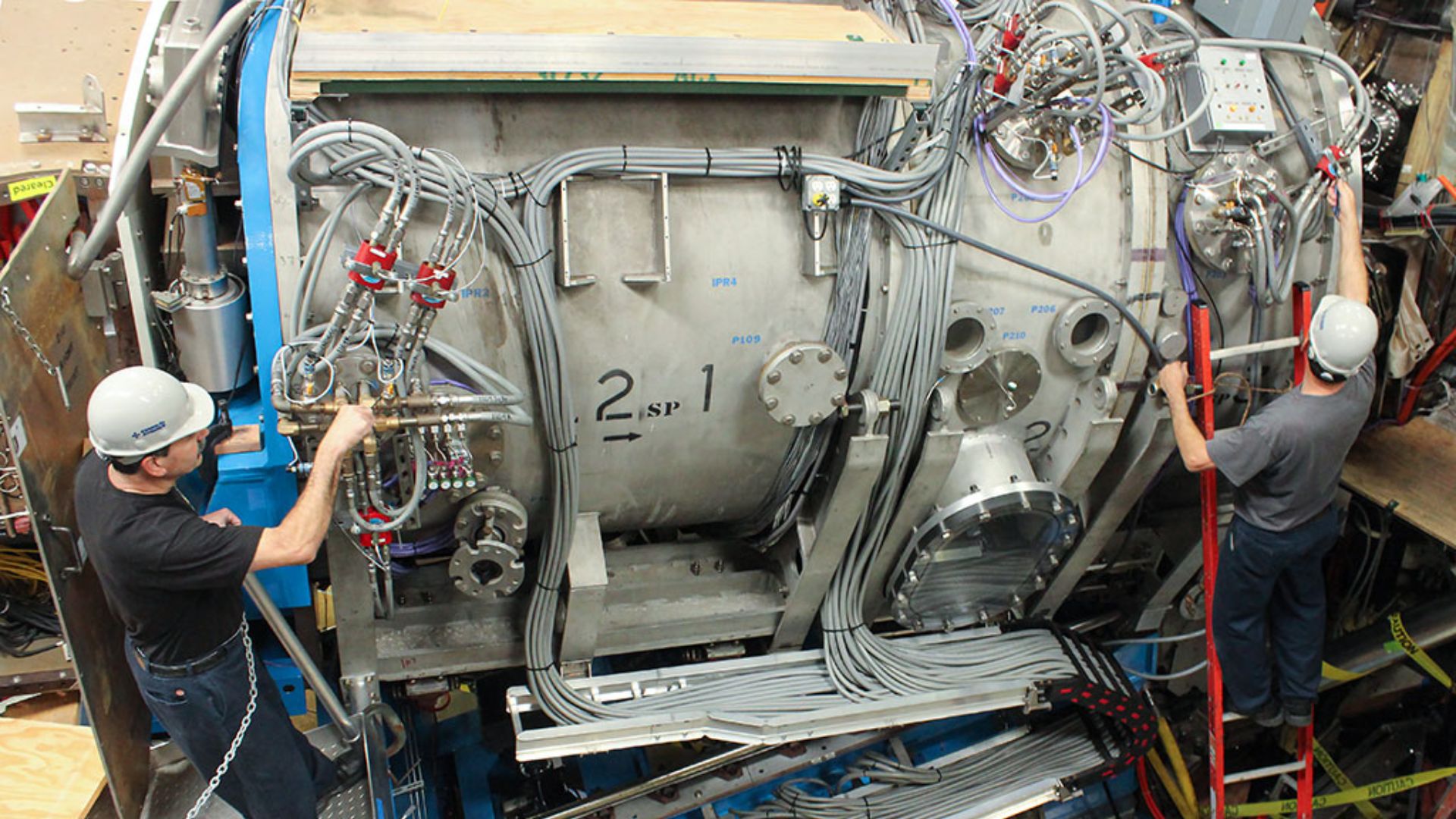
Engineers have successfully run five live tests using an automated system to stabilize a fusion reactor in real time. The trials took place at the DIII-D National Fusion Facility in San Diego. The software platform is called PACMAN, which stands for Prediction And Control using MAchiNe learning. During the experiments, the platform handled several difficult control tasks without human intervention. In one test, the system predicted a destructive tearing mode instability 200 milliseconds before it could form. Standard controllers only spot these disturbances after they start. Standard controllers then attempt to suppress the issue, which often degrades reactor performance. PACMAN adjusted the reactor settings early enough to prevent the disturbance altogether. Solving an optimization problem The software also solved an optimization problem that previously had no single working formula. It coordinated all six of the reactor’s gyrotrons, which are high-power microwave systems that heat the fuel. The program changed mirror angles and adjusted beam power outputs across all six units at the same time. In other trials, a reinforcement-learning model took full control of the heating systems. The platform also forecast sudden bursts of energy at the edge of the fuel. PACMAN divides its workload into four sequential stations. “The whole PACMAN framework typically runs in about 20 milliseconds, and it’s not running once,” explained Andy Rothstein, co-lead author of the paper published in Nuclear Fusion. “It’s running again and again and again. It can see small things happening in the plasma and adjust in a way that a human would never be able to do.” First, the software gathers raw diagnostic readings from the reactor, including temperature, density, and magnetic data. A screening routine then inspects these values, strips out measurement errors, and packages the clean data. Next, specialized machine learning algorithms pull the parameters they need from the package. These models predict what the fuel will do in the immediate future. Finally, downstream controllers convert those predictions into hardware commands, such as firing a heating beam. An output stage resolves any conflicts between separate commands, enforces strict equipment safety boundaries, and routes the signals directly to the reactor. Speeding up experimental work This assembly line setup solves a major engineering limitation in fusion research. Traditional computer simulations model plasma physics with great precision, but they often take days or months to run. That makes them too slow for live experiments that last only a few minutes. Machine learning models, by contrast, make predictions in fractions of a second. The modular design also speeds up experimental work. Past machine learning projects in fusion were custom-built from scratch, making them difficult to link together. In PACMAN, each model operates as a standalone module. Researchers can modify or replace an algorithm in a matter of days without altering the surrounding software. The trials address a core challenge inside tokamak reactors. These devices use powerful magnetic fields to contain plasma, a superheated gas hotter than the core of the sun. The fuel can develop instabilities within thousandths of a second. Human operators need whole seconds to react, which is far too slow to keep the reaction stable. Human operators still supervise the process. Physicists define the experimental goals, tune the parameters between shots, and rely on hardcoded limits to prevent equipment damage. The creators say the framework can easily move to other tokamak facilities, offering an adaptable control standard for future commercial fusion designs.Get the latest in engineering, tech, space & science - delivered daily to your inbox.An active and versatile journalist and news editor. He has covered regular and breaking news for several leading publications and news media, including The Hindu, Economic Times, Tomorrow Makers, and many more. Aman holds expertise in politics, travel, and tech news, especially in AI, advanced algorithms, and blockchain, with a strong curiosity about all things that fall under science and tech.
US nuclear fusion reactor prevents plasma instability 200 milliseconds in advance
Full Article
Original Source
Read the full article at Interestingengineering →KhanList aggregates and links to publicly available news content. We do not host full articles from third-party sources. Always verify important information with original sources.