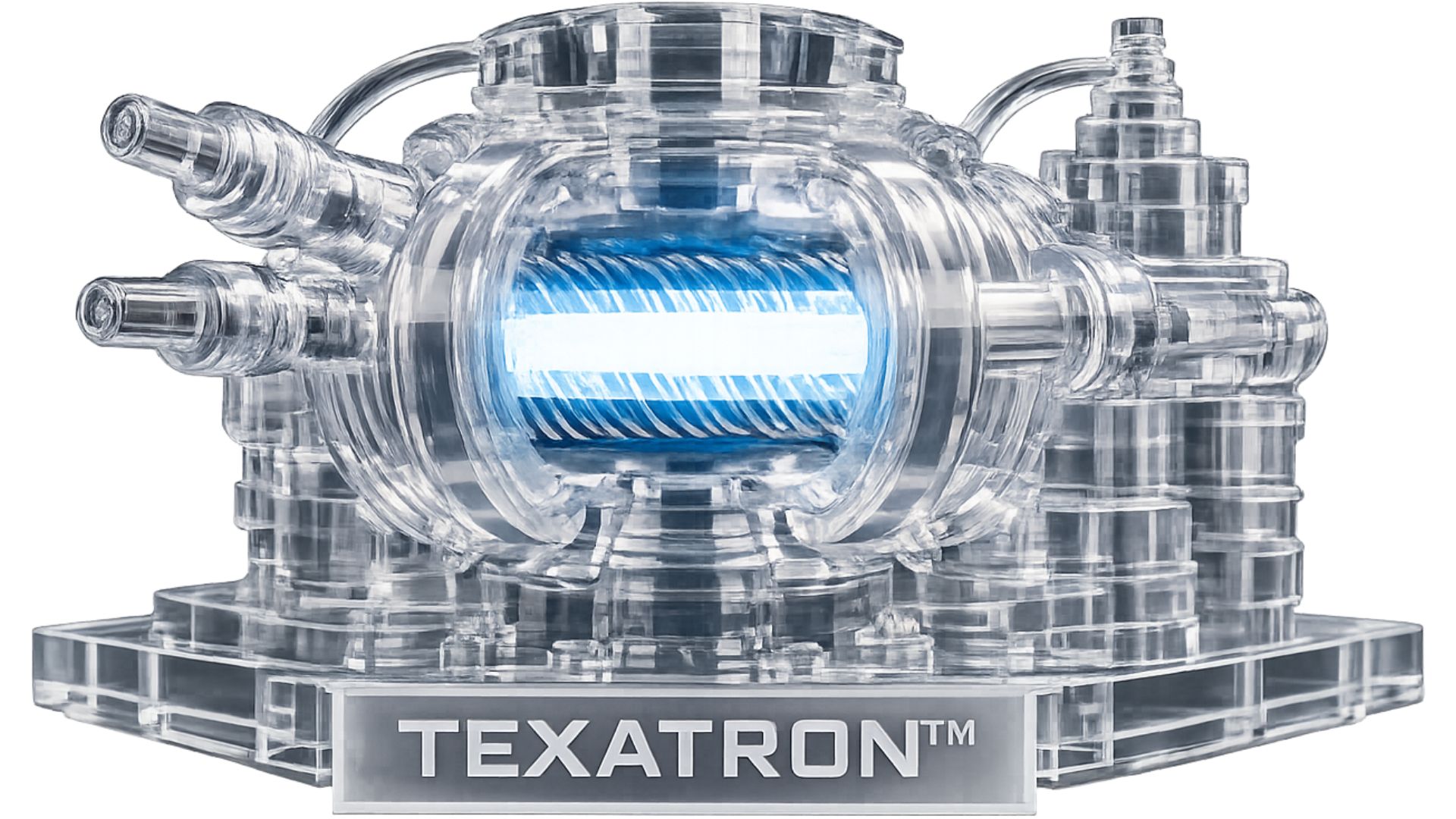
American Fusion has officially cleared a major regulatory hurdle, securing research and development certification from the Texas Department of State Health Services (DSHS) for all twelve registered models of its Texatron Fusion Engine platform. The development was shared by American Fusion’s Executive Chairman Brent Nelson in an interview, as reported by the company. This regulatory clearance applies to system hardware configurations across a wide power capacity spectrum, beginning with 500-kilowatt units and extending to large-scale architectures designed to output up to one gigawatt. With authorization completed, technical teams are preparing to start the next phase of experimental testing at Texas Tech University. The primary technical objective of the upcoming experimental sequence is to verify nuclear fusion reactions inside the Texatron confinement hardware. Operational research teams plan to gather diagnostic measurements concerning plasma dynamics, specifically tracking core plasma temperatures, particle densities, and magnetic containment behaviors during operational cycles. “Nelson stated that the Company’s initial testing objectives include validating fusion reactions within the Texatron platform and collecting performance metrics related to plasma behavior and system operation,” said the company in a press release. Maintaining conditions for sustained fusion reactions Evaluating these physical parameters allows engineers to assess how efficiently the system achieves and maintains the conditions required for sustained fusion reactions. Following the initial reaction verification, testing will shift toward evaluating the pulse-generated electrical output produced by the engine, which serves as an intermediate milestone before attempting continuous electricity generation. “Data generated during testing is expected to be independently documented, with findings potentially available for publication following review,” remarked the company. Unlike conventional nuclear fission reactors that require steam turbines and produce long-lived radioactive waste, the Texatron system utilizes magnetic-confinement technology to generate electricity from high-energy plasma while significantly reducing radioactive byproducts. “Advanced fusion systems can convert energy directly into electricity, reducing reliance on steam turbines and minimizing energy losses,” noted American Fusion. “This enables higher efficiency, simpler infrastructure, and faster, more flexible power generation for modern grids.” Current engineering efforts are distributed across several intermediate engine sizes, including 5-megawatt, 10-megawatt, and 20-megawatt configurations, along with preliminary engineering planning for a 100-megawatt unit. Transportable and reduced radiation profile The physical characteristics and direct electrical output of the engine dictate its target integration environments. Hyperscale artificial intelligence data centers increasingly utilize high-voltage direct current power infrastructure, meaning matching the generator’s direct DC output reduces energy conversion losses compared to traditional steam turbines, though power conditioning is still required to stabilize voltage. The transportable and reduced radiation profile of the hardware allows smaller units to be deployed on trucks to supply power for defense installations, mining operations, and remote industrial facilities. The operational targets for 2026 depend on executing the multi-stage plasma validation tests, establishing performance metrics, expanding patent protections, and negotiating initial power placement agreements with commercial partners. “American Fusion Energy is moving from proven laboratory breakthroughs toward scalable energy systems by focusing on real-world engineering challenges,” concluded the company. “Building on validated progress in high-temperature plasma confinement, the company is translating fusion physics into practical pathways for future commercial power.” Recommended ArticlesGet the latest in engineering, tech, space & science - delivered daily to your inbox.An active and versatile journalist and news editor. He has covered regular and breaking news for several leading publications and news media, including The Hindu, Economic Times, Tomorrow Makers, and many more. Aman holds expertise in politics, travel, and tech news, especially in AI, advanced algorithms, and blockchain, with a strong curiosity about all things that fall under science and tech.
US nuclear fusion engine secures key research permit for up to 1 GW power systems
Full Article
Original Source
Read the full article at Interestingengineering →KhanList aggregates and links to publicly available news content. We do not host full articles from third-party sources. Always verify important information with original sources.